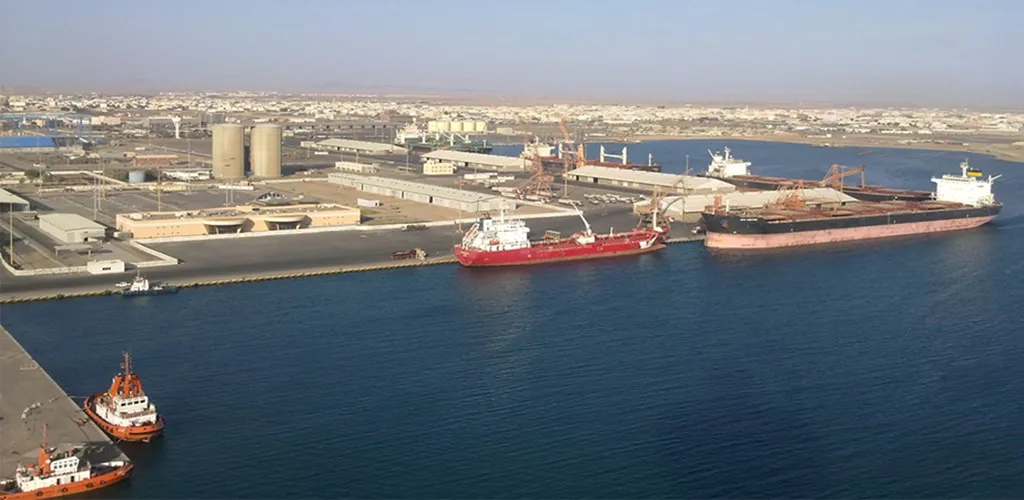
For years, Yanbu was a line item on Saudi port lists rather than a routing decision. Importers knew it as the oil and petrochemical gateway on the northern Red Sea, the port served by the East–West pipeline, and the closest seaport to Madinah. Containers from China went to Jeddah, King Abdullah Port or Dammam, and that was the end of the conversation.
That changed in 2026. Shipping from China to Saudi Arabia now has a fourth realistic gateway on the Red Sea coast, and it is not a marketing claim: a scheduled container service calls there, a terminal operator with a twenty-year concession is investing in box handling, and a logistics centre is under development. What has not changed is the arithmetic. Yanbu is a genuine alternative for some cargo and a costly detour for the rest, and the difference is decided by where your consignee actually is and how much schedule certainty you need.
This guide covers both halves: what Yanbu can do for a China-origin shipment in late 2026, and the specific ways it can cost you money if you pick it for the wrong cargo.
Two ports share the name Yanbu
Most of the confusion around this gateway comes from treating “Yanbu” as one port. It is two separate ports a short drive apart, with completely different cargo profiles.
| Yanbu Commercial Port | King Fahd Industrial Port (Yanbu) | |
|---|---|---|
| Code | SAYNB | — |
| Core cargo | General cargo, dry bulk, project cargo, pilgrims | Crude oil, refined products, petrochemicals; general cargo and containers |
| Berths | 12 | Multiple, including dedicated liquid berths |
| Stated annual capacity | About 13.5 million tonnes | Up to 210 million tonnes |
| Terminal operator (2026) | RSGT, multi-purpose concession for dry bulk and general cargo | RSGT, general cargo and container terminal |
| Container service | None scheduled | Folk Maritime “Red Sea Express”, 1,100 TEU |
| Natural hinterland | Madinah, AlUla, Tabuk, Yanbu Al Bahr | Yanbu Industrial City, SABIC plants, refinery cluster |
The historical role of the commercial port is easy to state: it is the sea gateway for Madinah, roughly 220 km inland, and it carries a dedicated terminal for pilgrims arriving by sea. Its 12 berths and 13.5 million tonnes of capacity make it a mid-sized general cargo port, not a container hub.
King Fahd Industrial Port is the giant next door. With handling capacity quoted at up to 210 million tonnes, it is the largest port on Saudi Arabia’s Red Sea coast for crude, refined products and petrochemicals, and it sits directly on the main Suez–Bab al-Mandab trade route. Until recently its container activity was negligible. That is the part that changed.
What actually changed in 2026
Three developments, in sequence, turned Yanbu from a bulk port with a footnote into a routing option.
First, a scheduled container service. In May 2026 the Saudi Ports Authority (Mawani), Folk Maritime and SABIC announced the “Red Sea Express” service linking Jeddah Islamic Port, King Fahd Industrial Port in Yanbu, Ain Sokhna in Egypt and Aqaba in Jordan. The first call at Yanbu came on 29 June 2026, when the Saudi-flagged Folk Jubail berthed with the first container shipment handled in partnership with SABIC and Red Sea Gateway Terminal. Service capacity is 1,100 TEU, and Folk Maritime describes a voyage cycle of around ten days across the four ports.
Second, a terminal concession with money behind it. Red Sea Gateway Terminal (RSGT) holds twenty-year build-operate-transfer concessions from Mawani covering multi-purpose terminals at Jeddah, King Fahd Industrial Port in Yanbu, Yanbu Commercial Port and Jazan. For Yanbu, the deal explicitly adds container operations alongside the existing dry and liquid bulk business, with a commitment to deploy ship-to-shore and rubber-tyred gantry cranes. RSGT put minimum investment across the four terminals at SAR 1.6 billion over the concession period, with SAR 700 million of that in the first five years. This is not a trial call arrangement; it is a twenty-year bet that boxes will keep coming.
Third, supporting infrastructure. Mawani has contracted Q Saudi to develop and operate an integrated logistics centre at Yanbu Commercial Port, an investment of more than SAR 29 million across 120,490 square metres.
The numbers from the water are still modest, and that matters. In September 2026, King Fahd Industrial Port handled 2,494 TEU through the Red Sea Express: 1,494 TEU of SABIC products for export and 1,000 empty containers. Read that again. The port’s monthly container throughput is roughly what one mid-sized feeder carries, and four containers in ten were empties being repositioned. Yanbu is open for containers, but it is not yet a container port in the Jeddah sense.
Why importers started looking north
The pull factor was Jeddah. In the first week of July 2026, Hapag-Lloyd suspended bookings into Jeddah for cross-border land-bridge moves after yard density reached 90% and productivity fell by a fifth to a quarter. Forwarders reported truck queues of about five kilometres outside the port, drivers waiting up to three days, and container release waits measured in weeks rather than days. Maersk responded by routing boxes through Khor Fakkan and Salalah before feeding them into the Gulf, exactly the bypass behaviour we described in our Sohar and Duqm gateway analysis.
That specific crisis has eased. Hapag-Lloyd’s Middle East operational update for week 41 of 2026 put Jeddah yard density at 70% with reefer capacity at 80%, and Portcast’s monitoring for 18–24 October recorded a median vessel waiting time of 0.19 days at Jeddah, down 88% week on week. Congestion-driven diversions are therefore less urgent than they were in July.
What remains is structural. Jeddah is a single very large gateway handling the bulk of Saudi Red Sea imports, and every time it sneezes, the whole western supply chain catches cold. A second Red Sea container gateway — even a small one — changes the risk picture for consignees in the northern half of the country. That is the durable case for Yanbu, and it is stronger than the July congestion spike that first drew attention to it.
How your container actually reaches Yanbu
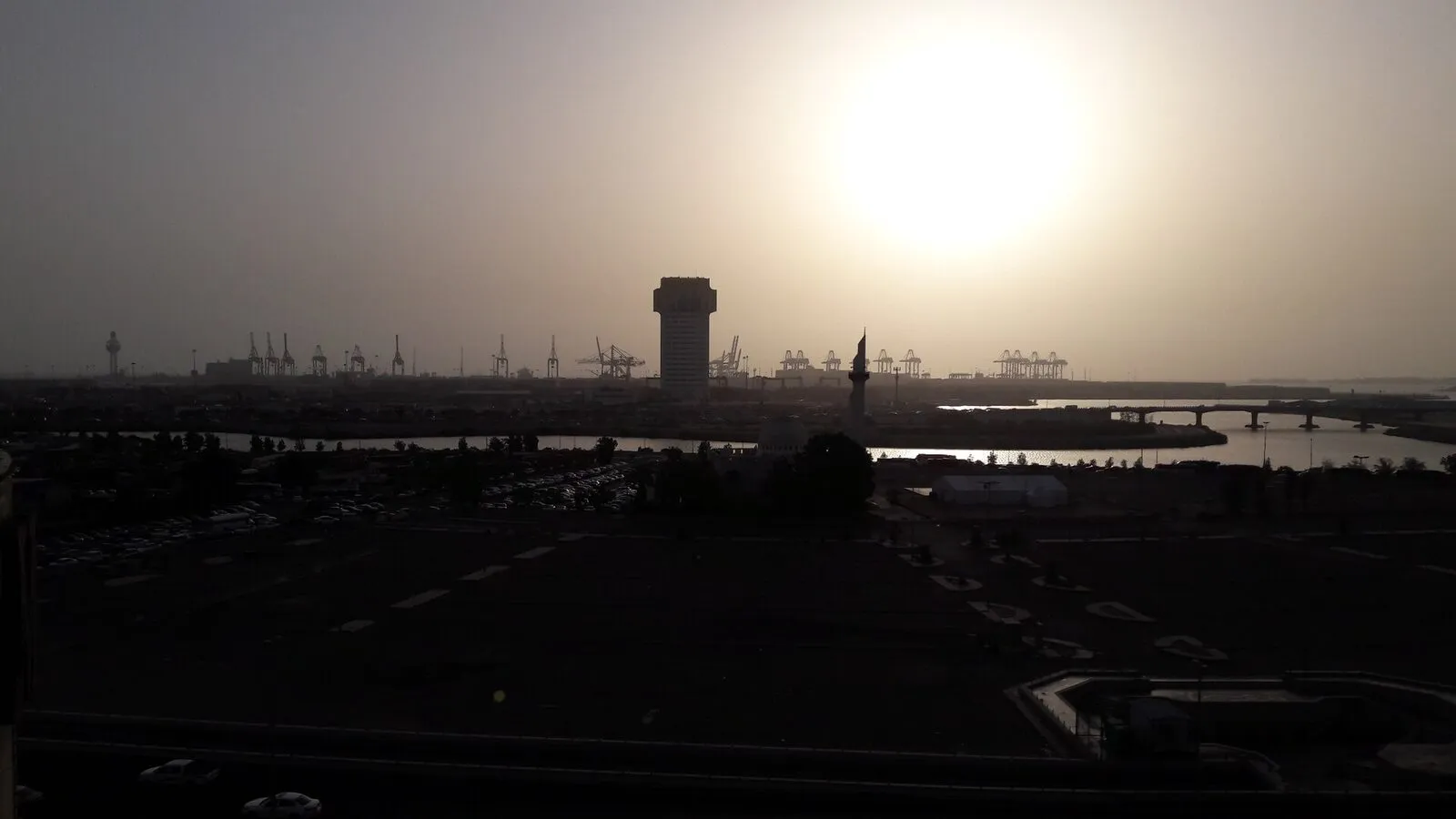
There is no Asia mainline string calling Yanbu. Containers from China reach it in one of three ways, and the route you get is the route you pay for.
| Routing | Typical transit from South China | What it involves |
|---|---|---|
| Mainline to Jeddah, then road | 17–21 days | Discharge at Jeddah, customs release, 330 km truck leg to Yanbu |
| Mainline to Jeddah, then feeder | 18–24 days | Discharge at Jeddah, transfer onto Red Sea Express, which runs a roughly ten-day port cycle |
| Air to Jeddah or Medina, then road | 4–7 days plus one day | Valuable or urgent cargo only; road leg from Jeddah or from the airport |
Three practical points follow from that table.
The feeder is a fixed cycle, not a shuttle. With a ten-day rotation across four ports and 1,100 TEU of capacity, a box that misses the Yanbu call waits for the next loop. If your supplier’s vessel arrives at Jeddah the day after the feeder sailed, you have lost a week, not a day. Always ask for the feeder’s actual sailing date at Yanbu, not just the mother vessel’s Jeddah ETA.
Road is often the faster and more controllable leg. Jeddah to Yanbu is about 330 km on a good highway, a drive of three and a half to four hours. In practice a truck leg is one to two days including release formalities, and it does not depend on a ten-day cycle. For cargo under about ten containers, road frequently beats waiting for the feeder.
Neither route removes customs. Clearance happens at the entry port. Yanbu has a customs presence and the same FASAH single-window process as the rest of the Kingdom, but its inspection and release capacity is calibrated for a general cargo port, not for a queue of forty containers arriving together. Our guide to the green channel and FASAH clearance explains what pre-lodging actually buys you.
What it costs
Budget-grade ranges for a China-origin container moving through Yanbu in the second half of 2026, quoted port-to-port and excluding duty, VAT, SASO/SABER certification fees and demurrage:
| Cost line | 20ft (USD) | 40ft (USD) | Notes |
|---|---|---|---|
| Ocean freight to Jeddah | 1,500–2,300 | 2,500–3,500 | Shenzhen/Guangzhou loading; East China adds about 100–200 |
| Feeder Jeddah to Yanbu | 250–450 | 400–700 | Space allocated by the operator, not the market |
| Road Jeddah to Yanbu | 350–600 | 450–800 | Per container, including haulage documentation |
| Inland Yanbu to Madinah | 250–450 | 350–600 | 220 km |
| Inland Yanbu to Riyadh | 700–1,100 | 900–1,400 | Just over 1,000 km by road |
Two observations that matter more than the numbers themselves.
First, the ocean leg is the same whether you clear at Jeddah or Yanbu. Yanbu’s cost advantage or disadvantage is entirely in the on-carriage line, so it is decided by destination, not by carrier choice. A consignee in Madinah saves on the inland leg by landing at Yanbu; a consignee in Riyadh pays more than they would landing at Jeddah, because Yanbu is further from the capital than Jeddah is by road.
Second, war-risk costs do not disappear. Yanbu sits inside the Red Sea, south of Suez and north of Bab al-Mandab, and both approaches carry elevated war-risk premiums in 2026. Marsh put additional premiums for Hormuz transits at 7.5%–10% of hull value in July 2026, up from 1%–3% earlier in the year, and Red Sea cover repriced in parallel. Those costs are carried by the ship, but they reach your invoice through surcharges. Our breakdown of Red Sea and war-risk surcharges shows how each line is constructed.
The four risks that are not in the rate sheet
The chokepoint is still the chokepoint. Yanbu is on the Red Sea, which means Asia-origin cargo reaches it through Bab al-Mandeb. Since 9–11 September 2026, when Houthi forces took Mokha and Perim Island, the group has controlled Yemen’s entire Red Sea coast, including the strait itself. Our analysis of the Bab al-Mandeb takeover sets out what that means for routing and insurance. Unlike Sohar and Duqm, which sit outside the strait, Yanbu does not let you sidestep this risk — it concentrates it into a single gate. If your reasoning for choosing Yanbu is “avoid the chokepoints”, you have chosen the wrong port.
The container base is thin. A port that handles 2,494 TEU in a month cannot absorb a shipper who suddenly needs forty boxes of reefer capacity on a fixed day. Equipment availability, empty-container supply and berth windows are all sized to a small, industrial customer base dominated by one exporter. As an outside importer, you are a guest in somebody else’s loop.
Industrial priorities come first. King Fahd Industrial Port moves up to 210 million tonnes of crude, refined products and petrochemicals. When industrial logistics are disrupted, container convenience is the first thing to be traded away. In September 2026, Saudi Arabia shut the East–West pipeline to Yanbu as a precaution after drone attacks — a decision taken for national export reasons, with consequences for every user of that port complex. Plan for the possibility that your box is not the port’s priority that week.
Certification and clearance rules do not relax. SASO/SABER applies to regulated products at every Saudi entry point. Yanbu has no special exemption, no faster conformity route and a smaller inspection bench. Landing at a quieter port can mean faster berthing and slower release, which nets out worse than Jeddah if your documents are incomplete. Fix the certificate before you fix the routing.
Yanbu, Jeddah or Dammam: which one for which cargo
| Your situation | Best gateway | Why |
|---|---|---|
| Consignee in Madinah, AlUla, Tabuk or Yanbu Industrial City | Yanbu | Shortest inland leg; 220 km to Madinah against 420 km from Jeddah |
| FMCG, retail or e-commerce volume into Riyadh or Jeddah | Jeddah or King Abdullah Port | Schedule depth, carrier choice, cheaper inland rates |
| Petrochemical, industrial or project cargo into Yanbu Industrial City | Yanbu | Purpose-built port, heavy-lift capability, direct plant access |
| Reefer cargo on a fixed weekly programme | Jeddah | Yanbu’s reefer plugs and cycling are limited |
| Cargo for the Eastern Province, Riyadh dry port by rail | Dammam | Rail link and no Red Sea leg |
| Diversification play to de-risk a Jeddah disruption | Yanbu, with a written rollover plan | A second gateway exists; treat it as a backup, not a default |
Who should actually use it
Yanbu earns its place for a specific importer profile: the consignee is in the Madinah region or inside Yanbu Industrial City, volumes are modest and predictable, cargo is not time-critical to the day, and the company wants a second Red Sea gateway documented before the next Jeddah disruption rather than after it.
It is the wrong choice if any of the following is true: you ship more than about twenty containers a month to one consignee; you need reefer; your SLA is measured in days; your cargo is high-value and you cannot tolerate a ten-day feeder slip; or your consignee is in Riyadh and is comparing total delivered cost with Jeddah.
A booking checklist for Yanbu
- Name the terminal, not the city. Commercial port or King Fahd Industrial Port decide which terminal handles your box and which operator you deal with.
- Get the feeder sailing date in writing. Mother vessel ETA at Jeddah is not arrival at Yanbu.
- Price the road leg before you commit. For fewer than ten containers, trucking from Jeddah frequently wins on both time and cost.
- Pre-lodge the SABER shipment certificate. The quieter port does not forgive missing documents.
- Ask what happens if the box rolls. In a 1,100 TEU loop, a rollover is a week; get the policy, not the promise.
- Keep a Jeddah fallback. The value of Yanbu is optionality. Optionality only works if the alternative is quoted and ready.
Yanbu in 2026 is a real second gateway on the Saudi Red Sea coast, backed by a twenty-year terminal concession and a scheduled feeder. It is also a small, industrial-first port whose container business is measured in thousands of boxes a month, sitting behind the same strait that has dominated every routing decision this year. Used for the cargo it suits, it removes a single point of failure from your Saudi supply chain. Used as a blanket replacement for Jeddah, it will cost you money and schedule certainty at the same time.
If you want both routings priced against each other before your next booking, send us the consignee city, the cargo description and the container count. We will come back with a single comparison, with each leg and surcharge shown separately.
- WhatsApp: Get a quote now
- Or review our container shipping service from China to Saudi Arabia before you book.