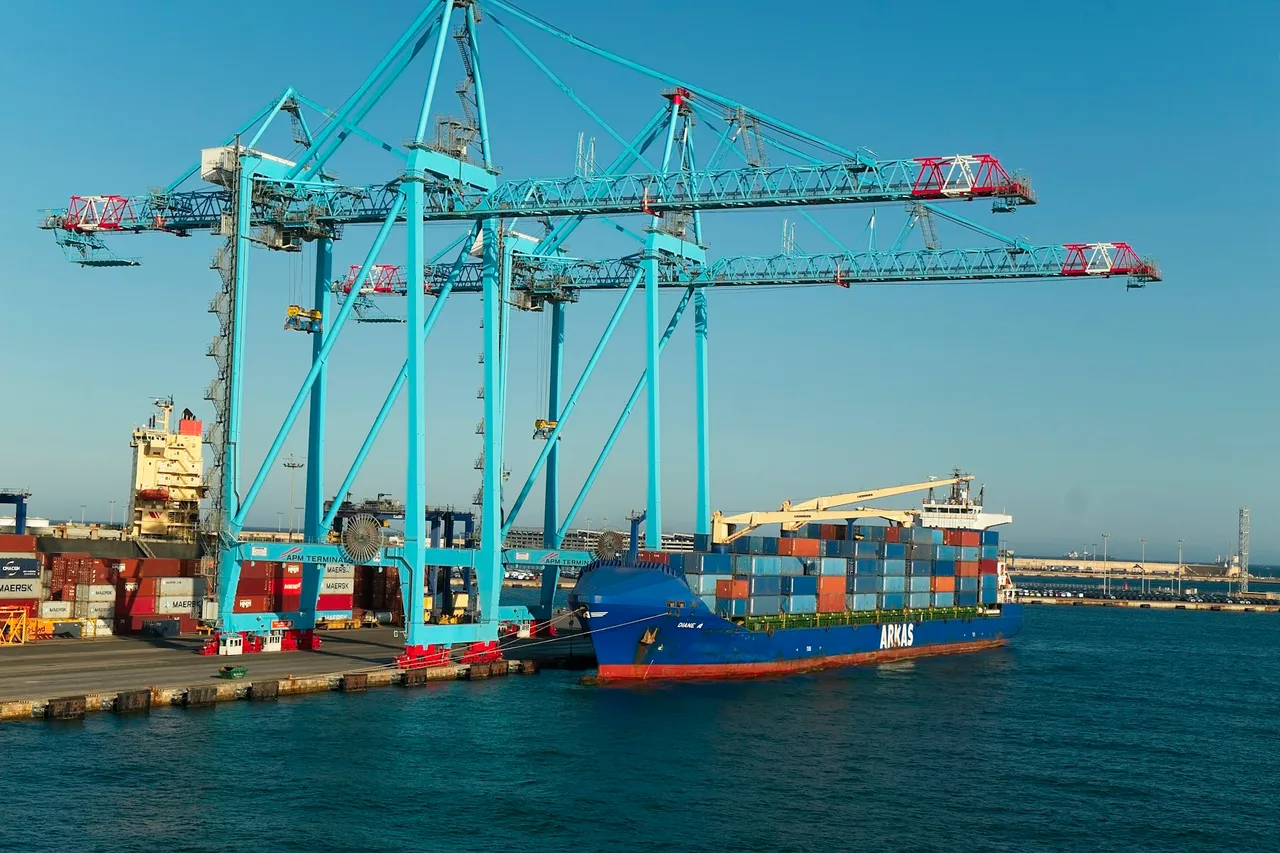
Importers who used to route everything through Jebel Ali or the upper Gulf are rethinking their maps. With Shipping from China to Oman now covering three viable gateways outside the worst of the Hormuz chokepoint, the country has quietly become the Gulf’s most practical insurance policy. Two ports drive that shift: Sohar, the industrial workhorse on the Gulf of Oman, and Duqm, the deep-water upstart on the Arabian Sea that barely appeared on rate sheets two years ago.
The numbers tell you how fast things changed. In the first half of 2026, Sohar Port handled 52 million tonnes of cargo, up 52% year on year, and its container terminal moved 545,000 TEU, up 40%, with growth driven largely by transshipment cargo rerouted away from riskier waters. Duqm’s liner connectivity jumped 213% in the third quarter of 2026 compared with its pre-crisis baseline, according to Sea-Intelligence’s reading of UNCTAD’s Port Liner Shipping Connectivity Index. When a port’s connectivity more than triples in under a year, carriers are not experimenting. They are committing.
This guide compares Sohar and Duqm head to head: what each port does well, what it costs to ship there from China, how long it takes, and which one fits your cargo profile.
Why Oman became the escape route
Geography does most of the work here. The Strait of Hormuz is the only sea lane into the upper Gulf, and every missile headline or transit-fee dispute adds cost and delay to cargo bound for Jebel Ali, Abu Dhabi, Bahrain, or Qatar. Our breakdown of Hormuz Strait transit risks shows how quickly war-risk premiums and carrier surcharges compound on that route.
Oman sits outside that trap:
- Sohar lies on the Gulf of Oman, roughly 170 nautical miles southeast of the strait. Vessels call there without entering the Gulf proper.
- Duqm sits on the open Arabian Sea, closer to the Indian Ocean trunk routes than to any chokepoint.
- Salalah, the established transshipment giant, handles the deepest mega-ships but is far south; we cover it here mainly for comparison.
Cargo discharged at these ports can reach the UAE and the wider GCC by short sea feeder or by road, as we described in our Fujairah Port analysis. For many shippers, landing in Oman and trucking or feeding cargo inland is now cheaper and more predictable than paying Hormuz premiums on a direct upper-Gulf call.
Sohar Port: the industrial powerhouse
Sohar is not new. What is new is how much traffic it is absorbing. The port and its free zone sit in Al Batinah North, about 200 km northwest of Muscat, and the complex has spent two decades building itself into Oman’s industrial heartland: a refinery, an aluminium smelter, petrochemical plants, and a container terminal with roughly 2.46 million TEU of annual capacity. Total trade volume through the port and free zone runs around 44 billion USD.
What the 2026 numbers mean for importers
The 52 million tonnes handled in H1 2026, a 52% jump, is not just statistics. It signals that carriers have added calls and that cargo owners have moved real volume. For you, that translates into:
- More frequent sailings from China. Direct and one-stop services from Shanghai, Ningbo, Shenzhen, and Guangzhou now call weekly or better.
- Competitive rates. Volume brings rate competition; Sohar often prices below upper-Gulf ports once you strip out war-risk surcharges.
- Faster clearance. A port built around industry processes cargo quickly; container dwell times here are among the lowest in the region.
Sohar’s free zone advantage
The Sohar Port and Freezone lets you store, process, or lightly assemble goods without paying Omani import duty, as long as the cargo stays inside the zone. Re-export from Sohar to the UAE, Saudi Arabia’s southern markets, Yemen, or East Africa is routine. If your business model involves regional redistribution, this matters more than a small difference in ocean freight.
Duqm Port: the deep-water bet that paid off
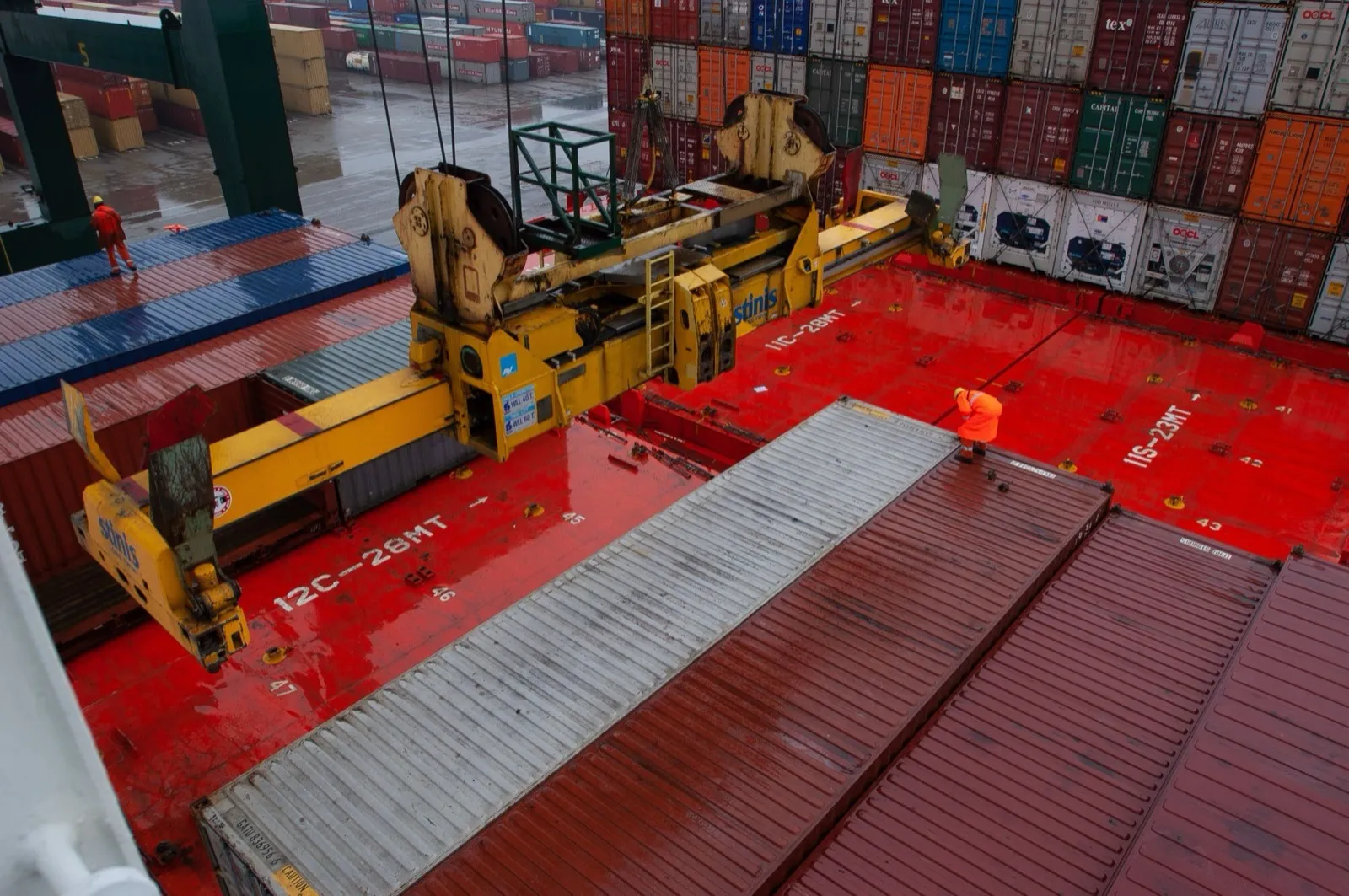
If Sohar is the established option, Duqm is the story of 2026. The port sits inside the Special Economic Zone at Duqm (SEZAD), and its fundamentals are hard to argue with: an 18-metre basin depth, a 19-metre entry channel, a drydock among the largest in the Middle East, and a quay that welcomed the CMA CGM Vasco de Gama (an 18,000-TEU vessel) on its maiden call in late July 2026, the largest container ship ever to berth there.
The connectivity figure explains why that call happened. According to Sea-Intelligence, Duqm’s liner connectivity index rose 213% against its pre-crisis baseline in Q3 2026, one of the sharpest jumps recorded anywhere in the world. Ports do not post numbers like that without carriers rearranging their networks around them.
Duqm’s ambitions go beyond containers. In September 2026, Bloomberg reported that Oman plans to more than double oil storage capacity at Duqm, with state energy firm OQ evaluating two supertankers for floating storage, a direct response to producers hunting storage and loading options outside Hormuz. Investment is also flowing into green hydrogen and green iron projects inside the zone, which will generate years of project-cargo demand.
Where Duqm still falls short
Honesty helps here. Duqm’s container business is young:
- Fewer direct China calls. Many shipments still arrive via transshipment at Salalah or on regional feeders, which can add days.
- Longer inland distance. Duqm is roughly 550 km from Muscat and well off the main UAE trucking corridors. Land-side costs can eat up the ocean savings unless your cargo’s destination is the Al Wusta region or you’re shipping project cargo that needs the heavy-lift berth anyway.
- Thinner LCL consolidation. If you ship small volumes, Sohar or Salalah offer more frequent consolidation options.
Sohar vs Duqm vs Salalah: which port for which cargo
| Factor | Sohar | Duqm | Salalah |
|---|---|---|---|
| Location | Gulf of Oman, 170 nm from Hormuz | Arabian Sea, outside all chokepoints | Southern Oman, Indian Ocean |
| Container capacity | ~2.46 million TEU/year | Growing, 18m depth, mega-ship ready | 6.5 million TEU after expansion |
| Best for | Industrial cargo, FCL, re-export via free zone | Project cargo, heavy lift, energy-sector shipments | Pure transshipment, East Africa trade |
| China connectivity | Frequent direct/near-direct sailings | Improving fast, still partly transshipped | Strong trunk-route connections |
| Inland access | 200 km to Muscat, road to UAE | Remote; 550 km to Muscat | Far from Gulf markets |
| Free zone | Sohar Port and Freezone | SEZAD (largest in Oman) | Salalah Free Zone |
For general commercial cargo bound for Oman or the northern GCC, Sohar is usually the pragmatic pick. For oversized, heavy, or energy-linked cargo, and for buyers watching the Hormuz risk premium most closely, Duqm earns its keep.
Rates and transit times from China
Ocean rates move weekly, but these ranges reflect the market for Q4 2026:
| Route | 20GP | 40GP | 40HQ | Transit Time |
|---|---|---|---|---|
| Shanghai → Sohar | 2,000 – 2,800 USD | 3,100 – 3,900 USD | 3,200 – 4,000 USD | 18 – 24 days |
| Shenzhen → Sohar | 1,900 – 2,600 USD | 2,900 – 3,700 USD | 3,000 – 3,800 USD | 16 – 22 days |
| Guangzhou → Sohar | 1,900 – 2,650 USD | 2,950 – 3,750 USD | 3,050 – 3,850 USD | 15 – 21 days |
| Ningbo → Sohar | 1,950 – 2,700 USD | 3,000 – 3,800 USD | 3,100 – 3,900 USD | 17 – 23 days |
| Shanghai → Duqm | 2,200 – 3,100 USD | 3,400 – 4,300 USD | 3,500 – 4,400 USD | 20 – 28 days |
Two notes on this table. First, Duqm rates run higher and less frequent because fewer services call there directly; part of the premium buys you a sailing that never approaches Hormuz. Second, whichever port you choose, remember that the headline rate is only the start. Our guide to shipping surcharges explains which add-ons to expect on China–GCC lanes, and war risk insurance remains a line item worth scrutinizing on any routing that touches Gulf waters.
For a fuller picture of Oman-bound pricing, see our Shipping Cost from China to Oman breakdown, and our container shipping guide for FCL and LCL specifics.
Customs and the free zone angle
Oman’s import basics are simple: most goods carry a 5% customs duty and 5% VAT. Used goods, alcohol, and tobacco are exceptions with higher rates. The real planning lever is the free zone:
- Goods staying inside the Sohar or Duqm zone skip import duty entirely.
- Re-export from the zone to third countries is untaxed.
- Inside SEZAD, foreign investors get 100% ownership with no minimum capital requirement, which is useful if you’re setting up a regional redistribution hub.
Documentation is standard: commercial invoice, packing list, certificate of origin, and bills of lading. Our DDP service handles all of this on your behalf, including air freight options when the schedule matters more than the freight bill.
The bottom line
Sohar and Duqm are not speculative alternatives anymore. Sohar gives you frequency, free zone flexibility, and some of the lowest dwell times in the Gulf. Duqm gives you deep water, mega-ship capability, total distance from Hormuz, and a government spending serious money to make it a regional hub. Salalah remains the transshipment king. Between them, Oman now offers something no other GCC state can match: three credible container gateways, none of which forces your cargo through a strait that makes headlines for the wrong reasons.
If you’re weighing Oman against your current routing, send us your cargo details and we’ll price both ports against your incoterm and deadline.
- WhatsApp: Get a quote now