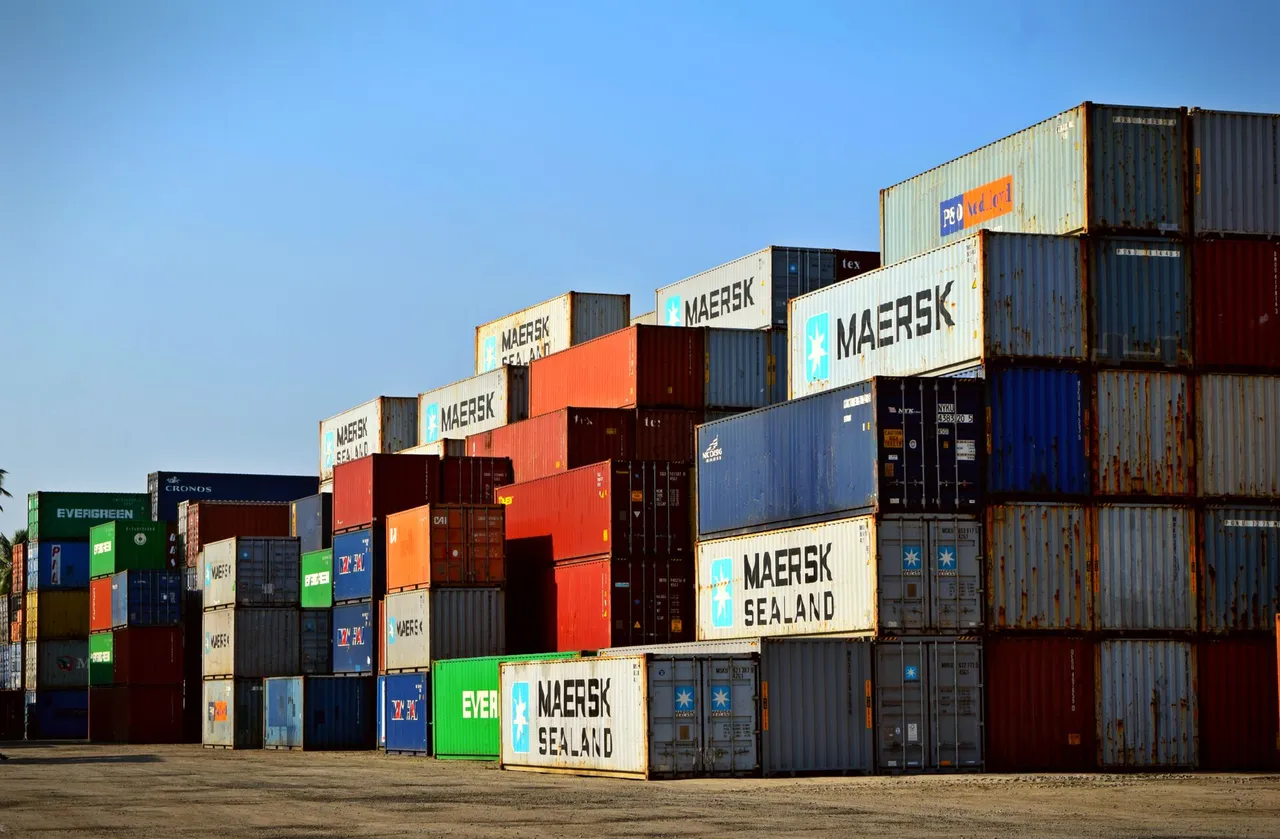
Every importer working the shipping routes from China to the GCC knows this scene: a delivery deadline is approaching, you call your logistics contact to book space, and find that the right sailing sold out three weeks before departure. In the current peak season this is no longer the exception. It is the default on most sailings bound for Jeddah, Khor Fakkan and Jebel Ali.
This guide explains why the 2026 peak season behaves differently from previous years, which surcharges you should build into your budget, and the booking plan we actually run with our customers in Saudi Arabia, the UAE, Kuwait, Qatar, Oman, Bahrain and Jordan.
Why this peak season is different
The usual drivers are all still there: White Friday in late November, year-end retail, and the e-commerce build-up. What changed is that congestion is now structural rather than seasonal.
Congestion at Chinese ports survived Golden Week. Linerlytica’s 8 September reading put global capacity absorbed by port congestion at over four million TEU, with average waiting times at Shanghai at 4.72 days and peaks of up to 12 days at some terminals. Analysts expected Golden Week to act as a pressure valve. The following days proved the opposite: Dimerco’s 1 October report describes a peak season that “refuses to end”, with AI hardware, semiconductor and year-end retail demand still filling vessels out of Asia.
The Strait of Hormuz has been closed to container shipping since 28 February 2026. The landbridge workarounds through Jeddah, Khor Fakkan, Fujairah and Salalah are established, but their capacity is limited and cannot stretch to cover everything. Our analysis of the Middle East freight rate surge showed that the real scarcity is a confirmed booking, not the price level alone.
Blank sailings are being managed more aggressively. Drewry counted 47 cancelled departures out of 729 scheduled in weeks 37 to 41, about 6%, including Maersk’s post-holiday cancellations out of Ningbo on 8 October and Shanghai on 10 October. Carriers are using cancellations to absorb vessel bunching, which means rollover risk stays live through mid-October and probably beyond.
The takeaway: do not plan Q4 around your memory of 2023 or 2024. Sea-Intelligence expects the capacity crunch to run into 2027, and the old rules do not work in this market.
The GCC demand calendar: when pressure actually peaks
Not all weeks of peak season are equal. This is the demand wave pattern we track on Gulf lanes:
| Period | Event | Effect on China-origin lanes |
|---|---|---|
| October | Production restart after Golden Week plus backlog at Shanghai and Ningbo | A late booking wave competes for the same slots, and rates do not soften the way they usually do |
| November | White Friday in Saudi Arabia and the UAE (the week of late November) plus e-commerce demand | The air freight peak and the highest PSS readings of the year |
| December | UAE National Day (2 December) plus year-end sales | Sustained pressure as January bookings start early |
| January 2027 | Dubai Shopping Festival plus early Ramadan stocking (Ramadan expected to begin in early February 2027) | A second demand wave, sometimes heavier than November for consumer goods |
| February 2027 | Ramadan plus Chinese New Year factory closures | Fewer sailings and most new bookings frozen |
The practical lesson: if your goods are aimed at White Friday promotions, the real booking deadline is early October at the latest. If you import consumer goods for Ramadan, your planning starts now, because January sailings are the last comfortable window before the February crunch. Get your product compliance in order at the same time; for Saudi-bound cargo that means a valid SABER certificate, because no booking window saves a shipment held at customs for missing certification.
The surcharge budget: what to expect on your Q4 invoice
In a normal market, base ocean freight makes up 70 to 80% of what you pay the carrier. On China–Gulf lanes this year that share has dropped sharply, because carriers recover their costs through itemized, published surcharges. The figures below come from actual 2026 carrier tariffs:
| Surcharge | Published level | Scope and date |
|---|---|---|
| Peak Season Surcharge (PSS) | USD 800 per container | Maersk from main Chinese ports to all GCC destinations, effective 1 January 2026 |
| Peak Season Surcharge (PSS) | USD 500 per 20ft, USD 1,000 per 40ft | Hapag-Lloyd from Far East Asia to the Gulf, effective 6 March 2026 |
| War Risk Surcharge (WRS) | USD 1,500 per dry container, USD 3,500 per reefer and special | Hapag-Lloyd on cargo to the Upper Gulf via Hormuz, effective 2 March 2026 |
| Emergency Conflict Surcharge | USD 2,000 per 20ft, USD 3,000 per 40ft | CMA CGM on Gulf trades |
| Regional Cost Recovery (RCR) | Varies by carrier | MSC announced it on Europe–Middle East bookings from 1 October 2026; expect similar fees to reach Asia–Gulf trades |
Stacked together, the realistic total runs between USD 1,000 and USD 3,000 per 40ft container on top of base freight, depending on carrier, routing and port of discharge. The rule we repeat to every customer: always ask for a line-item quote that separates the base rate from each surcharge, and never compare two quotes by their headline number alone. We broke down every one of these items in our guide to shipping surcharges on China–Middle East cargo.
One point worth pausing on: WRS stays on every routing through Hormuz for as long as the restrictions hold, and it does not disappear when peak season ends. Budget for it in 2027 too.
Current rate levels: the numbers to build your budget on
The figures below reflect September and early October 2026 market readings. Treat them as indicators that move weekly:
| Indicator | Level | Comparison |
|---|---|---|
| SCFI Persian Gulf route | USD 6,135 per TEU (4 September reading) | Roughly 3 to 4 times pre-crisis levels |
| China to Jeddah spot average | USD 10,870 per 40ft | Up 256% since end of February 2026 |
| China to Khor Fakkan spot average | USD 10,626 per 40ft | Up 479% since end of February 2026 |
| All-in to Jebel Ali (40ft high cube) | USD 8,000 – 9,000 | Above pandemic-era records |
| All-in to Jeddah and Dammam (40ft high cube) | USD 10,000 – 11,000 | Reflects the Red Sea gateway congestion premium |
Two numbers deserve a second look. First, the Jebel Ali–Jeddah spread of up to USD 2,000 per container makes routing choice a financial decision, not just an operational preference. Second, the partial return to Suez Canal transits improves the Asia–Europe legs that feed Jeddah, but it does nothing for a box still waiting at anchor off Shanghai.
The booking plan we run with our customers
After ten years on this lane, this is the sequence we actually execute every peak season:
Book three to four weeks ahead, minimum. The standard lead time in 2024 was two weeks, and today it regularly ends in a rollover. For October and November sailings, confirm the booking before production is even finished.
Re-confirm the schedule 72 hours before cargo cut-off. Cancellations are announced late, and a booking confirmed last month may already be rolled. The people who check the schedule at the last moment find out about problems before they become emergencies.
Split your risk across a carrier and two routings. Never depend on one string. The standard plan for Saudi-bound cargo pairs a Jeddah routing with a Jebel Ali transshipment option plus overland trucking. For UAE and northern Gulf cargo, we compare direct calls against Khor Fakkan and Fujairah outside the strait.
Trade your volume for protected space. If you ship more than five containers a month, negotiate a named-account agreement or a volume commitment with defined space protection, not just a discounted rate. In today’s market, a reasonably priced guaranteed slot is worth more than a deeply discounted floating rate.
Consolidate before you book. LCL shipments in a tight market pay disproportionately high rates and face the longest rollover queues. Consolidating into FCL, or through your forwarder’s warehouse program, routinely saves 15 to 25% on a per-CBM basis.
Keep an air bridge for genuine emergencies. When a production delay collides with a fixed delivery date, sea-air combinations are cheaper than full air freight and faster than waiting for the next available sailing. Compare the options yourself in our air vs sea freight guide for Saudi Arabia and the UAE.
Five mistakes we see repeat every season
- Comparing quotes on the base rate alone. Two quotes with the same headline number can differ by USD 1,500 per container in the surcharges underneath.
- Ignoring free time at the discharge port. Five extra days at a congested terminal can cost more than the entire PSS.
- Depending on a single routing. One cancelled sailing with no backup means two extra weeks and sometimes delay penalties from your own customer.
- Booking White Friday cargo in November. Confirmed space for late November gets reserved in October, not in November.
- No visibility from the China side. A carrier’s published schedule tells you nothing about berth and yard conditions. A forwarder with staff in Shenzhen can check what is actually happening at the origin terminal instead of relying on theoretical times.
The bottom line
The 2026 peak season on China–Gulf lanes is a tough market: congestion at the origin, a closed strait at the destination, and surcharges stacking in between. But importers who book early, itemize their costs and spread their risk are not suffering more than in any other year. The difference between a shipment that lands on time and one that circles the terminal is not luck. It is the booking plan.
If you have cargo that will be ready in China in the coming weeks, contact us this week: we review your routing options, compare all-in prices and confirm space before it sells out.
- WhatsApp: Get a quote now