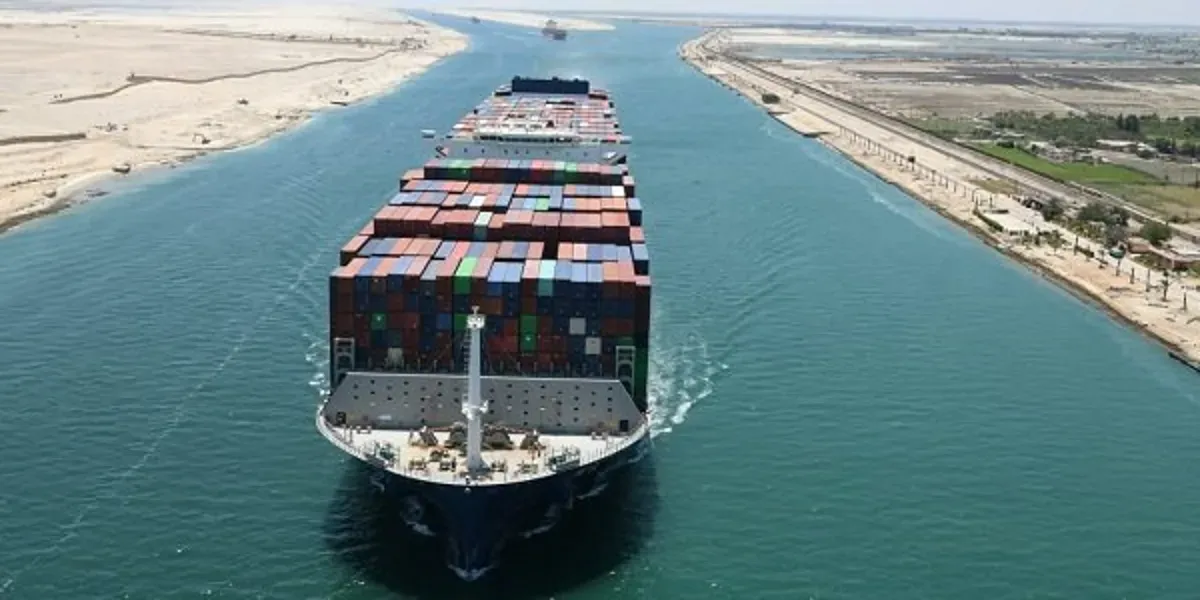
Shipping from China to Saudi Arabia and the wider GCC is about to get faster — at least on paper. On 14 September 2026, Maersk and Hapag-Lloyd announced that four more services in their shared Gemini Cooperation network would return to the Suez Canal, adding AE5, AE11, AE12 and ME2 to the AE15 and AE19 loops that had already resumed. On 21 September, the 19,000-TEU Marchen Maersk became the first vessel on the restored AE5 loop. MSC, CMA CGM and COSCO Shipping have made parallel moves. After nearly three years of Cape of Good Hope diversions, the world’s biggest container lines are going back through the Red Sea — even as the security situation around the Bab al-Mandeb Strait worsens.
For importers booking shipping from China to UAE or Saudi Arabia, this is the single most important routing development of 2026. This article explains who is returning, what the traffic data shows, and how to plan your shipments during a transition that could still reverse.
Who is returning to the Suez Canal, and when?
The September announcements build on a gradual restart that began over the summer. The table below summarises the confirmed carrier moves as of 21 September 2026.
| Carrier / alliance | Service(s) returning to Suez | First sailings / notes |
|---|---|---|
| Maersk & Hapag-Lloyd (Gemini Cooperation) | AE15/SE3, AE19/SE4 (from August); AE5, AE11, AE12, ME2 (announced 14 September) | AE5 resumed 21 September with Marchen Maersk; Maersk CEO Vincent Clerc says conditions for a 2026 resumption are met |
| MSC | Jade, Albatros, Himalaya, Tiger (from 24 August); Indusa westbound (14 September) | Service-by-service transition; contingency plans allow voyages to be re-routed |
| CMA CGM | Selected Asia–Europe and Asia–Mediterranean loops | Joins OCEAN Alliance partners in resuming Red Sea transits from mid-September |
| COSCO & OOCL | Five Asia–Europe/Mediterranean routes from 15 September | OOCL Portugal (24,188 TEU) transited Suez southbound on 16 September — COSCO’s first since the crisis began |
Both Maersk and Hapag-Lloyd stress that the restored routings remain conditional. Their advisories state that future operations depend on stability in the Red Sea and the absence of further escalation — language that leaves the door open to a rapid return to the Cape if conditions deteriorate.
The numbers behind the comeback
The carrier announcements are backed by a genuine traffic recovery at the Egyptian waterway:
- Suez Canal Authority data: container ship net tonnage through the canal reached approximately 72.1 million tons in the first eight months of 2026, up 54.2 per cent from 46.7 million tons in the same period of 2025.
- August was the busiest month since December 2023: 1,232 transits (102.4 million dwt), up 28 per cent year on year. Even so, traffic remains about 39 per cent below pre-crisis levels.
- Cape diversions at a two-year low: Linerlytica data shows the share of global vessel capacity rerouted around the Cape of Good Hope fell to just 4.6 per cent.
- Asia–Europe capacity is following: Sea-Intelligence estimates more than one-quarter of Asia–Europe container capacity will transit the Red Sea in September, with roughly 35 per cent of westbound Asia–Mediterranean capacity using Suez.
- Bab al-Mandeb still far from normal: average weekly container capacity through the strait was about 213,000 TEUs in August, compared with more than 930,000 TEUs in August 2023.
In other words, the recovery is real but incomplete — and it is concentrated on the northern part of the Red Sea route. For a detailed background on how the crisis unfolded, see our Red Sea shipping crisis analysis.
Why carriers are going back despite the risks
The economic logic is simple. Sailing through Suez instead of around Africa saves approximately 10 to 14 days on Asia–Europe voyages, cuts fuel consumption by roughly 30 per cent, and frees up vessels that would otherwise be tied up on longer rotations. With congestion building at Asian and European ports and bunker fuel prices running around 60 per cent above pre-war levels, every saved nautical mile matters. Shorter rotations also let carriers recover schedule reliability and put capacity back into the market without ordering new ships.
Sea-Intelligence has modelled a striking consequence: if carriers fully return to Suez by the end of 2026, global headhaul TEU-mile demand could fall by 8.7 per cent in the first half of 2027 — a structural overcapacity signal that would put significant downward pressure on ocean freight rates. That is good news for shipping from China to Saudi Arabia budgets in 2027, even if spot rates remain elevated right now.
The catch: the security picture is getting worse, not better
The resumption is happening at the same moment the Houthis consolidated control of Yemen’s entire Red Sea coastline, including Mokha and the islands around Bab al-Mandeb — the narrow southern gateway every Suez-bound ship must pass. As we covered in our analysis of the Houthi capture of Mokha and Perim, the group has declared Saudi-linked vessels as targets while telling US officials it will honour its ceasefire with Washington.
Three risk factors importers should keep in mind:
- War-risk insurance remains elevated: Lloyd’s Market Association clauses and carrier war-risk surcharges are still priced dramatically above pre-crisis levels, and the transit-fee and insurance controversies from earlier this year have not been fully resolved.
- Official advisories are still active: the US Maritime Administration’s Red Sea and Bab al-Mandeb advisory runs through 22 September 2026, and UKMTO continues to log incidents, including a warning entry west of Yanbu on 10 September.
- The route is reversible: carriers have explicitly reserved the right to revert to the Cape of Good Hope voyage by voyage. The Strait of Hormuz situation adds a second layer of uncertainty for Gulf-bound cargo.
What does this mean for your China–GCC shipments?
Transit times should improve — gradually
As more Asia–Europe loops normalise through Suez, schedule reliability on connecting services into Jeddah, Dammam and Jebel Ali should improve. However, the transition phase itself is a source of volatility: carriers are compressing rotations and, according to industry reporting, even considering riskier back-hauls to recover delays. Expect some bunching of arrivals and occasional rollovers over the next few weeks rather than immediate stability.
Rates: high now, softer later
Spot rates remain firm. As of 10 September, benchmark pricing showed Far East to North Europe around 4,300 USD per FEU and Far East to the Mediterranean near 4,800 USD per FEU, with China to Jeddah and China to Khor Fakkan quoted above 10,600 USD per FEU on some lanes. But as Suez capacity returns and the TEU-mile overcapacity scenario materialises, analysts expect downward pressure — particularly on Asia–Mediterranean and Gulf corridors.
Your booking strategy for Q4 2026
- Confirm the actual routing of your booking: with carriers restoring services voyage by voyage, two bookings on the “same” service can sail different routes. Ask your forwarder for the vessel name and voyage number, and verify the published rotation.
- Lock all-inclusive pricing now: DDP door-to-door quotes that bundle freight, customs clearance and insurance protect you from war-risk surcharge surprises.
- Plan around China’s Golden Week: with October factory shutdowns approaching, demand is peaking just as networks are in flux. Our Golden Week shipping guide explains how to schedule around it.
- Keep a contingency lane open: maintaining the option to route via air freight or through the UAE’s ports for urgent cargo is still worth the premium while the Red Sea transition proves itself.
- Review your cargo insurance: ensure your policy explicitly covers war and disturbance risks on Suez and Bab al-Mandeb transits under current terms.
The outlook
The direction of travel is clear: the container shipping industry is re-committing to the Suez Canal, and the traffic data supports it. But this is a managed, conditional comeback — not a declaration that the Red Sea is safe. Maersk’s own market updates still call the situation “unpredictable,” and the Houthis’ control of the Bab al-Mandeb coastline gives them leverage that did not exist during the ceasefire period.
For GCC importers, the winning strategy in the coming months is the same one that worked during the crisis: flexibility, locked-in pricing, and a forwarder who monitors routings daily.
Get a routing-stable shipping plan today
The GCC Freight team in Shenzhen tracks carrier advisories and Red Sea security developments every day, and we confirm the actual sailing route for every booking we manage. Whether your cargo is bound for Jeddah, Dammam or Jebel Ali, we offer fixed all-inclusive pricing with full customs clearance.
- WhatsApp: Get a quote now