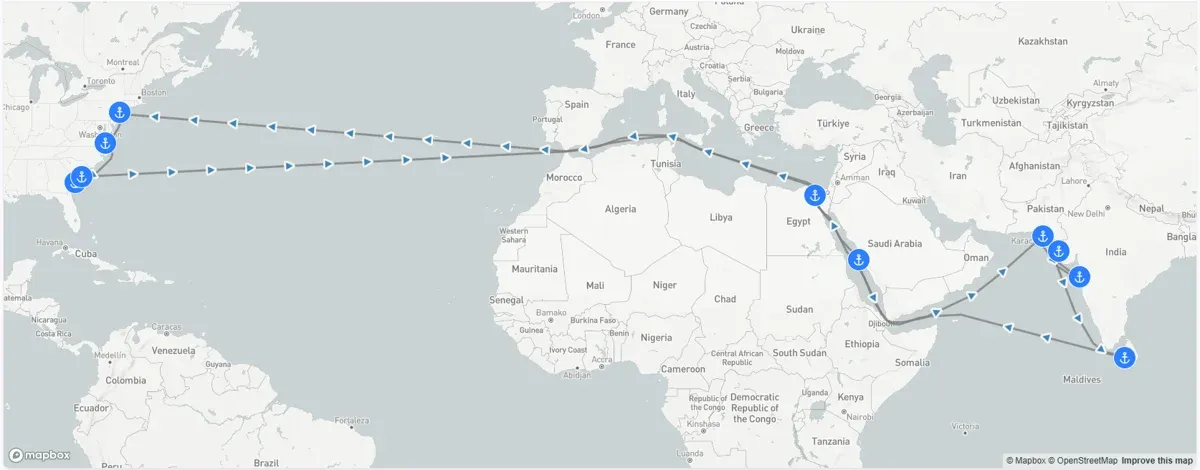
If you import goods from China to Saudi Arabia, UAE, or any other Gulf country, you have certainly heard about the Red Sea shipping crisis. Since late 2023, attacks on commercial vessels in the Bab el-Mandeb Strait have caused major disruptions to international shipping.
But the important question for you as an importer is: Does this crisis actually affect your shipments coming from China to your country? The short answer: The impact exists but is much less severe than what European importers are facing. In this practical guide, we explain in detail what you need to know as an importer in the Gulf, and how to ensure your goods arrive on time despite this crisis.
Current State of the Red Sea Crisis in Mid-2026
Ongoing Maritime Threats
Despite continued international efforts to protect maritime navigation in the region, Houthi attacks on commercial vessels still pose a real threat to shipping in the Red Sea and Bab el-Mandeb Strait. This situation has led to:
- Route Diversions: The majority of vessels traveling from Asia to Europe continue to be rerouted around the Cape of Good Hope instead of through the Suez Canal, adding approximately 10-14 additional days to voyage times.
- Rising Insurance Costs: Significant increases in marine insurance premiums for vessels passing through the Red Sea, adding additional costs per container.
- Reduced Suez Canal Traffic: A decline in traffic through the canal exceeding 60% compared to pre-crisis levels.
The Situation in June 2026
In June 2026, reports indicate that:
- Continued Attacks: Sporadic attacks still occur, though they are increasingly focused on vessels associated with specific parties in the conflict.
- Shipping Company Adaptation: Major shipping companies have adapted to the new situation, with most now operating routinely on alternative routes.
- Relative Price Stability: After the sharp price increases in early 2024, shipping prices have seen relative stability, though they remain approximately 30-50% higher than pre-crisis levels.
Does the Crisis Actually Affect Your Shipments to Saudi Arabia or UAE?
The Good News: The Impact Is Much Less Than You Think
If you import goods to Saudi Arabia, UAE, Qatar, Oman, Kuwait, or Bahrain, you are in a much better position than European importers. The reason is simple: geography works in your favor.
Why? Vessels coming from China to your country do not need to pass through the troubled Red Sea area. Instead, they take a completely different route:
- The Safe Route: Ships travel from the Indian Ocean directly to the Arabian Gulf through the Strait of Hormuz, an area far from the Red Sea events.
- No Need to Circumnavigate Africa: Unlike shipments heading to Europe that are forced to circumnavigate the Cape of Good Hope (adding 10-14 days), your shipments follow the natural direct route.
But… There Are Some Indirect Effects
Although the shipping route itself is safe, the crisis affects you indirectly:
1. Global Vessel Shortage
With hundreds of ships diverted to the long route around Africa, vessels have become less available in the global market. This means:
- Greater competition for booking space on ships.
- Possibility of slight delays in sailing schedules.
2. Rising Insurance Costs
Marine insurance premiums have risen globally due to the crisis, and this effect reaches you even if your shipments are on a safe route.
3. Transshipment Port Congestion
Some shipments that pass through Singapore or Malaysian ports for transshipment may face slight delays due to global port congestion.
Simple Comparison: Your Shipments vs European Shipments
| Aspect | China→GCC | China→Europe |
|---|---|---|
| Route Change | Not required in most cases | Required (around Africa) |
| Transit Time Increase | Slight (1-3 days) | Major (10-14 days) |
| Cost Increase | Moderate (10-20%) | Major (30-60%) |
| Reliability Impact | Limited | Major |
Current Transit Time Changes
Transit Times from China to GCC Countries (June 2026)
| Route | Pre-Crisis Transit Time | Current Transit Time | Change |
|---|---|---|---|
| Shanghai → Jeddah | 18-22 days | 20-25 days | +2-3 days |
| Shanghai → Jebel Ali | 14-18 days | 15-20 days | +1-2 days |
| Shanghai → Doha | 20-24 days | 22-26 days | +2 days |
| Shanghai → Sohar | 16-20 days | 17-21 days | +1 day |
| Shenzhen → Jeddah | 16-20 days | 18-22 days | +2 days |
| Ningbo → Jebel Ali | 15-19 days | 16-20 days | +1 day |
Note: The times mentioned are maritime transit times only and do not include customs clearance times.
Reasons for the Slight Increase in Transit Times
- Transshipment Port Congestion: Some routes that pass through Singapore or Malaysian ports for transshipment have experienced slight delays.
- Shipping Company Schedule Changes: Adjustments in sailing schedules to accommodate changes in other routes.
- Additional Security Measures: Some shipping companies are following additional security measures in the region.
Freight Rate Trend Analysis
Current Pricing Situation (June 2026)
After the sharp rise in shipping prices during early 2024, prices have seen relative stability in the first half of 2026. However, prices remain higher than pre-crisis levels:
40-Foot Container (FCL) Prices from China to the Gulf
| Route | Pre-Crisis Price (2023) | Current Price (June 2026) | Change Percentage |
|---|---|---|---|
| Shanghai → Jeddah | $1,800-2,200 | $2,200-2,800 | +20-25% |
| Shanghai → Jebel Ali | $1,500-1,900 | $1,800-2,400 | +15-20% |
| Shenzhen → Doha | $2,000-2,500 | $2,400-3,000 | +15-20% |
Air Freight Rates
Air freight has seen a relatively larger increase, as some urgent shipments have shifted from sea to air due to delays on European routes, leading to:
- A 15-20% increase in air freight demand to the Gulf.
- Air freight prices rising by approximately 25-35% compared to 2023 levels.
Price Forecasts for the Second Half of 2026
Analyses indicate:
- Continued Relative Stability: Unless the crisis escalates significantly, relative price stability is expected to continue.
- Peak Season: Prices may see a slight increase during the pre-Ramadan shipping season (mid-2026) and before the back-to-school season.
- Air Freight Pressure: Pressure on air freight may continue if the crisis persists.
Practical Risk Mitigation Strategies
Based on GCC Freight’s experience in dealing with logistics crises, we offer the following strategies for GCC importers:
1. Early Planning and Advance Booking
Booking 4-6 Weeks Ahead: In the current relative stability, advance booking remains important to ensure:
- Availability of space on vessels.
- Better pricing.
- Avoiding delays during peak seasons.
GCC Freight Tip: We advise our clients to plan shipments 6-8 weeks before the required date, especially during peak seasons.
2. Diversifying Ports and Routes
Leveraging Gulf Port Diversity: GCC countries feature diverse ports, providing significant flexibility:
| Country | Major Ports | Advantages |
|---|---|---|
| UAE | Jebel Ali (Dubai), Khalifa Port (Abu Dhabi), Port Rashid | Major transshipment hub, advanced infrastructure |
| Saudi Arabia | Jeddah, King Abdullah (Rabigh), Dammam | Covering western and eastern kingdom |
| Oman | Sohar, Salalah | Strategic alternative, competitive customs fees |
| Qatar | Hamad | Modern port, large capacity |
Alternative Port Strategy: If one port is affected, alternative ports can be used with land transport to the final destination. For example:
- Using Sohar Port in Oman as an alternative to Jeddah Port for goods heading to southern Saudi Arabia.
- Using Jebel Ali Port as a transshipment center for goods heading to other Gulf countries.
3. Combining Sea and Air Freight
Sea-Air Model: For urgent and cost-sensitive shipments, the sea-air model can be used:
- Sea freight to Jebel Ali or Sohar ports.
- Air freight from the UAE or Oman to the final destination.
This model provides a balance between cost and speed, reducing transit time by approximately 40-50% compared to sea freight alone, with costs approximately 30-40% lower than direct air freight.
4. Comprehensive Insurance and Protection
Cargo Insurance: In times of crisis, comprehensive insurance becomes more important:
- All Risks insurance.
- Coverage for delays and damages.
- Insurance based on the actual value of goods (Value-based).
GCC Freight Tip: We offer our clients comprehensive insurance solutions in cooperation with reputable international insurance companies.
5. Continuous Monitoring and Rapid Adaptation
Real-Time Tracking: Using advanced Track & Trace systems to monitor:
- Real-time shipment location.
- Potential delays.
- Early warning alerts for issues.
Rapid Adaptation: If any unexpected changes occur, it is necessary to:
- Communicate directly with the freight forwarder.
- Evaluate available alternatives.
- Make quick decisions based on updated information.
6. Strategic Inventory Management
Increasing Safety Stock: In periods of uncertainty, it is advisable to increase safety stock by 15-25% to avoid:
- Supply chain disruptions.
- Lost sales due to stockouts.
- Being forced to use expensive air freight for urgent shipments.
GCC Freight’s Integrated Solutions for the Red Sea Crisis
At GCC Freight, we understand the challenges facing importers in the Gulf countries, and we have developed comprehensive solutions to deal with the Red Sea crisis:
1. Diverse and Flexible Port Network
- Strategic Partnerships: Strong relationships with all major Gulf ports (Jebel Ali, Jeddah, Sohar, Hamad, Dammam).
- Routing Flexibility: Ability to change the port of arrival based on the current situation.
- Transshipment Services: Comprehensive transshipment services via the UAE and Oman to all Gulf countries.
2. Multi-Modal Shipping Solutions
- Sea-Air: Sea-air shipping services from China to the Gulf via Jebel Ali or Sohar.
- Sea-Land: Sea-land shipping services for goods heading to countries far from ports.
- Air Freight: Direct air freight services for urgent shipments.
3. Real-Time Shipment Tracking
- Track & Trace System: Advanced tracking system providing real-time updates.
- Automatic Alerts: Instant notifications if any changes occur.
- Customer Dashboard: Easy-to-use electronic interface for monitoring all shipments.
4. Crisis Management Team
- 24/7 Monitoring: Specialized team tracking developments in real-time.
- Risk Assessment: Continuous risk assessment and proactive recommendations.
- Direct Communication: Direct communication channels (WhatsApp, email, phone) for rapid response.
5. Customized Consultations
- Client Needs Assessment: Customized analysis of each client’s needs.
- Tailored Recommendations: Specially designed solutions based on cargo type, budget, and timeline.
- Periodic Reports: Periodic performance reports and recommendations for continuous improvement.
Conclusion and Recommendations
The Red Sea crisis in 2026 demonstrates the importance of flexibility and strategic planning in supply chain management. Although shipping routes from China to GCC countries are less affected compared to routes to Europe, the indirect impacts cannot be ignored.
Key Recommendations for GCC Importers:
- Early Planning: Book 6-8 weeks before the required date.
- Port Diversification: Leverage the diversity of Gulf ports as an alternative strategy.
- Multi-Modal Shipping: Use the Sea-Air model for urgent shipments.
- Comprehensive Insurance: Do not cut corners on insurance during uncertain times.
- Partnership with a Reliable Agent: Work with an experienced freight forwarder with an extensive network.
At GCC Freight, we understand that every day of delay means financial loss for you as an importer. That’s why we offer:
- Real-Time Tracking: Know where your cargo is at every moment.
- Transparent Pricing: No hidden fees or surprises.
- Immediate Alternative Solutions: If any problem occurs, we provide alternatives within hours.
- Arabic Support: Our team speaks Arabic and understands your needs.
For a free quote or consultation:
- WhatsApp: [WhatsApp Link]
- Email: [email protected]
- Phone: [Phone Number]
Publication Date: June 18, 2026 Last Updated: June 18, 2026 Sources: International shipping industry reports, Gulf port data, GCC Freight internal analyses