If you import on shipping routes from China to the GCC, the first two weeks of September 2026 are the most important booking window of the year. China’s Golden Week holiday (1–7 October) is now only weeks away, and this year it is colliding with record global port congestion, repeated typhoon disruption at Chinese export gateways, and deepening congestion at Gulf alternative hubs. The result: freight rates on key lanes are moving sharply, vessel space is tightening earlier than usual, and shippers who wait until late September risk missing their pre-holiday sailing entirely.
This article breaks down what is happening in the September 2026 freight market, what it means specifically for cargo moving from China to Saudi Arabia, the UAE and the wider Gulf, and the exact deadlines you should work against to protect October delivery commitments.
Why September 2026 Is Different
Golden Week happens every year, and experienced importers plan around it. What makes 2026 unusual is that three separate pressures are peaking at the same time:
- The pre-Golden Week export rush — factories and suppliers are pushing cargo to port ahead of the 1–7 October shutdown, compressing weeks of demand into days.
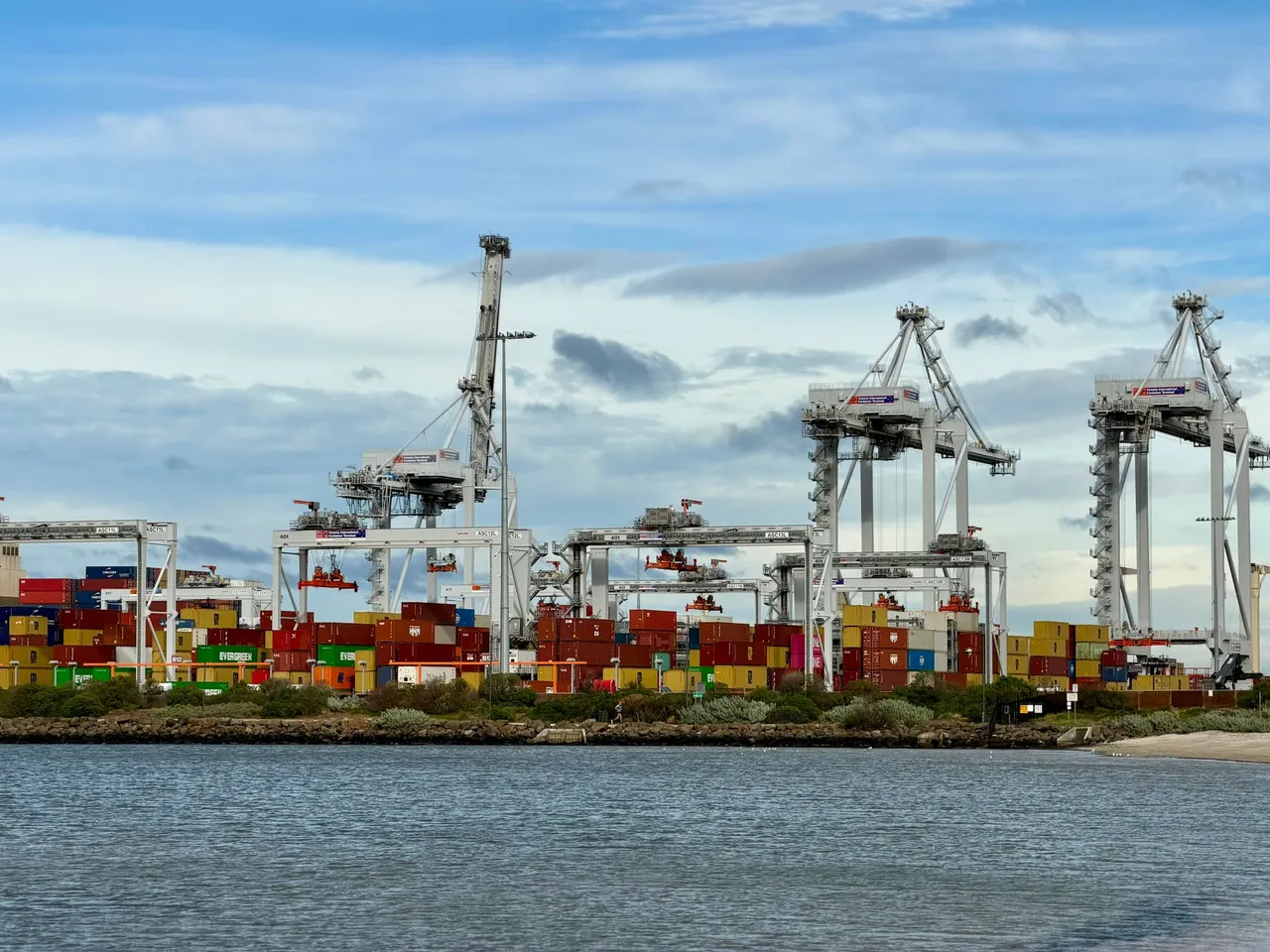
- Record port congestion and weather disruption in China — typhoon activity around Shanghai and Ningbo has produced berthing delays of up to 10 days, and congestion is cascading through feeder services and trucking corridors.
- Gulf hub congestion — alternative regional gateways including Khor Fakkan, Fujairah and Sohar are reporting berthing delays of 7 to 14 days as carriers reroute around ongoing Red Sea and Hormuz security risks.
Any one of these would be manageable. Together, they are removing a significant share of effective capacity from the China–Gulf trade just as demand peaks.
Pressure 1: The Golden Week Rush Has Already Started
China’s Golden Week 2026 runs from 1 to 7 October, with the Mid-Autumn Festival cutoffs falling just before the holiday. Factories typically close or run at reduced capacity for the full week, and many take additional days on either side.
The freight impact follows a predictable three-stage pattern:
- Pre-holiday rush (now until late September): Factories race to complete orders, suppliers fight for export slots, and importers compete for vessel space. This is when rates spike, equipment gets tight, and bookings roll.
- Holiday slowdown (1–7 October): Terminals, trucking providers and customs offices operate with reduced staffing. If a problem occurs — a documentation error, a missed inspection — it may not be resolved for days.
- Post-holiday backlog (mid-to-late October): Held cargo, deferred bookings and fresh orders re-enter the system simultaneously, causing vessel bunching, rolled containers and schedule compression that can stretch into November.
In 2026 this pattern is more severe than usual because it follows months of weather disruption at Chinese ports. Importers who wait until the third week of September to confirm cargo readiness will find the best sailings already full.
Pressure 2: Record Congestion at Chinese Export Gateways
Industry data published in early September shows global port congestion at record levels:
| Indicator | Early-September 2026 Level | Source |
|---|---|---|
| Vessel capacity waiting to berth globally | More than 4.3 million TEU | Linerlytica |
| Share of the global fleet affected | About 12.6% of a 34.4M TEU fleet | Port Technology International |
| Effective capacity removed from the market | Roughly 1.7 million TEU | Industry estimates |
| Berthing delays at Shanghai / Ningbo | Up to 10 days | Linerlytica |
| Cancelled sailings across major trades (weeks 36–40) | 45 blank sailings | Drewry |
For context: 4.3 million TEU of capacity sitting at anchor exceeds the absolute congestion volumes seen during the pandemic disruption — although as a share of today’s much larger global fleet, the percentage is lower than the 2022 peak.
The practical meaning for importers is simple: a booking confirmation no longer guarantees that your container loads on the scheduled vessel. Rolled cargo, port omissions and last-minute schedule changes are all elevated. Effective capacity — ships that are actually in the right place, on schedule, and able to take your cargo — is roughly 1.7 million TEU lower than the headline fleet number suggests.
Typhoon activity this season, including Super Typhoon Dolphin and Typhoon Saudel, has compounded the problem at Shanghai, Ningbo-Zhoushan, Xiamen and the South China gateway ports that feed sea freight services to the Gulf.
Pressure 3: Gulf Hubs Are Congested Too
The disruption does not end when the vessel leaves China. Regional reporting in early September points to congestion and delays at the Gulf’s alternative routing hubs — Khor Fakkan, Fujairah and Sohar — with some locations experiencing berthing delays of 7 to 14 days (FIDI Focus).
Carriers have responded with operational changes. Maersk, for example, has continued publishing Middle East operational updates covering booking restrictions and acceptance rules at several regional ports, and has adjusted Emergency Contingency Surcharges for cargo linked to Sohar, Fujairah and Khor Fakkan on certain trades.
For GCC importers this creates a double squeeze: even cargo that secures a pre-holiday departure from China can face additional waiting time at transhipment or entry points in the Gulf. Delivery planning for October and early November should assume buffer days at both ends of the journey.
Rates Are Moving in Different Directions — Watch the Lane, Not the Headline
Early-September rate data shows a sharply divided market:
| Trade Lane | Early-Sept Level (per 40ft) | Weekly Trend |
|---|---|---|
| Shanghai → Los Angeles | USD 7,185 | +5% |
| Shanghai → New York | USD 9,587 | +3% |
| Shanghai → Rotterdam | USD 4,092 | -5% |
| Shanghai → Genoa | USD 4,368 | -10% |
Transpacific rates are climbing as retailers push holiday inventory, while Europe-bound rates are easing on softer demand. The lesson for Gulf importers: global freight headlines do not describe your lane. China–Middle East pricing is driven by its own supply-demand balance — Gulf-bound space, equipment availability at Chinese ports, and the congestion surcharges carriers are applying on regional routings.
This is also why the cheapest quote is rarely the best option in a market like September 2026. Departure reliability and actual space protection matter more than a lower rate on a sailing that may blank or roll.
What This Means for Your GCC Shipments
If you are moving containers or air cargo from China to Saudi Arabia, the UAE, Kuwait, Qatar, Oman, Bahrain or Jordan over the next 60 days, expect:
- Tighter space on sailings departing China after mid-September, especially for 40ft high-cube equipment.
- Rate volatility: carriers are introducing or adjusting peak season, congestion and emergency contingency surcharges with short notice.
- Longer and less reliable transit: combine 10-day berthing delays at Shanghai or Ningbo with 7–14 day delays at Gulf hubs, and a nominally 18–25 day door-to-door lane can stretch well beyond 30 days.
- Documentation risk: with reduced staffing during Golden Week, errors on certificates of origin, SABER/ECAS certification or HS codes will take longer to correct. Our guides on SABER certificate changes in Saudi Arabia and UAE ECAS certification are worth reviewing before your cargo moves.
- Air freight spillover: shippers who miss ocean cutoffs often move urgent cargo by air, pushing up air freight rates and reducing capacity on China–Gulf lanes in late September and early October.
Booking Checklist: Deadlines for October and November Arrivals
Use this working timeline to protect your deliveries:
- By 10 September: Confirm supplier production completion dates and cargo readiness for all October shipments. Share your shipping plan with your forwarder.
- By 15 September: Lock bookings for sailings departing China in the last week of September. This is your realistic cutoff for cargo that must be on the water before Golden Week.
- By 20 September: Finalize all export documentation — commercial invoice, packing list, certificates of origin, and any product certifications (SABER for Saudi Arabia, ECAS for the UAE).
- 1–7 October: Assume minimal responsiveness from factories, terminals and some customs offices in China. Avoid scheduling critical shipments to depart during the holiday itself.
- Mid-October onward: Plan for the post-holiday backlog. Book November arrivals now rather than after Golden Week, when bunching pushes rates and rolling risk back up.
How GCC Freight Protects Your Cargo During Peak Season
As a Shenzhen-based forwarder focused exclusively on the Gulf market, we manage Golden Week pressure for our clients every year — and 2026’s overlapping disruptions make that support more valuable than usual:
- Advance space allocation: we hold contracted space on core China–Gulf sailings, so client cargo is protected even when the open market sells out.
- Multi-port flexibility: we can route cargo via Shanghai, Ningbo, Shenzhen or alternative gateways depending on where congestion is lightest each week.
- Gulf-side control: with our own Dubai warehouse and long-standing clearance teams at Jebel Ali, Jeddah, Dammam and beyond, we absorb arrival-side delays without losing visibility of your cargo.
- DDP planning: under our DDP shipping to the Middle East service, we handle booking, documentation, clearance and delivery as one chain — so a bottleneck at one stage is managed before it compounds at the next.
If you have October or November delivery commitments in the Gulf, the time to act is now, not after the holiday rush peaks.
- WhatsApp: Get a quote now