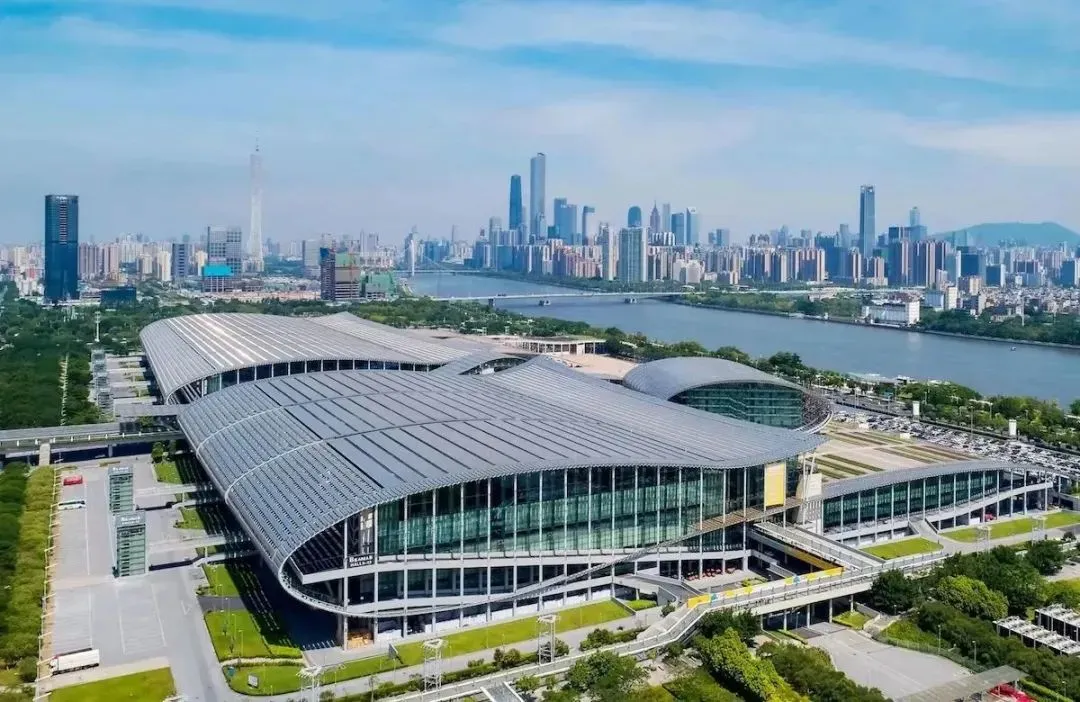
The 140th China Import and Export Fair opened today, 15 October 2026, at the Pazhou complex in Guangzhou, and runs in three phases until 4 November. If you are one of the thousands of buyers who have flown in from Riyadh, Dubai, Doha, Kuwait City, Manama, Muscat or Amman, the sourcing part of your trip is the easy part. The hard part starts when you leave the last booth, because the goods you just negotiated have to reach a Gulf port that has been effectively closed to container shipping since 28 February 2026.
This guide is about that second half of the trip: how to move a Canton Fair sourcing haul out of China and into Saudi Arabia, the UAE, Kuwait, Qatar, Oman, Bahrain or Jordan while the shipping routes from China to the GCC are still disrupted. If you have already booked your return flight and postponed the freight question, read this before you leave Guangzhou.
What is happening at the 140th Canton Fair
This is the 140th session since the fair began in 1957, and it opened with a keynote from Premier Li Qiang — a clear signal of how much weight Beijing is putting on export orders this autumn. The practical details that matter to a buyer:
| Phase | Dates | What is on the floor |
|---|---|---|
| Phase 1 | 15–19 October | Consumer electronics, appliances, machinery, lighting, hardware and tools, vehicles and parts, new energy |
| Changeover | 20–22 October | Halls closed |
| Phase 2 | 23–27 October | Building materials, furniture, kitchenware, ceramics, glassware, gifts, home decor |
| Changeover | 28–30 October | Halls closed |
| Phase 3 | 31 October – 4 November | Textiles, garments, footwear, bags, toys, stationery, medical and health products, food |
Doors open 09:30 to 18:00 daily at the China Import and Export Fair Complex in Pazhou, Haizhu District. Metro Line 8 runs straight to the complex. Entry is free for overseas trade buyers who pre-register online, and a single buyer badge covers all three phases of the session.
Two things make this session easier for Middle East buyers than it was a year ago. First, the visa position: passport holders from Saudi Arabia, Oman, Bahrain and Kuwait are covered by China’s visa-free trial through 31 December 2026, while the UAE and Qatar hold permanent visa-free entry. Second, the fair has built a service package aimed squarely at this region — online sourcing sessions, livestreamed hall tours fronted by regional hosts, and expanded support for Middle East companies operating inside China. The previous session in spring 2026 drew 314,000 overseas buyers from 220 countries, and the organiser has been explicit that it wants Middle East attendance to keep growing despite the regional conflict.
The shipment you are about to create is not a normal shipment
A buyer who orders from one supplier once a quarter has a simple logistics problem. A buyer who spends three weeks in Guangzhou has a different one entirely.
Think about what a typical Gulf buyer actually leaves the fair with. Perhaps three electronics suppliers in Shenzhen and Dongguan from Phase 1. A furniture and sanitaryware supplier in Foshan from Phase 2. A textiles or footwear supplier from Phase 3. That is five or six suppliers, three or four cities, three product categories, and very often three different readiness dates spread across six weeks. If each supplier ships independently, you pay five or six separate LCL consignments, five or six sets of documentation, and you take five or six separate chances of getting stuck at the discharge port.
The single most valuable decision you can make this month is to put that entire haul under one forwarder and one origin warehouse. We come back to the mechanics below, but decide it early, because the answer changes what you negotiate with each supplier.
What is actually closed: Hormuz, not the Red Sea
This distinction matters, because most of the shipping news you are reading is about the wrong waterway.
The Strait of Hormuz has been effectively closed to commercial container shipping since 28 February 2026. Today is day 228 of that closure. Iran’s military says the strait is closed and that any transit requires coordination with Iranian forces; Washington disputes that account. Whatever the political reading, the commercial result is unambiguous: a handful of transits where there used to be roughly 85 vessels a day, and carriers that treat the strait as a detour at best. ONE suspended bookings to and from the Persian Gulf on 2 March and was not alone in doing so.
The Bab el-Mandeb side has improved. Yemeni government forces cleared the strait and Mayyun Island in Operation Dawn of Yemen in the second week of October, and the Houthis’ position on the Yemeni Red Sea coast is no longer advancing. Lloyd’s List Intelligence counted 314 containership crossings through Bab el-Mandeb in September, the highest monthly figure since the attacks began and up 14.6% on August. Suez Canal transits in week 39 ran 68% above the same week last year.
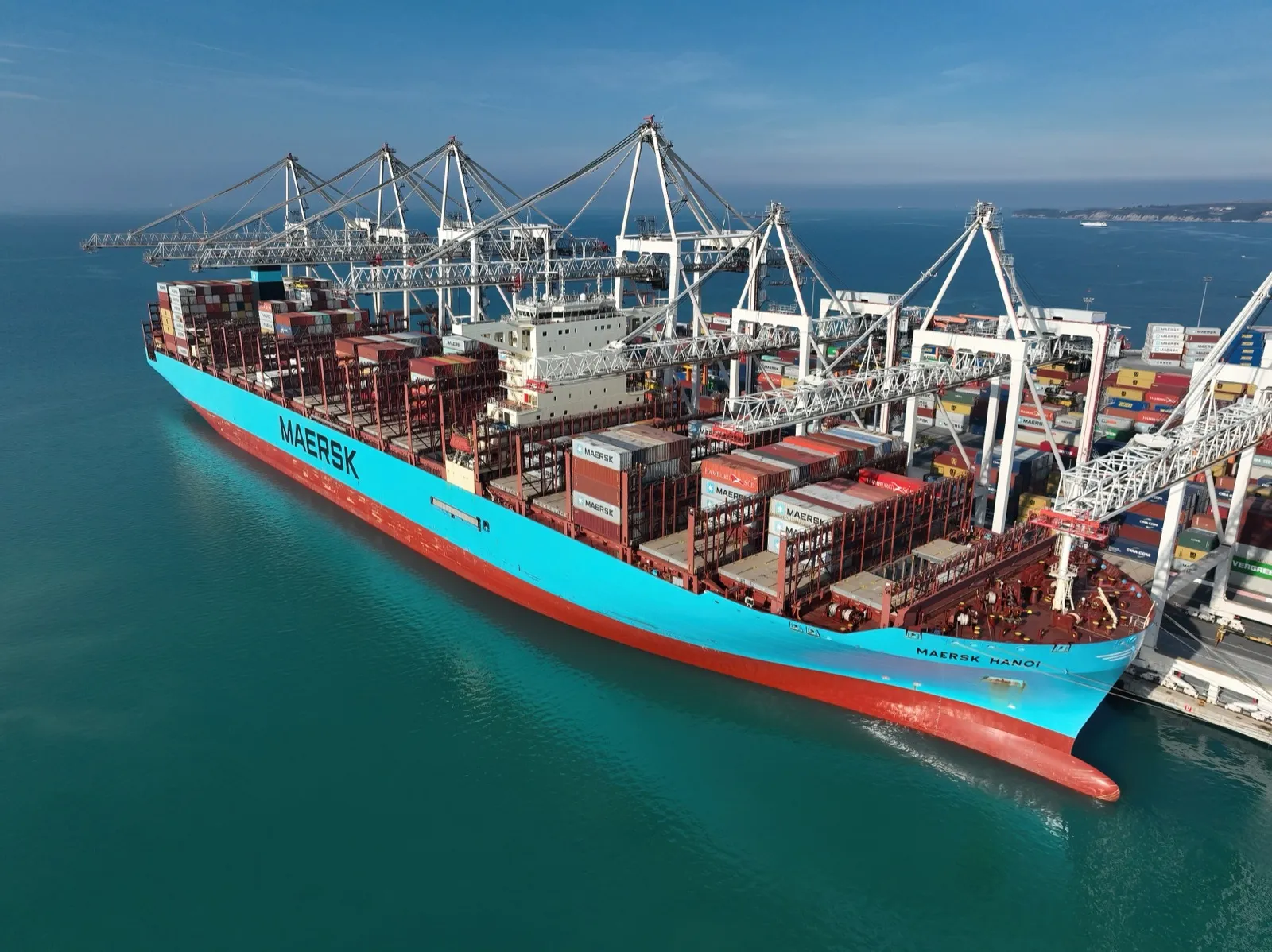
Those two facts combine into one conclusion: your box to Jeddah moves more easily than it did six months ago; your box to Jebel Ali, Dammam, Doha, Manama or Shuwaikh still does not. Jebel Ali, Dammam, Doha, Manama and Shuwaikh all sit inside Hormuz. Fujairah and Salalah sit outside it. That geography, not the Suez recovery, is why Gulf rates are still holding at levels nobody expected by October 2026. We broke the routing options down in our Fujairah bypass analysis, and the landbridge logic that moves cargo on from Khor Fakkan or Fujairah by truck is unchanged from our earlier Hormuz risk review.
And one thing the strait does not touch at all: air freight. Cargo that flies out of Guangzhou Baiyun or Shenzhen Bao’an to Riyadh, Dammam, Dubai, Doha or Kuwait is not affected by Hormuz, not assessed the Hormuz transit fee, and not waiting for a landbridge slot. A three to seven day air transit today is the same three to seven days it was in January.
Where your cargo actually leaves China
Guangzhou is not just where you buy. It is also a departure point.
Pazhou sits roughly 40 to 60 minutes from Nansha, one of the largest container terminals in southern China, and within a day’s trucking of Shenzhen’s Yantian and Shekou terminals. Practically every forwarder serving the Gulf consolidates from the same four origin clusters — Guangzhou and Nansha, Shenzhen, Ningbo and Shanghai. That means a sample you pick up at a Phase 1 booth on Monday can be in a Guangzhou warehouse on Tuesday and on a flight on Wednesday, with no supplier cooperation needed.
This is the practical advantage of dealing with a forwarder rather than letting each factory organise its own export: the origin side is where Canton Fair cargo goes wrong, not the destination side.
Consolidation: the decision worth more than any rate you negotiate
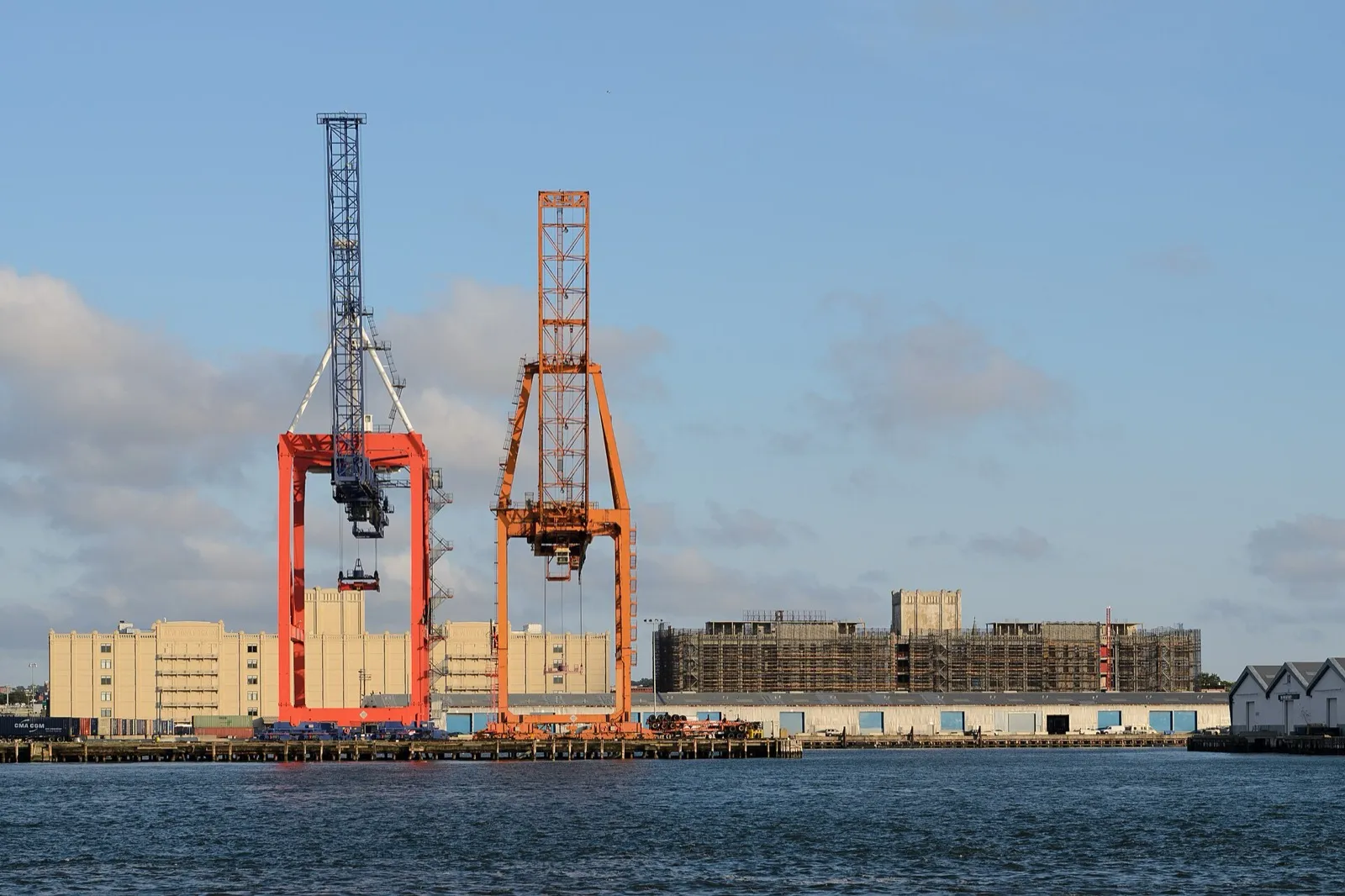
In a normal market, LCL looks cheap to a first-time buyer and expensive to everyone who has done it twice. In the current market it is brutal, because a box that cannot be filled still has to be booked, and LCL bookings face the longest rollover queues when space is scarce.
The maths is simple. Five suppliers, each shipping on its own, produce five LCL consignments, five sets of destination charges and five separate customs declarations. The same five suppliers consolidated into one 20ft or 40ft container at a Guangzhou warehouse produce one booking, one bill of lading and one declaration. On a per-CBM basis, consolidation routinely saves 15 to 25%, before you count the admin you avoid.
| Option | Best for | What to watch |
|---|---|---|
| LCL, consolidated at one origin warehouse | Orders under about 12–15 CBM, mixed categories, first-time suppliers | Per-CBM density charges; waiting for co-loaders to fill the box |
| FCL 20ft | Around 25–28 CBM of dense cargo | Paying for space you do not use if your goods are light and bulky |
| FCL 40ft / 40ft high cube | Above about 55 CBM, or bulky furniture and building materials | Highest absolute cost, lowest unit cost — the best per-unit rate on mixed hauls |
| Air freight | Samples, urgent retail, high-value low-volume electronics | Rate volatility in November; watch chargeable weight, not actual weight |
The discipline that makes consolidation work is timing. Give your forwarder the supplier list and the expected readiness dates as you leave each phase, not in November when everything is ready at once. A warehouse needs to know what is coming in order to build a container that actually closes on time.
Samples and urgent cargo: what belongs on a plane
Here is the part most buyers get wrong. The strait closure has pushed sea transit into unpredictable territory, and the instinct is to put everything on a plane. That is expensive and usually unnecessary.
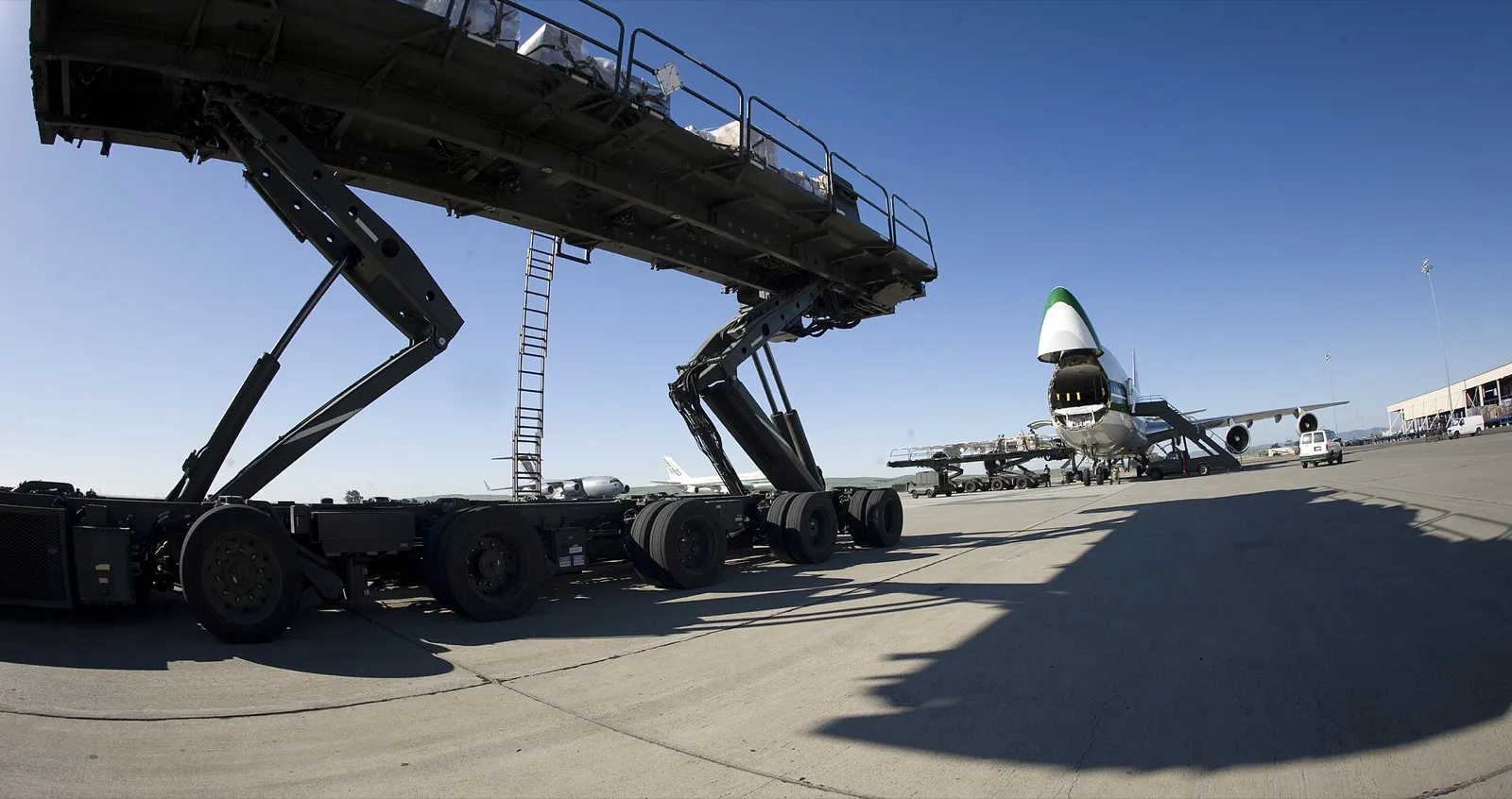
Send by air: the samples you need in your own market this quarter, the seasonal retail line that cannot miss White Friday or the Ramadan stocking window, high-value electronics where freight is a rounding error against the invoice, and anything you need to inspect in person before committing to container volumes. Air transit from southern China to Gulf destinations runs three to seven days on published routings, and it bypasses the strait discussion entirely. Compare the two properly using our air versus sea freight breakdown for Saudi Arabia and the UAE.
Keep on the water: furniture, sanitaryware, ceramics, glassware, building materials, textiles in volume, and anything where freight is a meaningful percentage of the landed cost. These categories are bulky, low-density and price-sensitive — exactly the profile that cannot absorb air rates.
The one gap worth naming: if you are importing consumer goods for the January and February 2027 selling season, your sea bookings are the ones under real pressure. We laid out the demand calendar and the booking lead times we actually work to in our Gulf peak season booking guide, and the short version is that confirmed space, not price, is the scarce commodity.
Get compliance right before you ship, not after
A Canton Fair haul is unusually exposed on compliance, because a large share of it is new product from new suppliers — the combination most likely to be stopped.
If any part of your haul is Saudi-bound, a valid SABER certificate is required, and it depends on your supplier submitting the right HS code and product data. If it is UAE-bound and includes electronics, ECAS certification applies. Both processes take time, both need input from the Chinese supplier, and both are far cheaper to start in October than to fix in December. A new supplier’s first shipment is the shipment most likely to have a documentation gap, so ask for the test reports and the certificate scope before you pay a deposit, not when the container is already at Jebel Ali.
What the numbers look like this month
Treat these as indicators that move weekly, not as quotes. They are the levels circulating in early October 2026.
| Indicator | Level | Reading date |
|---|---|---|
| SCFI, Shanghai to Persian Gulf base ports | USD 6,489 per TEU | 30 September 2026 |
| China to Jeddah spot average | USD 10,870 per 40ft | late September 2026 |
| China to Khor Fakkan spot average | USD 10,626 per 40ft | late September 2026 |
| All-in to Jebel Ali, 40ft high cube | USD 8,000 – 9,000 | early October 2026 |
| All-in to Jeddah and Dammam, 40ft high cube | USD 10,000 – 11,000 | early October 2026 |
On top of base freight, carriers are recovering costs through itemised surcharges. Maersk’s Middle East Operational Update 51, published on 8 October 2026, keeps these in force for cargo loading from or destined to Iraq, Kuwait, Saudi Arabia (Dammam and Jubail), Bahrain, Qatar, the UAE and Oman except Salalah:
| Charge | Amount | Applies to |
|---|---|---|
| Hormuz transit fee | USD 1,000 per container | Any container on a vessel transiting the Strait of Hormuz |
| Emergency freight rate | USD 1,800 per 20ft dry | The scope above |
| Emergency freight rate | USD 3,000 per 40ft dry | The scope above |
| Emergency freight rate | USD 3,800 per box | Reefer, special equipment and dangerous goods |
Other carriers use different names and different amounts, but the pattern repeats. If one quote on your Canton Fair haul looks suspiciously cheap, ask which of these lines it excludes. Our guide to PSS, WRS and redirection fees explains what each charge is supposed to cover.
For planning purposes, these are the baseline sea and air transit times we publish on each route:
| Destination port | Sea FCL, baseline routing | Air freight |
|---|---|---|
| Saudi Arabia (Jeddah, Dammam) | 15–19 days | 3–5 days |
| UAE (Jebel Ali) | 15–18 days | 2–4 days |
| Qatar (Hamad) | 17–21 days | 2–3 days |
| Kuwait (Shuwaikh) | 18–22 days | 2–3 days |
| Bahrain (Khalifa Bin Salman) | 16–20 days | 2–3 days |
| Oman (Sohar, Salalah) | 16–20 days | 4–7 days |
| Jordan (Aqaba) | 16–22 days | 3–4 days |
Add the landbridge leg for the Upper Gulf ports while Hormuz stays restricted. For the country-by-country detail, including port options and local customs steps, see our route pages for shipping from China to Saudi Arabia and shipping from China to the UAE.
Your plan for the days after the fair
- Before you leave the booth. Get the supplier’s exact factory address, not just the showroom. Consolidation pricing depends on how many cities you are collecting from.
- As each phase ends. Send your forwarder the supplier list, the CBM estimate and the readiness dates. Decide LCL versus FCL once, for the whole haul, not supplier by supplier.
- In the week after you fly home. Ask for one line-item quote covering every leg, with base freight separated from each surcharge. Compare quotes on the total, never on the headline rate.
- Two weeks before cargo cut-off. Confirm the certificate process is running — SABER or ECAS — and that the supplier has submitted the correct HS code.
- 72 hours before cut-off. Re-confirm the sailing. Cancellations and rollovers are announced late in this market, and a booking confirmed in October can already be rolled by November.
- Book the January window now, if you need it. Space into the Gulf for the Ramadan build-up is the tightest booking on the calendar, and it is decided in November.
If your cargo is sample-volume or time-critical, remember that air freight from China to the Gulf is unaffected by the strait and can be booked as soon as your first supplier is ready.
The bottom line
Canton Fair buying and Canton Fair shipping are two different jobs, and this year the second one is harder than the first. The fair gives you factory-direct pricing on five or six categories at once; the current market decides whether that pricing survives the freight line. The buyers who do well this session are the ones who consolidate under one forwarder, keep a genuine air bridge for the items that matter, start compliance in October rather than December, and treat a confirmed booking as more valuable than a discounted rate.
GCC Freight consolidates Canton Fair cargo at our own origin facilities in southern China and runs regular sailings and air uplift to Jebel Ali, Dammam, Jeddah, Hamad, Shuwaikh and Khalifa Bin Salman, with warehousing and re-export available from our Dubai facility once your goods land. If you are in Guangzhou this month, send us your supplier list and we will price the whole haul as one shipment.
- WhatsApp: Get a quote now