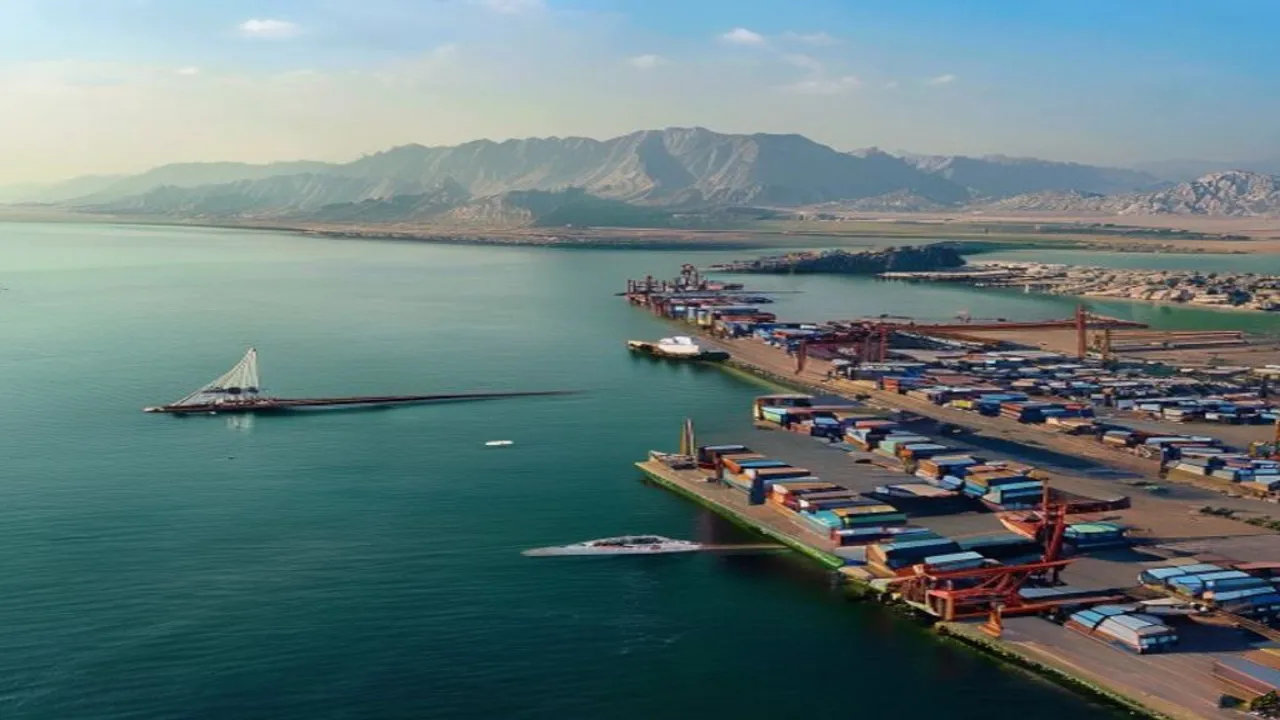
If you import goods from China to Saudi Arabia, the UAE, or other GCC states, most shipping plans revolve around one port: Jebel Ali. But in 2026, with rising tension around the Strait of Hormuz, more importers and logistics analysts are asking: is there an alternative? The answer is yes — but it is not in Dubai. It sits on the UAE’s east coast, at Fujairah Port.
In this guide, we explain why shipping from China to the UAE via Fujairah can be a smart tactical option, especially when maritime risk is elevated. We also compare Fujairah with Jebel Ali, review the available infrastructure, and outline the scenarios where this alternative makes sense.
Why are people talking about bypassing the Strait of Hormuz now?
The Strait of Hormuz is the main maritime artery of the Gulf. Every container heading to Jebel Ali, Jeddah, Dammam, or Doha has to pass through it. When tensions rise, war risk insurance premiums climb, schedules slip, and carriers impose extra surcharges.
By mid-2026 we saw:
- Higher war risk surcharges on vessels transiting the Strait.
- Some carriers rerouting to avoid hotspots.
- Transit times extended by roughly two to five extra days.
This does not mean the Strait will close. It does mean that a smart importer should have a backup plan. That is where Fujairah Port comes in.
Where is Fujairah Port?
Fujairah Port lies on the east coast of the UAE, facing the Gulf of Oman. This means vessels arriving from the Indian Ocean or Arabian Sea can berth there without entering the Strait of Hormuz.
That geography makes it a useful entry point for cargo ultimately bound for:
- Abu Dhabi, Dubai, and Sharjah (by truck).
- Northern and Eastern Saudi Arabia (via the border crossing).
- Oman (by road).
Who operates Fujairah Port? (It is not DP World)
There is a common misconception that Fujairah is run by DP World because DP World operates Jebel Ali and Mina Rashid. The reality is different.
- Port of Fujairah is the official port brand, covering oil, general cargo, containers, and maritime services.
- Fujairah Terminals is a wholly owned subsidiary of AD Ports Group, holding the concession to operate container, general cargo, passenger, and Ro-Ro terminals at the port.
- In 2017, AD Ports signed a 35-year concession agreement with Port of Fujairah.
In other words, Fujairah is an Emirati competitor to Jebel Ali, not an extension of it. For importers, that is positive: it creates diversification of options.
Infrastructure: what can Fujairah handle?
Fujairah is still far smaller than Jebel Ali, but it has infrastructure that can scale. Key figures:
| Metric | Fujairah Port | Jebel Ali Port |
|---|---|---|
| Annual container capacity | 720,000 TEU | 19.5 million TEU |
| 2030 target | 1 million TEU | ongoing expansion |
| Main berths | 4 | 27 |
| Quay length | 1,000 m | ~5,000 m |
| Draft | 15 m | deeper |
| General cargo yard | 1.3 million tonnes/year | — |
| Operator | Fujairah Terminals | DP World |
The port is equipped with two post-Panamax ship-to-shore cranes and two RTGs in the first phase. It can handle medium-to-large container vessels, but it is not yet ready to receive the world’s largest Ultra Large Container Vessels at scale.
Is there a direct shipping service from China to Fujairah?
This is the most important question for importers. Unfortunately, there is no dense direct network between China and Fujairah like the one serving Jebel Ali. Most cargo from China to Fujairah moves via a transshipment hub, usually:
- Jebel Ali itself.
- Singapore or Colombo.
- Salalah or Sohar in Oman.
So under normal conditions, Fujairah is neither cheaper nor faster than Jebel Ali. It becomes a smart option in three situations:
1. When the Strait becomes a critical vulnerability
If your shipment is stuck because of a partial closure or high insurance costs in Hormuz, it can be diverted to Fujairah and completed by land.
2. When you need strategic storage outside the inner Gulf
Cargo can be stored in Fujairah and fed gradually into the UAE or Saudi market according to demand.
3. When the cargo is destined for eastern UAE or northern Oman
Fujairah is geographically closer to these areas than Jebel Ali, reducing final road haulage cost.
Overland connections: how does cargo reach the rest of the GCC?
Road transport
The main road linking Fujairah to Dubai, Abu Dhabi, and Sharjah is Highway E84. It is the primary corridor for heavy trucks. From Fujairah, cargo can reach:
- Dubai in roughly one to one-and-a-half hours.
- Abu Dhabi in roughly two-and-a-half to three hours.
- Al Ain and the Saudi border in roughly three hours.
- Muscat, Oman, in roughly four to five hours.
Rail: Etihad Rail
The most exciting part of Fujairah’s future is its connection to the Etihad Rail network:
- The network stretches roughly 900 km from Ghuwaifat to Fujairah.
- Freight services began operating in 2023.
- It links 11 logistics terminals and four major ports.
- Passenger services started rolling out from June 2026, beginning with the Abu Dhabi–Fujairah line.
This means that in the coming years, goods can move from Fujairah to Abu Dhabi, Dubai, and the Western Region by rail, reducing dependence on trucks, emissions, and congestion.
Fujairah vs Jebel Ali: when to choose each?
| Scenario | Best choice | Reason |
|---|---|---|
| Regular shipment to Dubai or Saudi Arabia | Jebel Ali | More sailings, lower cost, larger infrastructure |
| Concern about Hormuz disruption | Fujairah | Entry without passing through the Strait |
| Cargo for eastern UAE | Fujairah | Closer by road |
| Large FCL container | Jebel Ali | Higher capacity, ULCV services |
| LCL or medium general cargo | Fujairah possible | Less congestion, potentially faster clearance |
| Long-term storage outside the inner Gulf | Fujairah | Competitive storage costs |
What is the expected extra cost of using Fujairah?
Because Fujairah is still a secondary container hub, using it usually means:
- Extra sea movement: if there is no direct sailing, a transshipment via another hub may be needed.
- Longer road haul: from Fujairah to Jeddah or Riyadh is longer than from Jebel Ali.
- Additional handling charges: due to smaller throughput.
However, that extra cost may be acceptable if the alternative is weeks of delay or very high insurance premiums caused by a Hormuz escalation.
Risks and limitations you should know
Before routing cargo through Fujairah, consider the following:
- Limited capacity: it cannot absorb Jebel Ali’s daily volume.
- Fewer carrier options: schedules are less flexible.
- Reliance on overland transport: most GCC markets still require trucking or rail.
- Documentation and certifications: SABER for Saudi Arabia, ECAS/ESMA for the UAE still apply depending on product type.
- No confirmed ULCV capability: official sources have not confirmed that the port can handle the largest container vessels at scale.
How to integrate Fujairah into your logistics plan
At GCC Freight, we do not see Fujairah as a permanent replacement for Jebel Ali. We treat it as a strategic backup option. Here is how you can benefit:
1. Split your shipments
Instead of sending everything to Jebel Ali, route 10% to 20% of volume through Fujairah. This reduces concentrated risk.
2. Maintain emergency inventory
Keep normal stock in Jebel Ali and a safety buffer in Fujairah.
3. Use Etihad Rail
As the rail network develops, move cargo from Fujairah to main Dubai and Abu Dhabi warehouses quickly and cost-effectively.
4. Coordinate SABER and ECAS
Our team helps prepare required certifications before cargo arrives, whether it lands in Fujairah or Jebel Ali.
Frequently asked questions
Can the Strait of Hormuz be completely avoided when shipping from China to the Gulf?
Most Gulf ports (Jeddah, Dammam, Doha, Kuwait, Bahrain) cannot be reached without passing Hormuz or Bab-el-Mandeb. But Fujairah allows you to discharge cargo before the Strait and complete the journey overland.
Is Fujairah cheaper than Jebel Ali?
Under normal conditions, usually not. During escalations, the cost gap may be smaller than the difference in delay and insurance.
Is there a direct line from Shanghai to Fujairah?
There is no dense direct service. Most services require transshipment through Jebel Ali, Singapore, or Salalah.
Can goods be stored in Fujairah duty-free?
Yes, free zones and bonded warehouses are available, but procedures vary depending on product type and final destination.
What is the difference between Fujairah Terminals and Port of Fujairah?
- Port of Fujairah is the overall port.
- Fujairah Terminals is the operating company for container, general cargo, and passenger terminals.
Why work with GCC Freight?
At GCC Freight, we do not offer just one port. We offer a network. That means we can:
- Evaluate each shipment and recommend the optimal port (Jebel Ali or Fujairah).
- Provide warehousing in Jebel Ali and a trucking network across the GCC.
- Monitor the maritime situation in Hormuz and the Red Sea and suggest rerouting when needed.
- Handle customs clearance and certifications (SABER, ECAS, ESMA).
- Quote in multiple currencies: AED, SAR, CNY.
- Support you in Arabic, English, and Chinese.
Conclusion
Fujairah Port is not a full substitute for Jebel Ali today, but it is a valuable tactical option in a smart importer’s playbook. With Etihad Rail expanding and investment in the port rising, Fujairah will become a larger part of the GCC logistics map.
If you import from China to the UAE, Saudi Arabia, or Oman, having two options — Jebel Ali and Fujairah — gives you more flexibility and protects your margins from geopolitical volatility.
Contact the GCC Freight team to build a flexible shipping plan that combines Jebel Ali and Fujairah and keeps your supply chain running in every condition.