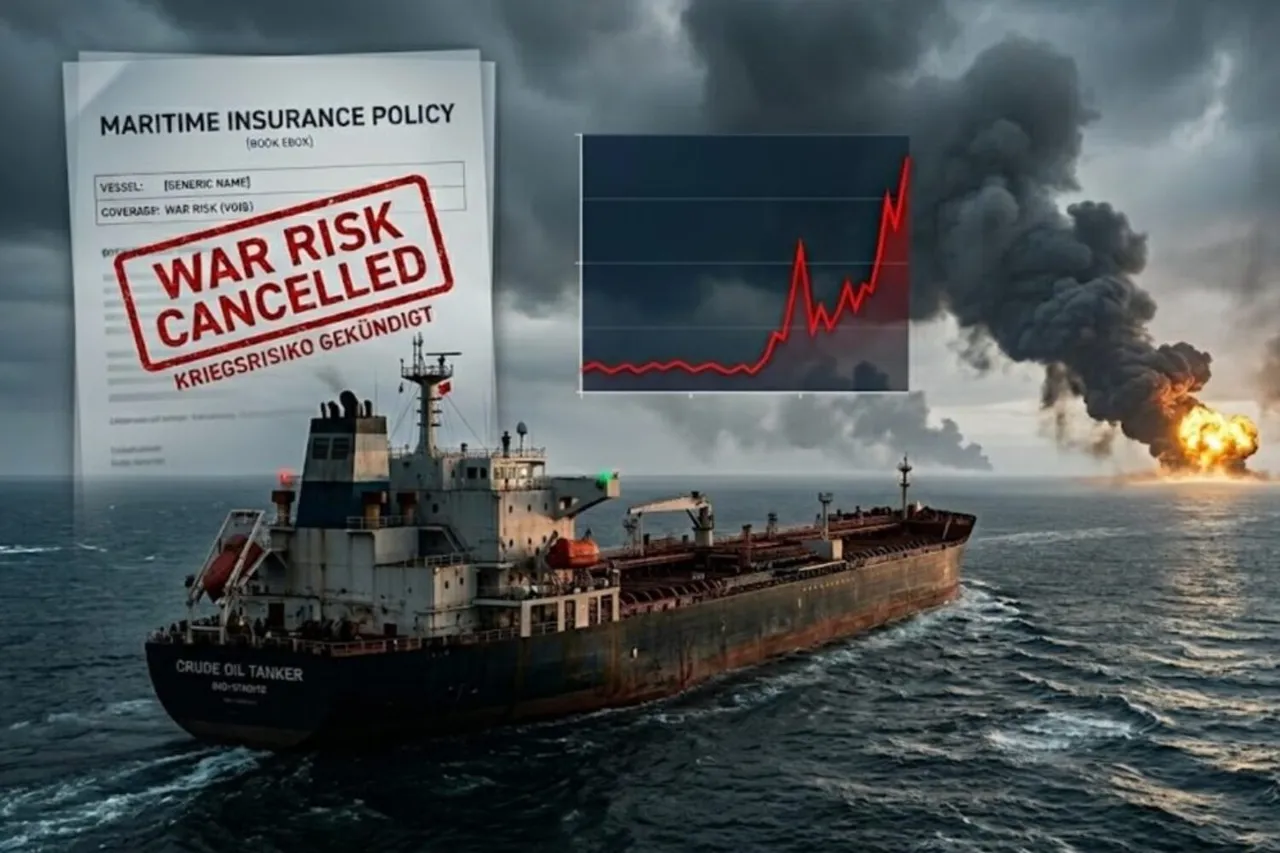
Every container that leaves Shenzhen or Ningbo for Saudi Arabia or the UAE now passes through at least one listed war risk area. The Red Sea, the Gulf of Aden, and the Strait of Hormuz all sit on the Lloyd’s Joint War Committee list, and underwriters price each transit accordingly. If you have received a freight quote in 2026 that looks higher than the market rate you remember, there is a good chance a war risk line item is part of the difference.
This guide explains how war risk insurance works for cargo owners, what it costs right now, and where the gaps in a standard policy hide. It is written for importers, not shipowners, so the focus stays on your goods and your invoice.
What war risk insurance actually is
Marine insurance is not one product. It is a stack of covers, and each layer responds to different events:
| Cover | Who buys it | What it protects | Typical trigger |
|---|---|---|---|
| Hull war risk | Shipowner | The vessel itself | Missile, drone, mine, seizure |
| P&I war risk extension | Shipowner | Liability (pollution, injury, wreck) | War perils excluded from standard P&I |
| Cargo war risk | Importer or exporter | The goods inside the container | War damage to cargo, capture, mines |
| Freight forwarder’s liability | Forwarder | Errors and legal liability | Negligence, not war perils |
Two things follow from this table. First, a ship that is fully insured can still leave your cargo uninsured, because hull cover protects the owner, not your boxes. Second, the standard marine cargo policy most traders carry under Institute Cargo Clauses (A) explicitly excludes war, capture, mines, and strikes under Clause 6. Peace-time cargo insurance is cheap partly because the war risk is carved out.
To close that gap you need war cover on the cargo side, usually written under the Institute War Clauses (Cargo) 1/1/82. These cover loss or damage from war, civil war, hostile acts, capture or seizure, and derelict mines or torpedoes. Without this extension, a missile that sinks the vessel carrying your goods is an uninsured event for you.
What it costs in 2026
Premiums move weekly, sometimes daily, so treat every figure below as a snapshot rather than a tariff. The numbers below reflect reports from Reuters, Lloyd’s List, S&P Global (via Al Jazeera), and market brokers between March and October 2026.
| Area | Peacetime reference | 2026 indicative range | Basis |
|---|---|---|---|
| Western Red Sea (Suez route) | ~0.01% | 0.1% | Hull value |
| Bab el-Mandeb / Gulf of Aden | ~0.05% | 0.5% to 0.75% | Hull value |
| Gulf of Oman loading/discharging, no Hormuz transit | nominal | 0.5% to 1.0% (7-day cover) | Hull value |
| Strait of Hormuz transit | 1% to 3% | 1.5% to 3%, spiking to 7.5% to 10% in July | Hull value |
| Black Sea (for comparison) | — | 2.5% to 3% | Hull value |
Three details matter when you read this table:
- The basis is hull value, not cargo value. A 0.5% hull rate on a vessel worth 100 million USD is 500,000 USD per transit. That is why owners pass part of the cost to cargo through surcharges.
- Flag and ownership change the price. US, UK, and Israeli-linked tonnage has been quoted at roughly three times the rate of neutral flags on the same route.
- Quotes are short-lived. In fast markets, underwriters limit quotes to 24 or 48 hours, which makes surcharges on your freight quote similarly unstable.
For cargo owners, the relevant number is smaller but real. Cargo war risk premiums are quoted on cargo value and in the current market commonly land in the range of a few hundredths of one percent up to around 0.1% for listed areas, depending on route, commodity, and insurer appetite. On a shipment insured for 100,000 USD, that is roughly 20 to 100 USD. The reason the total freight bill moves by far more than this is the hull side and the rerouting cost behind it.
How the cost reaches your invoice
You rarely see “war risk insurance” as a clean line in a sea freight quote. It arrives in disguise:
- War risk surcharge (WRS): a per-TEU or per-container fee carriers add on top of ocean freight when a route crosses a listed area. Our shipping surcharges guide breaks down how WRS differs from PSS and redirection fees.
- Rate level: on the Red Sea and Hormuz lanes, the base ocean freight itself absorbs part of the insurance cost because carriers buy cover fleet-wide.
- Detours: the Cape of Good Hope routing burns extra fuel and adds 10 to 14 days. Insurance is only one line in that arithmetic; see our Hormuz transit risk analysis for the full cost stack.
A related trap appeared in July 2026: Lloyd’s Market Association issued a clause under which a vessel that pays a Hormuz transit fee risks having its war cover cancelled. Our LMA clause explainer covers the wording and what to do about it. The short version for importers: ask your forwarder whether the carrier on your booking is paying any transit fee, and get the answer in writing.
The coverage gaps most importers miss
Even traders who buy cargo war cover routinely discover four gaps after a loss, when it is too late:
- Cancellation clauses. Cargo war cover can be cancelled on short notice (commonly 48 hours for existing voyages and 7 days otherwise) if the risk picture changes. If your policy was written months ago, confirm it is still in force for the specific voyage.
- Termination on change of risk. War clauses terminate cover if the vessel deviates into a new listed area or transships at a port you did not declare. Transshipment through Jebel Ali or Fujairah is normal; an undeclared diversion is not.
- Delay is never covered. War clauses and cargo clauses alike exclude loss caused by delay, even when a war risk caused the delay. The extra 12 days around the Cape is a commercial cost, not an insured one.
- Sanctions exposure. Paying fees to a sanctioned entity can void cover and create legal exposure. This is the LMA clause problem from the cargo side.
A worked example
Consider one 40-foot high-cube container of consumer electronics, cargo value 100,000 USD, sailing Ningbo to Jeddah:
- Standard cargo cover (ICC A) with war extension: expect a total premium in the low hundreds of USD for the voyage, with the war element typically under 100 USD at current cargo-side rates.
- War risk surcharge passed through on the freight: commonly tens of USD per TEU from carriers, varying by line and month.
- If the booking reroutes around the Cape: add roughly 10 to 14 days of transit and the associated working capital cost. For a realistic landed-cost picture on the Saudi lane, see our sea freight guide for Saudi Arabia.
The lesson: the direct insurance premium is rarely the painful number. Transit time, demurrage exposure at congested alternates, and the surcharge stack matter more, which is why route planning and insurance should be decided together.
Seven ways to keep war risk costs under control
- Buy cargo war cover explicitly. Do not assume “all risks” means war. Ask for the Institute War Clauses (Cargo) extension by name.
- Match the voyage to the policy. Declare the route, the transshipment ports, and the vessel when you place the insurance. Update it if the carrier changes the rotation.
- Check the cancellation terms. Ask your broker or insurer what notice period applies and whether cover is confirmed for the actual sailing dates.
- Review Incoterms. On CIF or CIP sales the seller arranges insurance; on FOB you arrange it. Know who is buying the war extension, because in many disputes nobody did.
- Ask about the carrier’s war cover status. Specifically, whether the vessel pays any Hormuz transit fee, given the LMA clause position.
- Price alternative routings properly. Fujairah and Omani ports can reduce or avoid Hormuz exposure for some UAE and northern Oman cargo. Compare total cost, not just ocean freight.
- Get the surcharge history. A forwarder that publishes how WRS moved on your lane over the last quarter is giving you useful data; one that says “rates are just high” is not.
What GCC Freight does on DDP shipments
Under our DDP service to Saudi Arabia and the UAE, insurance structuring is part of the quote, not an afterthought. We confirm the carrier’s war cover status, declare the routing to the insurer, and tell you before booking whether a war risk surcharge applies to your shipment and how much it is. If you prefer to carry your own cargo policy, we provide the vessel, route, and transshipment details your insurer will ask for.
Get a quote that already includes the insurance picture: