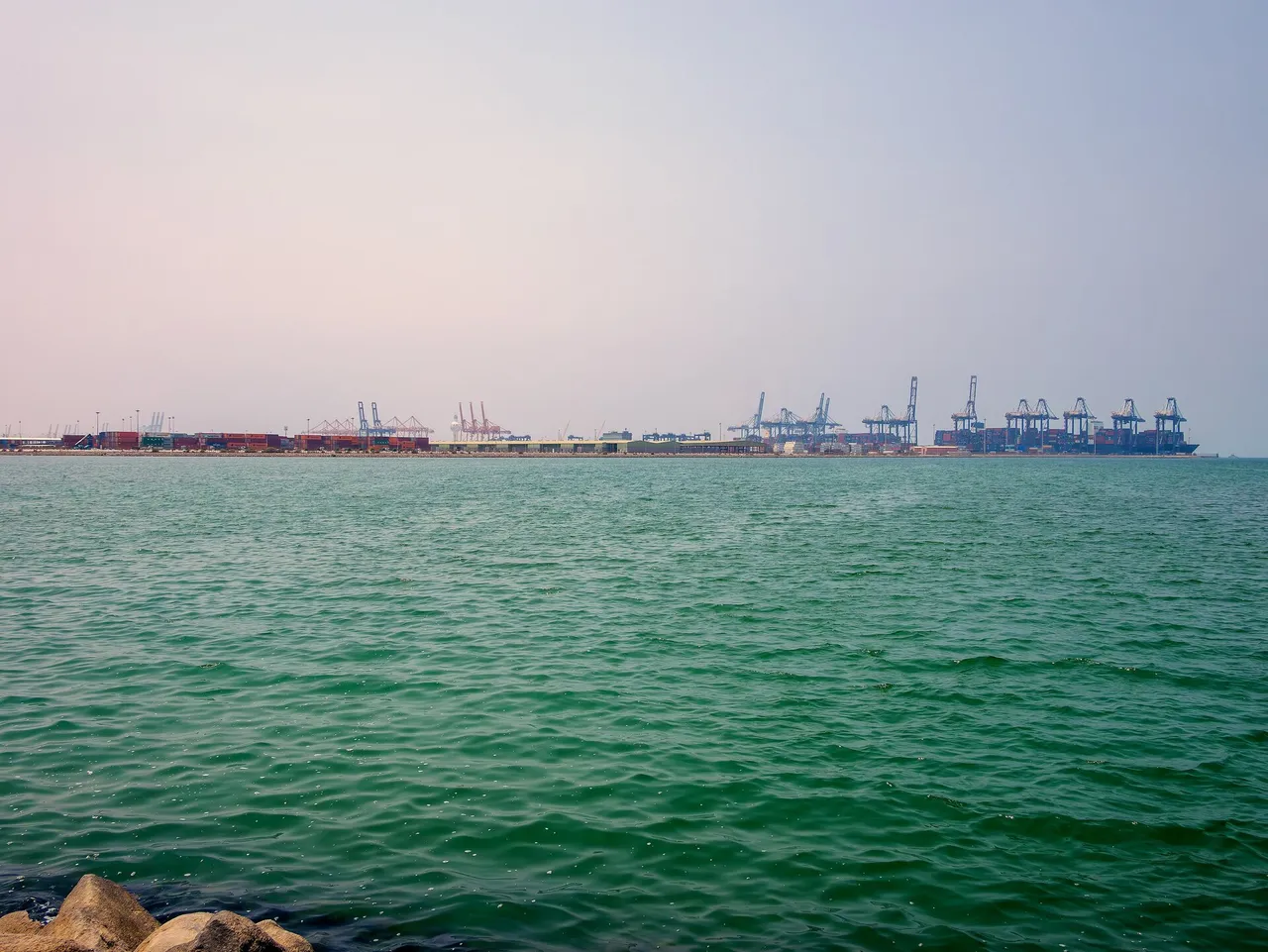
For most of this year, a container from China to Jeddah went through a Gulf relay port first: Jebel Ali normally, Khor Fakkan since the spring. From November there is a second option on the water, and it does not touch the Gulf at all.
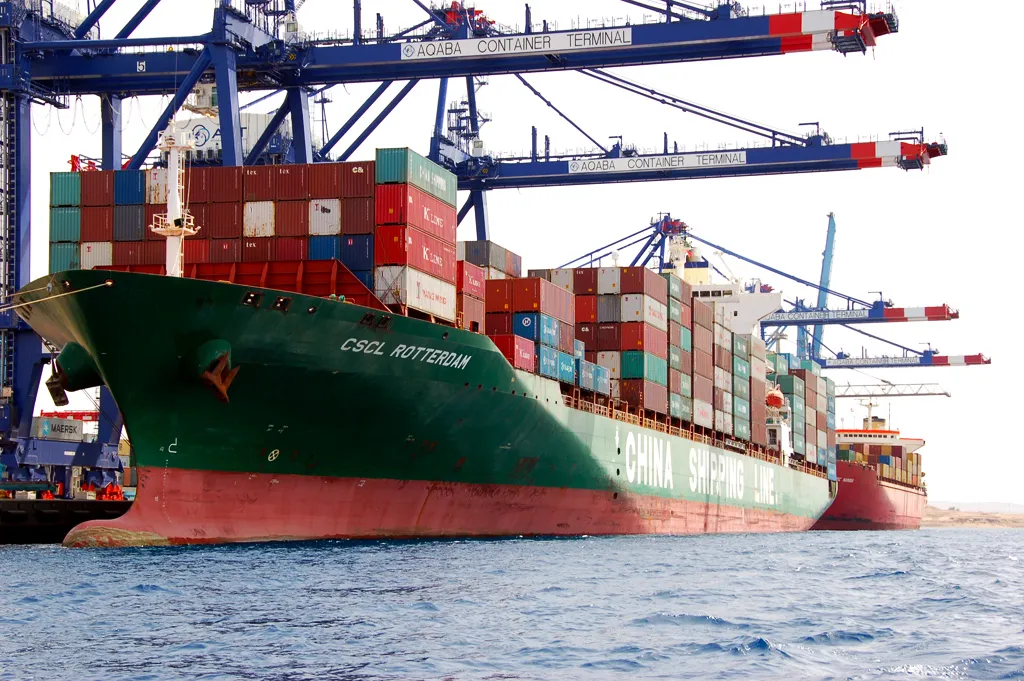
Dubai-based Emirates Shipping Line is launching a service it markets as the China Red Sea Connector. The published rotation is Shanghai, Ningbo, Nansha, Sokhna in Egypt, Aqaba in Jordan, then Jeddah. Four ships of roughly 2,500 TEU each, sailing about once every two weeks.
That is a small string. It is also the first direct China–Red Sea container service built around Saudi and Jordanian destinations since the Red Sea began reopening in September, and for importers whose cargo is currently relayed through the Gulf, the difference is worth understanding properly.
| Item | Detail |
|---|---|
| Carrier | Emirates Shipping Line (ESL), Dubai |
| Service name | China Red Sea Connector (CRC) |
| Rotation | Shanghai – Ningbo – Nansha – Sokhna – Aqaba – Jeddah |
| Vessels | 4 ships, about 2,500 TEU each |
| Frequency | Roughly one sailing every two weeks |
| First month of operation | November 2026 |
| Reported by | DynaLiners data, via Container News and SeaNews, 29 October 2026 |
Two things are still not public: the first sailing date and the full proforma. Book against a written schedule from the carrier, not against a press summary.
Why a direct call matters while Hormuz is shut
Commercial transit through the Strait of Hormuz has been largely blocked since late February. Container networks kept the Gulf supplied by taking boxes to ports outside the strait, Salalah and Khor Fakkan mostly, then moving them inland or feeding them north. Maersk’s Middle East update on 26 October still describes that architecture in detail: Kuwait, Iraq, Qatar, Bahrain and UAE cargo transships through Salalah and Khor Fakkan, Saudi import cargo goes through Jeddah, and Riyadh and Dammam are served over the Jeddah landbridge.
Every one of those legs is a handover. A handover means another cut-off, another set of terminal charges, and another point where a schedule can slip without anybody owing you an explanation. If your consignee sits in Jeddah or Amman, a direct call removes the handover. Not the risk, but one moving part fewer.
The Red Sea itself is busier than it has been all year. Alphaliner counts about 63 percent of Asia–Europe container capacity back on the Suez routing, and Lloyd’s List recorded 281 containerships, roughly 3 million TEU, through the canal in the four weeks to 25 October, even though tonnage is still about 36 percent below pre-crisis levels. Carriers are evidently willing to sail south of Suez again. What was missing for Saudi and Jordanian importers is a direct China call, which is the gap this service fills.
What four 2,500 TEU ships actually buy you
Do the arithmetic before you build a supply plan on it. Four vessels of 2,500 TEU on a fortnightly rotation works out to about two departures a month, or roughly 5,000 TEU per direction. A single 24,000 TEU ultra-large container ship carries nearly five times that in one sailing.
What that leaves you with:
- Space is finite and it will not be spread evenly across the three Chinese ports. Confirm whether your booking loads in Shanghai, Ningbo or Nansha.
- Book four to six weeks ahead for anything time-critical. On a fortnightly service a missed cut-off costs two weeks, not two days.
- Container mix is tight on a small ship. Reefer plugs and out-of-gauge slots are limited, and ESL has not published acceptance terms for either. Ask before you build the booking around them.
- Documents have to be right the first time, because there is no next-week sailing to absorb a correction.
The upside is just as real. One bill of lading, one carrier accountable end to end, and no dependence on a Gulf hub whose access runs through the most contested water in the world right now.
The Jeddah leg
Jeddah is Saudi Arabia’s main Red Sea gateway and, at the moment, the most reliable one. Our shipping from China to Saudi Arabia route page puts port-to-port transit at 16–20 days to Jeddah, 15–19 to King Abdullah Port and 18–22 to Dammam, and the sea freight guide for the Saudi lane covers container choice and clearance in detail.
What the direct call changes is predictability at origin, not necessarily speed. A fortnightly ship with a published rotation gives you a fixed loading window in China. A relay booking gives you a feeder connection that depends on when the mother vessel actually berths at the hub.
One number shows what this market looks like today. Maersk’s 26 October notice carries an emergency freight rate of USD 3,800, around SAR 14,250, on cargo to Jeddah for local consignees, and it has suspended reefers to and from Dammam and Jubail altogether. When an alliance charges that much to land a box at the kingdom’s main port, a smaller carrier offering a different routing is not competing on price. It is competing on access.
Clearance is still the bottleneck on this side. A SABER certificate that is not in place before the vessel arrives turns a 16-day transit into a 30-day landed cost problem, and the ocean leg cannot rescue you from that.
The Aqaba leg
Aqaba is the quieter half of this story and possibly the more interesting one. From Aqaba, cargo goes by road to Amman, to Baghdad in three to four days, to Damascus in about one, to Beirut in two. Our Jordan route page puts China–Aqaba FCL transit at 16–22 days, with sailings roughly every ten days before this service.
For a Jordanian or Iraqi importer, the Gulf relay was always the awkward part: your box goes east of Suez, gets handled in the Gulf, comes back west through the Red Sea, then heads north by truck. A direct China–Aqaba call cuts that loop in half. It also makes Aqaba a more credible alternative to Jeddah for cargo ultimately bound for Riyadh, if the overland rate works out.
The cost side the announcement leaves out
Nothing about a new service makes the Red Sea cheap. War risk premiums still price who owns the ship, not only where it sails: about 0.2–0.3 percent of hull value for a vessel with no Saudi link, around 3 percent for a Saudi-linked ship calling at Yanbu, up to 7 percent at Jizan, and 6–9 percent in Hormuz, according to insurance market reporting in late September. Those percentages land in your freight rate eventually.
ESL has been here before on cost. Earlier in 2026 it issued an emergency cost recovery surcharge covering UAE, Saudi, Oman, Egypt and Jordan cargo, and in April it was still publishing emergency routing arrangements for Red Sea boxes, including discharge at alternative ports and onward transport at extra cost. A carrier that has done that once will do it again if the water gets worse.
So ask for the all-in number: ocean freight, bunker, war risk, any emergency or redirection surcharge, destination charges in Jeddah or Aqaba, and the inland leg if you need one. Our surcharge explainer lists the line items that show up on a China–GCC invoice and what each is supposed to cover.
Booking checklist
- Get the proforma in writing, with vessel names and the actual first ETD from each Chinese port.
- Confirm your container type is accepted, especially reefers and heavy 40HQ cargo.
- Ask for the cut-off, VGM and document deadlines per port. They differ between Shanghai, Ningbo and Nansha.
- Put a rerouting and surcharge clause in the contract. “Subject to carrier notice” is the default; it should not be your only protection.
- Line up a fallback. Existing Suez strings still call Jeddah, and if the Red Sea closes again, Cape routing is the plan B every importer will be asking about in the same week.
- Price the alternative honestly. DDP through Jebel Ali with a landbridge is slower and carries strait risk, but it can still be cheaper per container. Compare landed cost, not ocean rate.
What to watch next
Three signals will tell you whether this becomes a real lane or a trial that quietly stops.
- A firm proforma that survives a full rotation. Two or three consecutive on-time calls is about the minimum evidence.
- Other mid-size carriers joining. ESL announced a China–Red Sea service back in 2024 as well, calling Ningbo, Nansha and Shekou and reaching Jeddah and Sokhna through Port Klang. This version drops Shekou and Port Klang and adds Shanghai and Aqaba. Carriers rework these strings constantly, so a second announcement from another line would confirm the demand is there.
- A quiet Bab el-Mandeb. Lloyd’s List reported no attacks on commercial shipping since 24 August as of 29 October, but Norway’s maritime authority kept ISPS Level 3 in place for the strait and extended Level 2 to the northern Red Sea off Yanbu on 30 October. Quiet, in other words, has not yet turned into a lower risk classification.
FAQ
Is this cheaper than existing China–Jeddah routes?
No published rate exists yet, and a 2,500 TEU ship will not beat alliance economies of scale on base ocean freight. The value is in fewer handovers and a fixed loading window.
Can I use it for cargo to Riyadh or Dammam?
Yes, over the Jeddah landbridge, but that inland leg is where most of the schedule risk sits right now. Budget it separately.
Does it replace the Gulf relay routings?
No. Four ships on a fortnightly rotation cannot absorb Saudi import volumes. It is one more option for cargo that suits it.
What happens if the Red Sea closes again?
The carrier reroutes and you pay for it. That is why the contract clause and the fallback plan matter more than the sailing date.
Bottom line
A fortnightly direct China–Red Sea string will not fix the Saudi or Jordanian supply chain by itself, and anyone selling it as a rate breakthrough is overselling. What it does is hand importers a second routing that skips the Gulf relay, at a moment when the relay is the weakest link in the chain. If your cargo goes to Jeddah, Amman or Baghdad and your volumes are steady, it is worth a quote. If it goes to Dammam in a reefer, not yet.
Comparing routings for a November or December shipment?
- WhatsApp: Get a quote now
Sources: Container News and SeaNews reporting on DynaLiners data (29 October 2026); Maersk Middle East operational update 52 (26 October 2026); Alphaliner capacity data via Seatrade Maritime (October 2026); Lloyd’s List Intelligence Red Sea brief (29 October 2026); Norwegian Maritime Authority security notice (30 October 2026); insurance market reporting on Red Sea war risk (September 2026); GCC Freight route data for China–Saudi Arabia and China–Jordan.