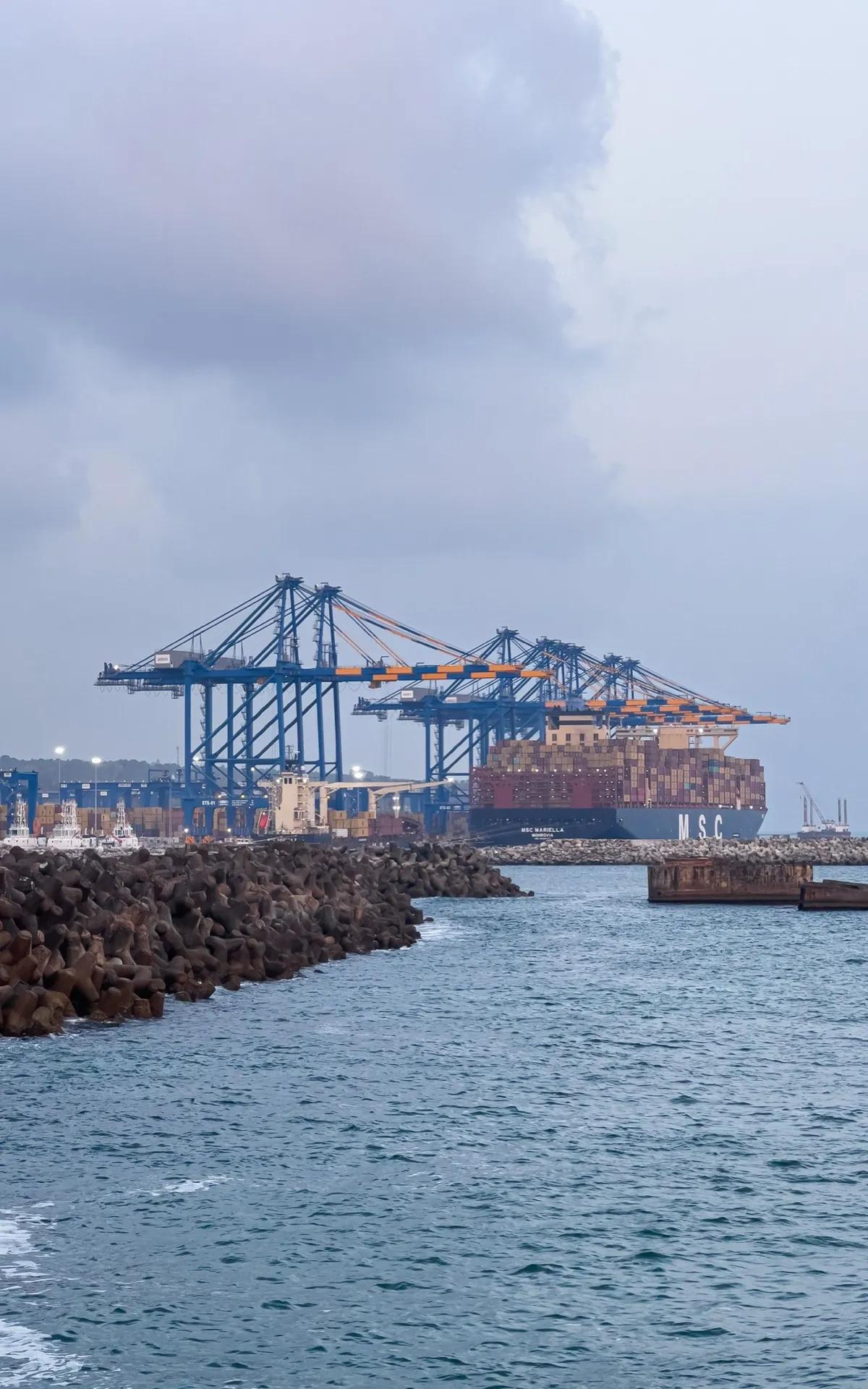
If your cargo moves on shipping routes from China to the GCC, the ground shifted again this week. In its Middle East Operational Update 49, published on 23 September 2026, Maersk reconfirmed the suspension of three Gulf landbridge corridors, extended cargo-type-specific booking suspensions, and introduced a market-linked air fuel surcharge of at least 15% of the transport rate. Less than two weeks earlier, the carrier began discharging selected Khor Fakkan bookings at Fujairah and trucking them under bond to Jebel Ali — with the final port of discharge on the bill of lading formally changed. For importers in Saudi Arabia and the UAE, this is not background noise: it changes which port your container lands at, which surcharge lines appear on your invoice, and how long your box waits after discharge.
What Maersk changed in September 2026
Five operational updates in four weeks tell the story of a network being rebuilt around a closed strait. The Strait of Hormuz has been effectively shut to container shipping since 28 February 2026, and Jebel Ali — the region’s largest container port — handled roughly 374,000 TEU in Q2 2026, about 90% below the same quarter a year earlier.
| Date | Advisory | What changed |
|---|---|---|
| 31 Aug | Operational Update 44 | Reefer bookings suspended to most Gulf ports; emergency freight rates introduced (USD 1,800–3,800 per container) |
| 9 Sep | Update 45 | Most dry bookings to/from Gulf ports suspended; Hormuz traffic fell to about 10 ships/day, the lowest since May |
| 11 Sep | Update 46 | Selected Khor Fakkan cargo discharged at Fujairah instead; three landbridge corridors paused; USD 500 cost-recovery surcharge announced |
| 16 Sep | Update 47 | Empty containers no longer returned to usual depots in seven markets; pick-up charges for non-preferred locations |
| 23 Sep | Update 49 | Landbridge pause reconfirmed; air fuel surcharge of at least 15% of the transport rate; suspension lists extended by cargo type |
The pattern matters more than any single line: each update tightens routing options and adds cost layers, while keeping a narrow set of gateways open.
The landbridge pause, explained
Since the spring, Gulf cargo has moved through two workarounds: an ocean leg to a port outside the Strait (Jeddah, Salalah, Khor Fakkan, Fujairah) followed by a bonded overland or feeder move to the final destination. Maersk’s September updates suspend the three corridors that connected these workarounds:
- Cargo from the UAE and Qatar moving via Jeddah port and Oman ports
- Cargo from Jeddah to the UAE, Oman and Qatar
- Cargo from Salalah and Sohar to the UAE, Saudi Arabia, Kuwait, Bahrain and Qatar
If your contingency plan from earlier in the year relied on any of these legs, it is no longer available as a carrier product. Saudi-bound cargo continues to route through Jeddah and King Abdullah Port — including boxes ultimately destined for Riyadh and Dammam — which is why Jeddah is now the single most important gateway for Shipping from China to Saudi Arabia. One quirk to watch: if a box is booked to Jeddah but the consignee is not Saudi-based, it will not be discharged there — it is rerouted onward via Khor Fakkan instead.
Fujairah rerouting: your port of discharge may change
Under Update 46, selected shipments booked with a final port of discharge of Khor Fakkan are being discharged at Fujairah, then moved under bonded landside transport to Jebel Ali. The final port of discharge is formally changed to Jebel Ali (via Fujairah) — and that single change cascades through your customs entry, delivery order, haulier booking, empty-return instruction and the demurrage & detention tariff that applies to the box.
The economics explain why. A DP World official told Semafor that overland moves from Fujairah or Khor Fakkan cost roughly four to five times sailing through Hormuz to Jebel Ali, with trucks queuing up to 12 hours against a 27-minute turnaround at the port before the crisis. Jebel Ali remains open only for cargo arriving via Khor Fakkan (imports) or via the landbridge. Our earlier analysis of Fujairah Port as the Hormuz bypass covered why this emirate became the region’s pressure valve; the September updates show that pressure now comes with paperwork consequences.
The surcharge stack
Carriers are recovering disruption costs line by line. As of 23 September 2026, a Maersk invoice for Gulf-bound cargo can carry all of the following:
| Charge | Amount | Notes |
|---|---|---|
| Emergency freight rate, 20ft dry | USD 1,800 per container | Applies to cargo loading from or destined for Iraq, Kuwait, Dammam, Jubail, Bahrain, Qatar, the UAE and Oman except Salalah |
| Emergency freight rate, 40ft dry | USD 3,000 per container | Same scope as above |
| Emergency freight rate, reefer / special / DG | USD 3,800 per container | DG accepted to Jeddah for local Saudi consignees only |
| Hormuz transit fee | USD 1,000 per container | Only where the vessel actually transits the strait; covers insurance premiums and crew risk compensation |
| Storage beyond 14 days | USD 25 per TEU per day | Invoiced fortnightly; includes transit storage under the emergency rate |
| OCR cost-recovery surcharge | USD 500 per container | Contract bookings to the UAE from 15 Sep, Bahrain/Qatar/Kuwait/Iraq from 17 Sep — not applicable to Far East Asia origins |
| Air fuel surcharge | Minimum 15% of transport rate | Market-index linked, announced in Update 49 |
For shippers in China, the last two rows are the ones to highlight in supplier negotiations: your China-origin contract cargo is explicitly excluded from the USD 500 OCR surcharge, and the new air fuel surcharge applies as a percentage rather than a flat emergency fee. None of this changes the broader trend we documented in our Middle East freight rate surge analysis — but it does mean quotes should be itemised so every surcharge line is visible before the booking, not after.
What is still moving
Despite the suspensions, a functioning route network remains — it is just narrower and more specific:
| Corridor | Status (23 Sep 2026) |
|---|---|
| Saudi Arabia — Jeddah & King Abdullah Port | Open for dry cargo; main gateway for the Kingdom, including cargo for Riyadh and Dammam |
| UAE — Khor Fakkan | Open for imports; some boxes discharged at Fujairah and moved by bond to Jebel Ali |
| UAE — Jebel Ali | Open only via landbridge from Khor Fakkan/Fujairah |
| Oman — Salalah & Sohar | Open; Salalah transshipment accepted for non-upper-Gulf destinations |
| Kuwait, Qatar, Bahrain | Dry bookings largely suspended on Maersk; other carriers and consolidators still routing via Salalah and Khor Fakkan with feeder/land connections |
| Iraq | Suspended on Maersk |
| Jordan | Open except reefer; cross-border cargo transiting Jordan remains suspended |
This is also the context behind the carriers’ return to the Suez Canal earlier this month: getting to Jeddah efficiently matters more than ever, because the last leg into the upper Gulf increasingly depends on where the box can land.
What importers should do this week
- Re-verify the port of discharge on every booking confirmation against the carrier’s latest advisory — do not rely on the original confirmation alone.
- Match the suspension list to your cargo type. Dry, reefer, dangerous goods, out-of-gauge and in-gauge cargo each carry different suspension lists on Maersk; checking one and generalising is the most common mistake.
- For Saudi cargo, pre-file in FASAH at least 72 hours before arrival and book the truck before berthing. Jeddah’s median berth wait was 2.2 days in early September, but landside delays of 10–12 days after discharge are being reported — plan the delivery appointment, not just the vessel.
- Confirm the empty-return depot and its charges before committing the return leg. Usual return locations in the UAE, Qatar, Bahrain, Kuwait, Saudi Arabia (Jubail), Iraq and Oman (Duqm) are no longer accepting empties; designated depots and pick-up charges apply.
- Itemise surcharges in your quotes. Show emergency freight, the Hormuz transit fee, storage and OCR as separate lines so your landed-cost comparison between carriers is honest.
- Re-check Jebel Ali contract rates booked via Khor Fakkan — Maersk is updating them, and the rate shown at booking can change before the price calculation date.
- For air cargo, model the new 15% minimum fuel surcharge into Q4 budgets on air freight lanes, and ask your forwarder whether the FSC index has moved since the quote.
How GCC Freight keeps your cargo moving
Carrier advisories describe what one shipping line will and will not do. A freight forwarder with its own Dubai warehouse, decade of customs clearance experience across the GCC, and multi-carrier options can route around single-carrier suspensions: consolidating LCL through Salalah and Khor Fakkan, moving Saudi cargo through Jeddah with pre-arranged sea freight and inland delivery, or switching time-critical shipments to air with transparent surcharge modelling. For cargo already on the water, we track discharge-port changes daily and re-issue delivery orders before demurrage starts accruing.
If you have boxes booked to the Gulf this quarter, now is the time to audit them against the September updates — not when the arrival notice lands.
- WhatsApp: Get a quote now