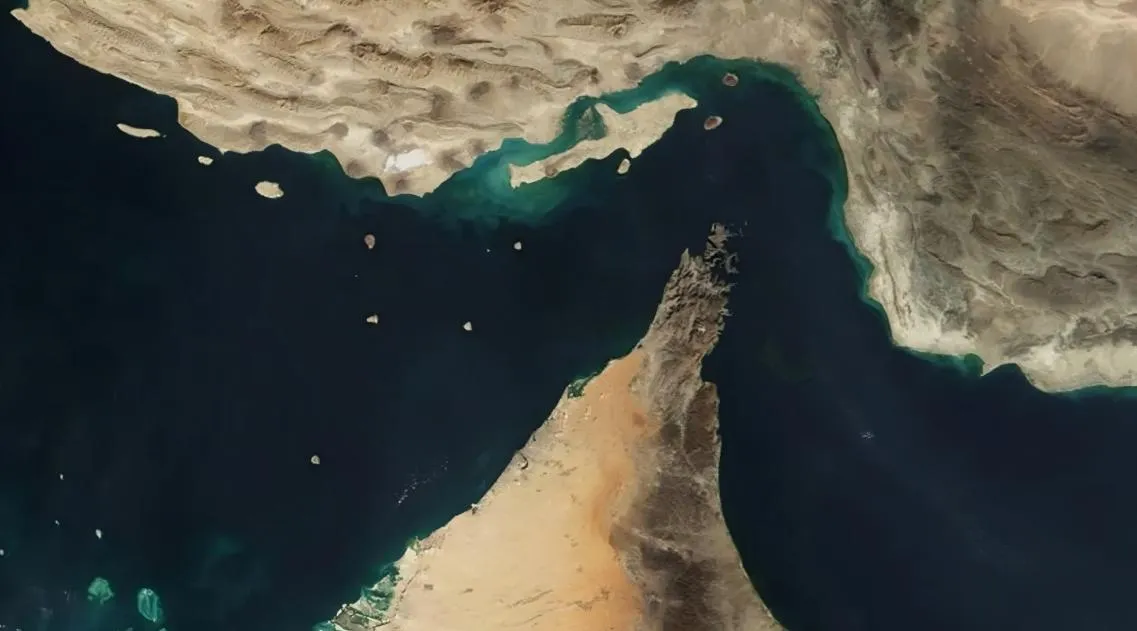
On 17 August 2026 a Liberia-flagged bulk carrier was transiting outbound through the Strait of Hormuz when an unknown projectile struck its engine room. The attack killed one seafarer and left the remaining crew dependent on the Omani Coast Guard. The incident, reported by the UK Maritime Trade Operations in Warning 115-26, is a sobering reminder that the strait remains a live conflict zone — and that container cargo moving from China to Jebel Ali, Jeddah, Dammam or Sohar is still exposed to serious disruption. If you are responsible for Shipping from China to Saudi Arabia, Shipping from China to UAE or Shipping from China to Oman, this update changes how you should think about transit risk, insurance and booking lead time.
Two days earlier, on 15 August, another bulk carrier was hit in the same southern approaches of the strait. That vessel survived with one injured crew member and hull damage to the starboard side, according to UKMTO Warning 116-26. Taken together, the two incidents show that attacks on commercial shipping are continuing inside Hormuz, that the engine room is a deliberate target, and that the human cost is rising.
What the 17 August attack tells us
The latest attack is not simply another line in a long list of incidents. It contains three signals that matter directly to cargo owners.
1. Engine rooms are being targeted
Twelve of the twenty confirmed projectile attacks since 6 July 2026 have hit engine rooms, according to UKMTO data. In a narrow strait such as Hormuz, a disabled ship does not drift harmlessly out of the traffic lane. It can block the corridor, force other vessels to stop or reroute, and trigger salvage, towage and port-congestion cascades. For a container liner that must keep a fixed schedule, even a single disabled vessel ahead of it can mean days of delay.
2. The southern corridor is not safer than the northern one
After weeks of reports that ships were being directed toward the Tehran-controlled northern route, the 15 and 17 August attacks occurred near Oman’s Musandam Peninsula, in the southern corridor. That means both corridors are now under fire. Shippers can no longer assume that choosing one side of the strait removes the risk.
3. Seafarers are being killed
INTERCARGO, the international association of dry-cargo shipowners, confirmed the death and stated that the confirmed toll of seafarers killed in the Hormuz conflict had risen to at least sixteen. The organisation repeated its call for all parties to stop treating merchant mariners as instruments of political pressure. From a cargo-owner’s perspective, the practical implication is equally serious: as casualties mount, fewer crews and shipowners are willing to transit the strait at any price, and those who do will charge a premium that is ultimately passed to shippers.
| Incident | Date | Vessel type | Location | Casualty / damage | Source |
|---|---|---|---|---|---|
| Bulk carrier engine-room hit | 17 Aug 2026 | Bulk carrier | Hormuz outbound | 1 seafarer killed | UKMTO Warning 115-26 |
| Bulk carrier starboard hit | 15 Aug 2026 | Bulk carrier | Southern Hormuz near Musandam | 1 seafarer injured, hull damage | UKMTO Warning 116-26 |
| ADNOC-linked tankers hit | 14–15 Aug 2026 | Oil tankers | Hormuz outbound | Vessel damage, crews safe | WAM / Reuters |
| Confirmed projectile attacks since 6 Jul | 6 Jul – 17 Aug 2026 | Mixed merchant | Hormuz | 12 engine-room hits | UKMTO / gCaptain |
Why this matters for container cargo from China
Bulk carriers and tankers are not container ships, but they share the same strait. When a projectile disables a vessel in a narrow waterway, every other ship in the queue is affected. Container services are particularly vulnerable because they operate on fixed weekly schedules with multiple port calls. A single incident can cause:
- Schedule slippage: a vessel waiting for a disabled ship to be towed may miss its next port window.
- Route diversion: carriers may suspend calls at Jebel Ali, Jeddah or Dammam for one or more sailings.
- War-risk premium increases: insurers adjust premiums as the casualty list grows.
- Crew-related delays: ships already en route may refuse to enter the strait, forcing last-minute transhipment.
- Equipment imbalance: fewer reliable sailings mean empties pile up in the Gulf and become scarce in China.
If you are buying sea freight from China to GCC, the question is no longer whether Hormuz will reopen soon. It is whether your forwarder has a plan for the current environment.
Impact by destination market
Saudi Arabia
Saudi-bound containers usually pass through the Red Sea or Hormuz depending on the port. The Bab el-Mandeb blockade and the continued Hormuz attacks mean both routes carry elevated risk. Our recent Bab el-Mandeb attack article explained the Red Sea risk; the latest engine-room deaths confirm that Hormuz is no alternative. Shippers using Shipping from China to Saudi Arabia should plan for longer lead times and consider Dubai or Oman staging.
UAE
Jebel Ali is still the largest container hub in the region, but it sits on the far side of Hormuz. The 14–15 August attacks on ADNOC-linked tankers showed that the UAE corridor is exposed, and the 17 August fatal attack deepened the concern. Some lines are already diverting to Fujairah Port on the UAE east coast. If your supply chain depends on Shipping from China to UAE, ask your forwarder whether the booked service calls Jebel Ali directly or uses a feeder from outside the strait.
Oman
Sohar and Salalah are the most commonly discussed bypass options. Sohar sits just outside Hormuz, while Salalah on the Arabian Sea avoids the strait entirely. Both ports are receiving additional feeder traffic, but their capacity is finite. Expect longer wait times and higher trucking costs to final destinations in the UAE or Saudi Arabia. Our Container Shipping from China to Oman guide covers the current port conditions in detail.
Qatar, Kuwait and Bahrain
These smaller markets rely heavily on Jebel Ali transshipment. Any delay at Jebel Ali therefore ripples quickly into Doha, Kuwait City and Manama. With limited direct sailings, advance booking and consolidation become essential.
What shippers should do now
-
Treat Hormuz as a prolonged risk, not a temporary disruption The 17 August death and the 15 August injury are not isolated. Until a durable ceasefire and insurance framework are in place, plan for continued disruption.
-
Add 10–20 days to your China–GCC lead time Whether the delay comes from rerouting, port congestion or carrier blank sailings, buffer stock is cheaper than stockouts.
-
Book FCL and LCL space 3–4 weeks ahead With fewer sailings and high uncertainty, last-minute bookings are expensive and often unavailable. Secure space early for sea freight to the Gulf.
-
Confirm war-risk insurance wording Ask specifically whether the policy covers the corridor being used and whether paying any transit fee would void cover. Our Lloyd’s Market Association clause article explains the catch-22.
-
Split urgent cargo to air freight For high-value, time-critical or seasonal goods, air freight from China to GCC avoids both Hormuz and Bab el-Mandeb.
-
Use Dubai or Sohar staging Pre-positioning inventory outside the immediate chokepoint reduces the chance that every shipment hits the same bottleneck.
-
Review DDP contract terms Make sure demurrage, detention, force majeure and insurance responsibilities are clearly assigned. A reliable DDP forwarder should absorb these risks.
Frequently asked questions
How many seafarers have been killed in the Hormuz conflict? As of 17 August 2026, INTERCARGO confirmed that the toll had reached at least sixteen. The actual number may be higher because some incidents are not publicly reported.
Are container ships being attacked directly? Most publicly reported attacks have targeted tankers and bulk carriers, but container liners use the same strait and the same corridors. A disabled ship of any type blocks the lane for everyone.
Is the northern Hormuz route safer? The 15 and 17 August attacks occurred in the southern corridor near Musandam, but the northern route has its own risks, including interaction with Iranian authorities and possible insurance-voiding transit fees.
Should I stop shipping to the GCC? No, but you should plan carefully. Cargo is still moving, and many importers are successfully using alternative routings and staging strategies.
Will freight rates from China to the GCC keep rising? While the strait remains unstable, war-risk premiums, bunker surcharges and equipment-imbalance costs will keep pressure on rates. A sudden reopening is unlikely in the short term.
How GCC Freight is responding
At GCC Freight we treat each sailing week as a fresh risk decision. Our operations team is currently:
- Monitoring UKMTO, IMO and flag-state advisories daily;
- Selecting the most stable corridor and carrier option for each FCL/LCL booking;
- Offering Sohar, Salalah and Fujairah staging when direct Jebel Ali or Hormuz transit is disrupted;
- Providing sea-air combinations via Oman or the UAE for urgent cargo;
- Confirming war-risk cover and transit-fee wording before every Hormuz movement;
- Handling customs clearance, SABER and ESMA documentation so cargo does not sit after arrival.
If you have containers on the water or are planning the next shipment, now is the time to review routing, insurance and lead times with a forwarder that understands both the Chinese export side and the GCC import side.
Get a China–GCC shipping plan that accounts for the latest Hormuz risk
- WhatsApp: Get a quote now