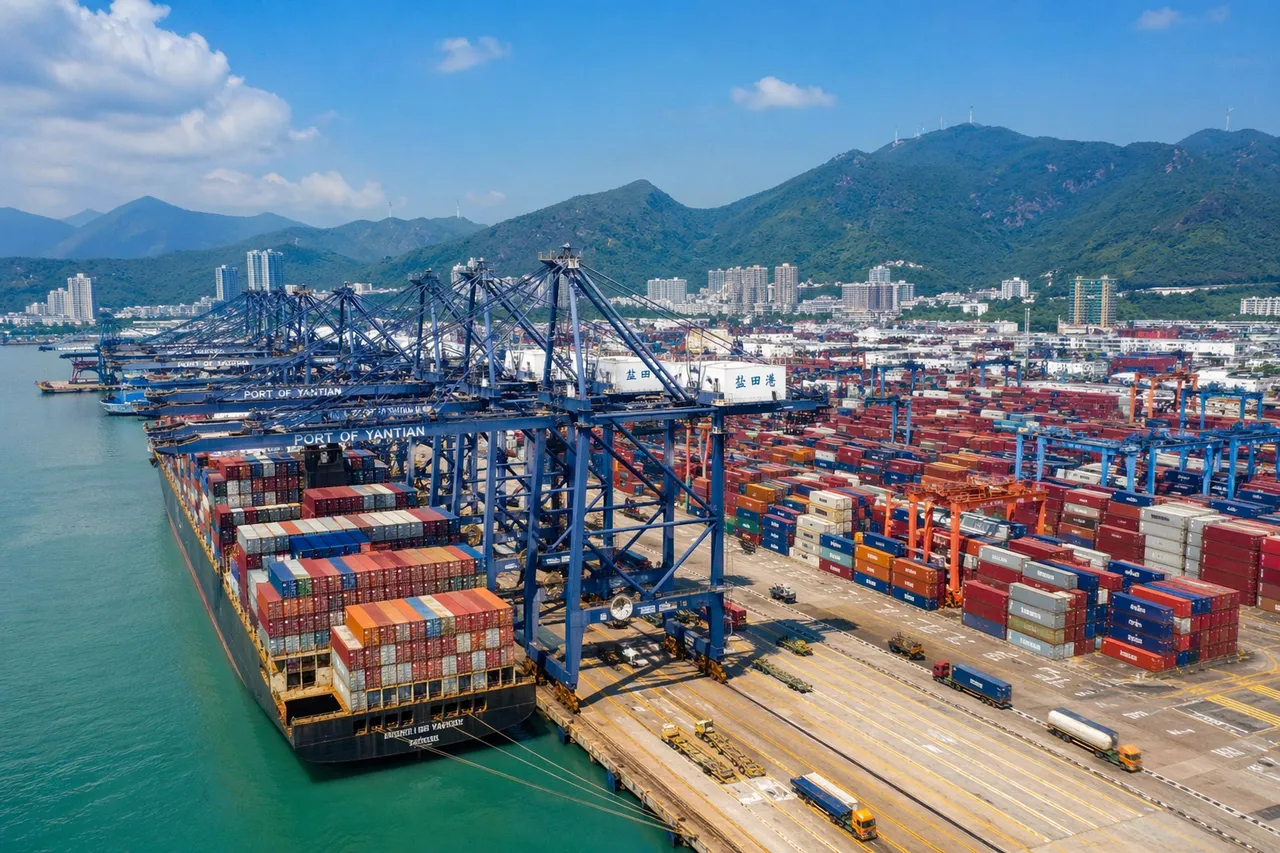
Cargo moving on shipping routes from China to the GCC faces a second, quieter disruption this month — and it is happening at the origin, not the strait. As China’s Golden Week holiday (1–7 October 2026) gets underway, more than 4 million TEU of container capacity is being absorbed by congestion at the country’s biggest gateways, vessel waiting times at Shanghai and Ningbo have reached double digits on bad days, and analysts now warn that the resulting backlog could keep ocean capacity tight into 2027. For Gulf importers already managing the highest China–Middle East rates on record, the message from the first week of October is simple: the factory holiday will not bring the usual rate relief or schedule breathing room this year.
What the data says going into Golden Week
The congestion picture built up through September and was still deteriorating as the holiday began:
| Indicator | Latest reading | Source / date |
|---|---|---|
| Capacity absorbed by global port congestion | Over 4 million TEU | Linerlytica Market Pulse, 8 Sep 2026 |
| Waiting time at Shanghai (7-day average) | 4.72 days, worse at some terminals | Kuehne+Nagel operational data, 8 Sep 2026 |
| Peak waits at Shanghai & Ningbo | Up to 12 days | Linerlytica, 8 Sep 2026 |
| Asia–North Europe capacity around Golden Week | 1.5 million TEU over 4 weeks — +27% YoY, +60% vs pre-pandemic | Sea-Intelligence, reported 4 Oct 2026 |
| Blank sailings, weeks 37–41 (East–West) | 47 of 729 scheduled departures cancelled (~6%) | Drewry, late Sep 2026 |
| Drewry World Container Index, 1 Oct | USD 4,434 per 40ft, −1% week on week | Drewry WCI, 1 Oct 2026 |
The headline number deserves a caveat: Sea-Intelligence notes that part of that 1.5 million TEU is an illusion of capacity created by vessel bunching — delayed ships cluster at anchor, then arrive at downstream ports in waves. Real, usable capacity is tighter than the deployment figures suggest, which is why schedules rather than headline rates are the thing to watch.
Why ships stay full through the holiday
Golden Week normally works like a pressure valve. Factories close, export bookings dry up for seven to ten days, carriers blank sailings to match, and spot rates soften. This year Linerlytica warned the opposite could happen: the backlog of delayed export cargo waiting to be loaded at Shanghai and Ningbo is large enough to keep the ships that do sail essentially full through the holiday.
That prediction is being confirmed as the week unfolds. Dimerco’s October 2026 Asia Pacific freight report, released on 1 October, describes a peak season that “refuses to end” — AI hardware, semiconductor and year-end retail demand are still filling vessels out of Asia, while typhoon backlogs and bunching keep arrival schedules chaotic. On 4 October, coverage of Sea-Intelligence’s analysis warned that Asian port congestion could prolong the shipping capacity crunch into 2027, with HSBC expecting delays to migrate toward Southeast Asia and the Indian subcontinent next.
For carriers, the response is already visible in the schedules: rather than restoring normal service after the holiday, Maersk has Golden Week-related Asia–Europe cancellations departing Ningbo on 8 October and Shanghai on 10 October — after the official holiday ends. Blank sailings are being used to manage bunching, which means rolled cargo is a risk well into mid-October.
How this stacks onto the GCC picture
Origin-port congestion does not replace the Gulf’s own problems — it compounds them. The Strait of Hormuz has been effectively closed to container shipping since 28 February 2026, and the landbridge workarounds via Jeddah, Khor Fakkan, Fujairah and Salalah are fully established but capacity-constrained. Our analysis of the Middle East freight rate surge documented spot rates from China to Jeddah at USD 10,870 per FEU (+256% since late February) and to Khor al Fakkan at USD 10,626 per FEU (+479%) as of mid-September — both above the Covid-19 records.
Add a 4–12 day origin delay to an already stretched Red Sea / landbridge itinerary and three things happen:
- Booked connections miss. Boxes that would have made a Jeddah or Salalah transshipment window are rolled to the next sailing, and each rollover adds 5–10 days on top of the congestion delay.
- Detention clocks start earlier relative to the cargo’s actual journey. With the carrier network already diverting and discharging cargo at alternative ports — as we covered in the Maersk September landbridge pause — an extra origin delay narrows the margin before free time expires at the discharge port.
- The rate floor stays high. The Drewry index eased 1% in the week to 1 October, but rates into the Gulf are set by landbridge capacity, not by the global index. Do not expect Golden Week to produce the usual seasonal discount on shipping from China to Saudi Arabia or UAE lanes this year.
The partial return of carriers to the Suez Canal helps on the Asia–Europe legs that feed Jeddah, but it does nothing for a box still sitting at anchor off Shanghai — which is where many Gulf-bound shipments are right now.
What GCC importers should do now
- Add 7–14 days to your planning buffer for any cargo loading in October from Shanghai, Ningbo or nearby gateways — and tell your consignee before the vessel sails, not after.
- Re-confirm sailing schedules 72 hours before cargo cut-off. Blank sailings are still being announced around Golden Week, including post-holiday departures; a booking confirmed last month may already be rolled.
- Split urgent cargo to air. For time-critical shipments, air freight from Shenzhen, Guangzhou or Hong Kong avoids the ocean queue entirely; model the fuel surcharge percentage, not just the base rate.
- Book earlier for November cargo. If congestion migrates through Southeast Asia and the subcontinent as HSBC expects, the post-holiday recovery wave will compete for the same slots. Lock space now for cargo ready after 8 October.
- Watch free time, not just freight. With multi-leg routings via Jeddah, Khor Fakkan or Salalah, a rolled box can burn demurrage-free days before it even reaches its discharge port. Review the terms we broke down in our surcharges and fee guide before committing.
- Get a China-side view of your shipment. A forwarder with staff in Shenzhen can check actual terminal status at origin — berth queues, yard density, customs exam backlogs — instead of relying on the carrier’s published schedule.
How GCC Freight keeps your cargo moving
Published schedules tell you what carriers planned; they rarely tell you what is happening at the berth. With our own team and warehouse in Dubai and a decade of customs clearance experience across the GCC, we monitor origin congestion, transshipment connections and discharge-port free time as one chain — so your box is re-booked, re-routed or switched to air before a delay becomes a demurrage bill. Whether your cargo is moving via sea freight through Jeddah and Khor Fakkan or needs an urgent air alternative, we quote the full landed picture, not just the base rate.
If you have cargo loading from China in October, contact us this week — the congestion map is changing daily, and the plan that worked in September may not survive October.
- WhatsApp: Get a quote now