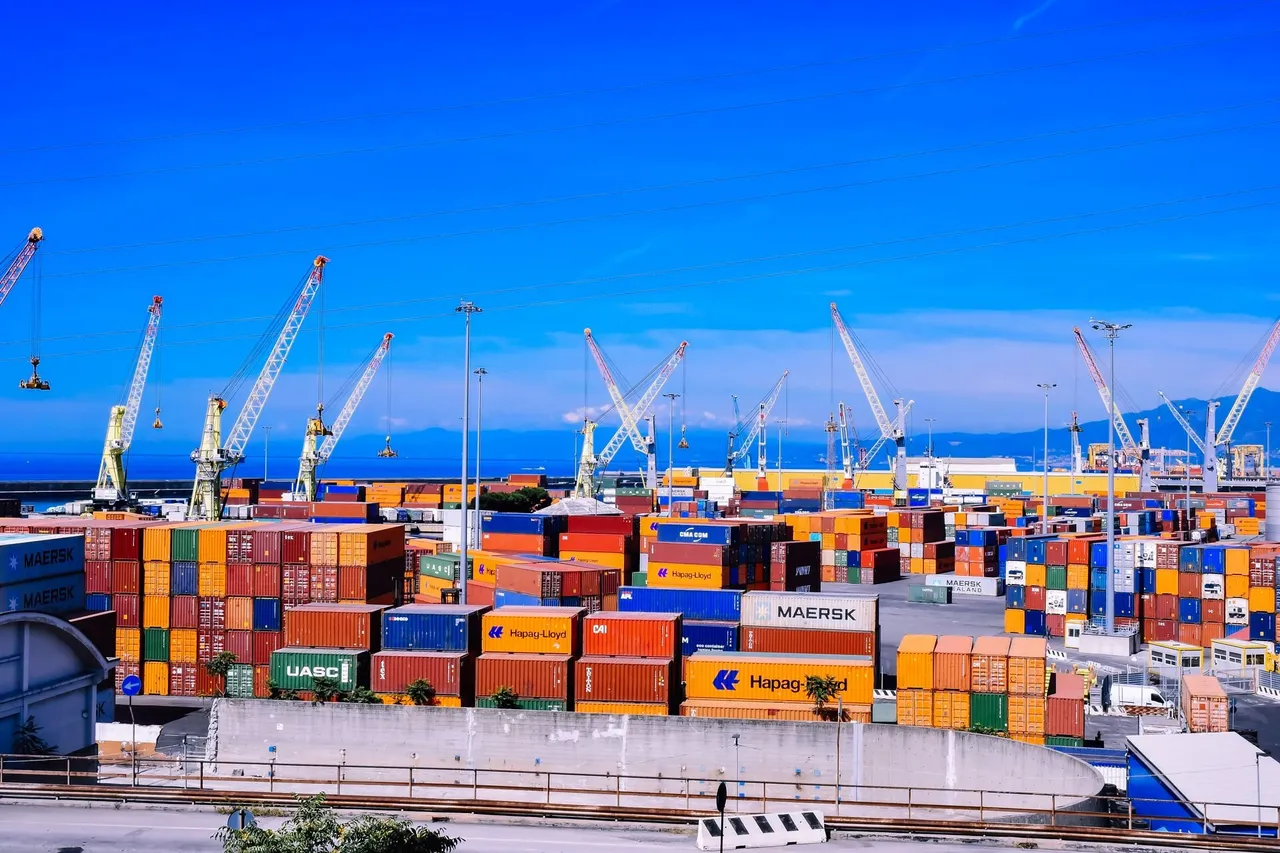
When an importer asks what it costs to ship from China to Bahrain, the answer they get is an ocean rate. That number is real, it is the one that moves week to week, and for most consignments it is not the largest line on the invoice.
Consider a 40-foot container of general cargo with a CIF value of BD 20,000. Duty at 5% is BD 1,000. VAT at 10% is charged on the customs value plus the duty, so BD 2,100. That is BD 3,100 of tax payable at Khalifa Bin Salman Port before the terminal has moved the box, before the broker has filed the declaration, and before anyone has quoted you a handling charge. If your ocean freight was BD 5,300, the tax alone is more than half of it — and the tax is not negotiable, while the freight is.
This guide to shipping from China to Bahrain prices the whole bill. Everything below is in Bahraini dinars, because that is the currency the invoice arrives in; one dinar is fixed at 2.652 US dollars and at 10 Saudi riyals, so conversion is arithmetic rather than a market view.
First, the ocean rate — and why the published ones disagree
There is no single 2026 ocean rate for this lane, and any page that gives you one is guessing. Published China→Bahrain figures for a 40-foot container this year span the equivalent of roughly USD 1,500 to USD 8,150 depending on the source, and a 20-foot from about USD 650 to USD 5,950. That is not a market range. That is four different products sharing one name.
The gap has three causes, and it is worth being able to name them when two quotes arrive and differ by a factor of three.
- Surcharges inside or outside the headline. CMA CGM’s Emergency Conflict Surcharge, effective 2 March 2026 and still in force, adds USD 2,000 per 20-foot, USD 3,000 per 40-foot and USD 4,000 for reefer or special equipment on shipments to Bahrain and its Gulf neighbours. A rate that excludes it is not comparable with one that includes it.
- Direct call versus relay. Bahrain has a direct call on some strings and is served as a tail off Jebel Ali or Dammam on others. The relay is cheaper per box and slower, and it carries a second vessel’s schedule risk.
- Date. A rate is a statement about a week. The log that shows 40-foot bookings at USD 7,600–8,150 in June and July 2026 and the pages showing USD 1,500 do not contradict each other so much as describe different months and different scopes.
Our own published ranges on this site — sea freight from China to Bahrain — sit at the lower end because they are port-to-port base rates for normal commercial conditions. In a conflict year, treat any figure without a date and a surcharge position as a rumour.
The stack, line by line
Here is what actually gets billed on an FCL import into Khalifa Bin Salman Port (KBS), the country’s only general commercial port.
| Line | Amount | Who charges it | Source |
|---|---|---|---|
| Ocean freight, 40-foot, port to port | Quoted in USD, wide range | Carrier | Dated quote only |
| Origin charges in China | Per quote | Forwarder / carrier | — |
| Terminal handling, import, 40-foot | BHD 71.170 | APM Terminals Bahrain | Bahrain Ports Tariff V.001, rev. 20 Jan 2024, §4.1.1 |
| Terminal handling, import, 20-foot | BHD 46.090 | APM Terminals Bahrain | Same |
| Terminal handling, import, over 40-foot | BHD 108.900 | APM Terminals Bahrain | Same |
| Delivery order and documentation fee | BHD 45 + BHD 45 per bill of lading | Carrier | OOCL Bahrain and Hapag-Lloyd Bahrain local charges, 2026 |
| OFOQ customs declaration | BD 3 pre-arrival, or BD 5 standard | Bahrain Customs Affairs | Bahrain national portal, accessed 20 Nov 2026 |
| Customs duty | 5% of CIF | Bahrain Customs Affairs | GCC common tariff; US ITA country guide, 1 Dec 2025 |
| VAT | 10% of (CIF + duty + excise) | National Bureau for Revenue | NBR Imports & Exports VAT Guide v1.5, 18 Jun 2026, §1.1.6 |
| Clearance agent | About BHD 26 (USD 70 per shipment) | Licensed broker | Bahrain destination-agent rate card, 2026 |
| Delivery inside Bahrain | About BHD 38 (USD 100 per delivery) | Haulier | Same |
| Storage, if you pass 9 free days | BHD 3.560 per day for a 40-foot, days 10–21 | APM Terminals Bahrain | Bahrain Ports Tariff V.001, §4.5.1 |
| Detention, if you pass 5 free days | Line-side scale, rising from BHD 10 per day for a 40-foot | Carrier | ONE Bahrain import detention tariff, 2026 |
Two lines on that table deserve to be read twice, because they are where importers lose money they did not budget.
The storage clock and the detention clock are not the same clock
KBS gives nine free days on a full import container, counting from the day it enters the port to the day it leaves. From day ten the charge is BHD 1.780 per day for a 20-foot, BHD 3.560 for a 40-foot and BHD 4.160 above 40 feet, rising again on day 22 and again on day 32. That is generous by Gulf standards, and it is also the number everyone looks at.
Your container line gives you five free days for a standard import box, and three for a reefer. Detention starts after that, typically at BHD 5 per day for a 20-foot and BHD 10 for a 40-foot on the first tier, then stepping up.
The port is therefore not your constraint. The line is. A shipment that clears on day eight is inside the port’s free time and outside the carrier’s — and the carrier bills you for the days between. The practical rule: the container has to be emptied and returned to the terminal within five days of discharge, not nine, unless you have agreed an extension in writing before the vessel arrives. Returning the empty to a different Gulf port instead is a repositioning charge of about USD 800 dry and USD 3,000 for a reefer.
There is one more trap behind that. Once cargo is de-stuffed at the CFS, the free days on the cargo itself are gone: collection more than three hours after de-stuffing attracts a charge, and cargo still on hand after 17:00 is billed per TEU per day. For LCL, the clock that started generous becomes the clock that costs money on the same afternoon.
The VAT lines importers get wrong
Three points, all from the National Bureau for Revenue’s own imports guide, updated 18 June 2026.
- VAT is on the duty-inclusive value. The base is the customs value plus customs duty plus excise — not the CIF value alone. On a BD 20,000 CIF shipment the difference between “10% of CIF” and the correct calculation is BD 100.
- A duty exemption is not a VAT exemption. Goods that enter duty free — the 426 listed food and medical categories, development-project imports, transshipments — still pay 10% VAT at import unless they fall inside a specific VAT exemption such as basic food, medicines or investment precious metals. Importers routinely budget on the duty line and get surprised by the tax line.
- VAT-registered importers can defer it. If you are registered for VAT in Bahrain, you can apply to the NBR to declare import VAT on your return for the period rather than paying at the port. That is a cash-flow instrument, not a discount, and it is worth arranging before your first shipment rather than during it.
And one structural point: goods that stay inside a duty-suspension regime — a customs warehouse, temporary admission, or transit — are not an import for Bahrain VAT until they are released. The NBR’s own worked example moves goods under transit through Bahrain to Saudi Arabia with no Bahrain VAT at all. That is the legal foundation of the causeway section below.
What small shipments actually pay
LCL into Bahrain is priced per cubic metre, and the metre is not the only unit you are buying. Published China–Bahrain LCL tariffs bill with a one cubic metre minimum, so a 0.3 CBM carton pays for a full metre. On top of that:
- KBS charges LCL de-stuffing at BHD 3.780 per freight ton, and LCL storage at BHD 0.040 per freight ton per day.
- Bahrain requires imported LCL cargo to be palletised; loose cartons are palletised at destination at the consignee’s cost.
- The customs declaration has a minimum fee of BD 5 regardless of cargo value.
- The forwarding agent’s minimum applies per shipment, not per kilo.
Add those four to a one-cubic-metre shipment with a low invoice value and the “cheap” option stops being cheap. LCL is the right answer between roughly one and twelve cubic metres; below one cubic metre, a courier or air consolidation usually wins on total cost, and above fifteen, a 20-foot container wins on both cost and control. The sea freight from China to Bahrain guide carries the FCL and LCL comparison, and the air freight from China to Bahrain piece covers the per-kilo substitute when the volume is small.
The causeway: when Bahrain is not the destination
A meaningful share of cargo into KBS is sold into Saudi Arabia’s Eastern Province, and the routing decision changes the tax bill completely. Since 18 February 2026 the causeway has new tolls: cars SAR 35 per crossing, minibuses SAR 55, large buses SAR 70, and trucks SAR 7 per tonne.
There are two ways to move that cargo, and they are not equivalent.
| Route | What you pay | When it makes sense |
|---|---|---|
| Clear in Bahrain, then truck to Saudi Arabia | Bahrain 5% duty + 10% VAT, then Saudi 5% duty + 15% VAT at the border | The goods genuinely enter the Bahrain market first, or are partly sold there |
| Move under customs transit, clear in Saudi Arabia | Saudi 5% duty + 15% VAT only; no Bahrain duty or VAT, because the goods never became an import | The final sale is in Saudi Arabia and the paperwork is right |
The second route is the one that saves money and the one that fails most often, because it depends on the transit declaration being correct before the truck reaches the border. On the Saudi side, the declaration should be filed at least 48 hours before arrival, the truck needs a FASAH appointment, and duty plus 15% Saudi VAT are paid at the border post on release. Saudi compliance — SABER and SASO, Arabic labelling, a separate Saudi import entry — is triggered at the causeway, not at KBS.
Two limits worth knowing before you plan around it. A container that crosses into Saudi Arabia must come back to the original port of discharge unless you have paid for a drop-off, so one-way equipment is not free. And the causeway is a single road with weight limits of 45 tonnes permitted and 55 tonnes maximum for five-axle combinations — it is not a scalable alternative to a sea service when volumes rise.
If the goods are re-exported rather than sold in Bahrain, the Bahrain Logistics Zone next to the port is the cleaner instrument: a customs-bonded area with 24-hour customs presence, full duty exemption while goods stay in the zone, 100% foreign ownership, and land leases at BHD 4.14 per square metre per year on plots from 4,000 square metres with a 20-year renewable term. The suspension ends when the goods are released into Bahrain or into Saudi Arabia — at that point the destination’s duty and VAT apply.
Six levers that actually move the bill
- Fix the free-time extension before the vessel sails. A written extension costs a fraction of the per-day storage and detention that starts on day six.
- Decide the destination country before you book the ocean leg. Transit to Saudi Arabia and import into Bahrain are different documents, different tax lines and different compliance regimes.
- Consolidate to a container before 15 cubic metres. The LCL minimums — one metre, one declaration, one freight ton of de-stuffing — compound on small volumes.
- Register for VAT and defer the import charge. It converts a payment at the port into a line on a return.
- Ask for the surcharge position in writing. An ocean rate that excludes a USD 3,000 conflict surcharge is not a cheaper rate; it is an incomplete one.
- Price the empty return into the plan. The five-day line-side clock and the nine-day port clock only reconcile if the box is emptied fast.
The market it lands in
Khalifa Bin Salman Port is not a small operation to be apologising for. It ranks 19th in the World Bank and S&P Global Container Port Performance Index, published in June 2026, and among the top five global improvers. Between January and May 2026 it handled 238 ship calls and about 97,000 containers, and it is the only general commercial port in the country, with a design capacity of one million TEU, 1,800 metres of quay and four post-Panamax cranes.
That matters for cost, not just for pride. A port ranked in the global top twenty clears boxes quickly, which means the storage and detention charges above stay theoretical for a well-prepared importer and become real only when the documentation slips. The bill in Bahrain is decided in the office, not on the quay.
If you want the whole arithmetic before you commit — duty, VAT, terminal, declaration, delivery, and the free-time clock — send us the product, the CIF value and the delivery address. We will return the sheet in dinars, line by line, so you can see which number is the freight and which number is the tax.
- WhatsApp: Get a landed cost sheet