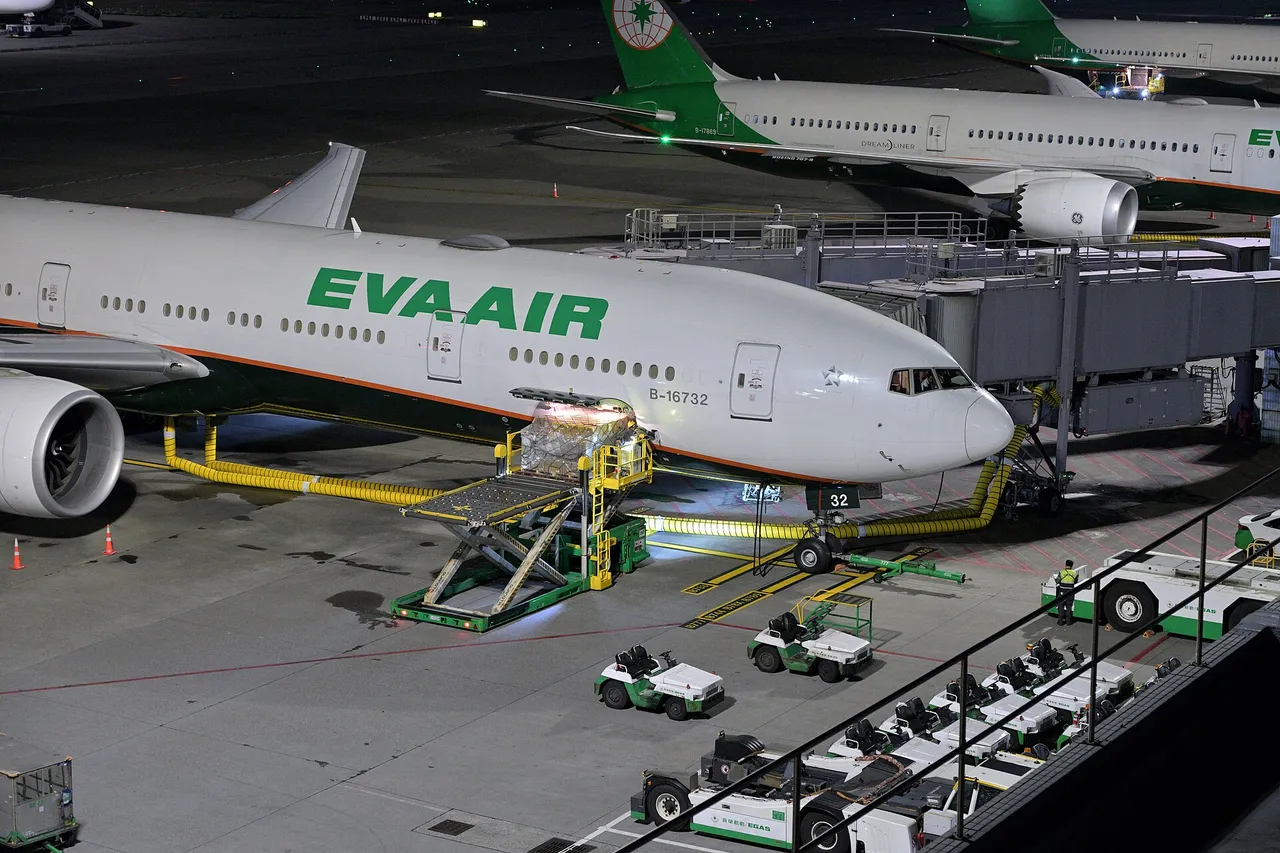
Bahrain is the one GCC market where air freight is not a premium option bolted onto a working sea route. It is, for a growing share of cargo, the only door that opens directly into the country.
Two sets of numbers explain why. In October 2026, Bahrain’s ports recorded 64 vessel arrivals, down 28.9 per cent from 90 in September; only 13 of those calls were container ships, and 48.4 per cent of all origin calls came from the United Arab Emirates — a relay, not a sailing from Asia. Meanwhile Bahrain International Airport handled 405,217 tonnes of cargo in 2025, up 3.2 per cent on 392,812 tonnes the year before and a record for the airport.
So the sea side is a feeder network running through someone else’s hub, and the air side is a genuine cargo airport with its own clearances. That asymmetry is what makes shipping from China to Bahrain a different calculation from Kuwait or Qatar, and it is what this guide is about: what the air lane costs per chargeable kilo, where the days go, and how to clear BAH without paying terminal storage while your file is rebuilt.
Why the sea lane behaves like a feeder
Khalifa Bin Salman Port is a clean, well-run terminal operated by APM Terminals Bahrain, and it clears cargo quickly by regional standards. It is also small, and almost all of its boxes arrive from another port rather than from China direct.
The October data is blunt about it. Container vessel calls: 13 for the month. Almost half of all arrivals originated in the UAE, which means the typical routing for a Chinese container is a mainline call at Khor Fakkan or Jebel Ali, a feeder leg across the Gulf, then a Bahrain import entry. When Hormuz is closed and the mainline carriers are rearranging their Gulf rotations — as they have been since February 2026 — that feeder leg is where the schedule disappears. The container is not late because Bahrain is slow. It is late because its mother vessel discharged somewhere else on a different day.
The terminal is visibly working the problem. On 9 October 2026, APM Terminals Bahrain and Bahrain Customs started a pilot night de-stuffing operation at the container freight station, running from 22:00 to 06:00 with customs inspection and delivery from 07:00, on a five-day trial that required documents by 16:00 the previous day and clearing agents at the shed by seven in the morning. That is what a port does when the constraint has moved from the quay to the warehouse door.
None of this makes sea freight wrong for Bahrain. It makes it a lane you schedule with slack. Our sea freight guide to Bahrain covers the port-to-port numbers and the sailing structure; the point here is narrower. For anything with a fixed deadline, the sea lane’s real transit is not the 15–20 days on the schedule. It is that number plus however long the relay takes this month.
What actually flies, and from where
Bahrain International Airport is a passenger airport with a cargo operation attached, and the cargo operation is larger than most importers assume. Gulf Air runs belly capacity and Falcon Cargo out of its Bahrain hub; DHL’s Bahrain-based freighter airline (Boeing 767s) has long been the airport’s anchor cargo tenant. In April 2026, with the region’s airspace still unsettled, DHL Global Forwarding’s regional chief said Gulf Air was operating out of Bahrain again and that Gulf carriers were steadily restoring capacity — while noting that Muscat and Riyadh would remain its alternative hubs for the foreseeable future, and that rates had softened but were still well above pre-crisis levels. By May, DHL’s own market note put restored Gulf capacity at around 80 per cent or more of pre-crisis levels.
For a shipper in China, that produces three usable routings rather than one.
| Routing | Typical path | Airport-to-airport | Comment |
|---|---|---|---|
| Hub transit via UAE | Shenzhen, Guangzhou or Shanghai → DXB → BAH | 2–4 days | Deepest capacity, most frequent connections, one extra handling point |
| Hub transit via Qatar | Shanghai or Guangzhou → DOH → BAH | 2–4 days | Strong widebody belly capacity; good for oversize pieces |
| Charter or direct uplift | Ad hoc main-deck or charter | 1–2 days | Booked for projects and peak crushes, not for a standing weekly need |
There is no scheduled main-deck freighter rotation from mainland China to Bahrain that you should build a recurring programme on. In practice, the lane is belly capacity plus a Gulf hub, and the hub choice is a trade-off between connection depth (UAE) and handling (Qatar). Hong Kong remains the sensible origin when the cargo is a battery or a mixed dangerous-goods consignment: its dangerous-goods regime is more flexible than the mainland airports, at a higher rate per kilo.
What it costs per kilo
Air freight is priced on chargeable weight — the greater of actual weight and volumetric weight, where volumetric weight is length × width × height in centimetres divided by 6,000. A light, bulky carton pays for air it does not use; a dense one pays only for what it weighs.
Published market rates for the China–Bahrain lane in the second half of 2026 sit in these bands:
| Chargeable weight | Rate per kg | What it suits |
|---|---|---|
| 45–100 kg | USD 7.00–8.50 | Samples, urgent spares, first production runs |
| 100–300 kg | USD 5.50–7.00 | Electronics, accessories, repeat orders |
| 300–500 kg and above | USD 4.50–5.50 | Commercial replenishment, seasonal stock |
Those are higher than the China–Kuwait bands for the same period, and the reason is structural rather than commercial: Bahrain’s lane needs a hub connection, and every connection adds both a handling charge and a day. Pre-crisis quotes of USD 3.50–6.00 per kilo no longer clear at these volumes. Treat any quote inside that band today as either an old rate sheet or a rate without the surcharges.
Four items sit outside the headline rate and are worth asking about explicitly:
- Fuel and security surcharges. They move monthly and, in this market, upward.
- Origin handling and screening. Terminal handling at origin plus X-ray screening, typically USD 0.15–0.30 per kilo, is often quoted separately.
- Destination charges. Ramp handling, terminal storage after free time, and the clearing agent’s fee at BAH.
- Insurance. Around 0.3 per cent of commercial value for all-risk cover, which for air cargo is cheap relative to the exposure.
The five clocks inside “five to eight days”
Air freight from China to Bahrain is usually quoted at three to eight days. Where those days go matters more than the total, because three of the five clocks are yours to control.
| Clock | Realistic time | Who controls it |
|---|---|---|
| Carton ready and picked up | 0.5–1 day | You and your supplier |
| Export declaration and screening in China | 0.5–1 day | Forwarder, at origin |
| Flight and hub connection | 1–3 days | Airline |
| Arrival, ULD breakdown, transfer to the cargo terminal | 0.5–1 day | Airport and handler |
| OFOQ clearance and delivery | 0.5–2 days | Your file |
The last clock is the one importers lose, and it is the one Bahrain has made easiest. Customs Affairs runs a single window, OFOQ 2, covering import declarations across sea and air, and it supports pre-clearance — the declaration can be lodged and assessed while the aircraft is still airborne, so that release happens at or near arrival rather than after it. Used properly, a BAH import can gate out on the day of arrival. Used badly, the same shipment sits in the terminal for three days accruing storage while an invoice is corrected.
Clearing BAH without losing the day
The file is short and unforgiving. You need the commercial invoice showing accurate CIF value and a description that matches the goods, the packing list with exact dimensions and gross weights, the air waybill, and a certificate of origin. Where a permit or conformity requirement applies to the product, it has to exist before arrival, not after.
Two habits separate a one-day clearance from a four-day one.
File on the air waybill, not on the invoice email. The AWB is the transport contract, but it is not a document of title — unlike a bill of lading, it does not need to travel to the consignee to release the goods. That is an advantage, and it is wasted if the agent only starts work when the PDF lands in an inbox the morning after arrival.
Reconcile invoice and packing list before you send them. The single most common cause of a BAH delay is a mismatch between the invoice description and what is physically in the cartons, or a value that does not survive a spot check. Customs assesses duty on CIF value against the HS line; a corrected invoice after arrival costs storage, not just time.
On duty and tax, the arithmetic is simple but the rate is often misquoted. Bahrain applies the GCC common tariff — 5 per cent on most goods, assessed on CIF value — plus VAT at 10 per cent, which rose from 5 per cent on 1 January 2022 and is still shown as 5 per cent in a lot of older freight content. Excise applies separately to tobacco, energy drinks and similar products. Some foodstuffs, medicines and industrial inputs are exempt from duty; almost nothing is exempt from VAT.
For batteries and other dangerous goods, the constraint is documentary rather than commercial: a valid MSDS and a UN38.3 test report for lithium cells, packing that meets the IATA rules, and an origin airport willing to accept the shipment. In practice that usually means Hong Kong.
Air, sea, or sea-air: the honest comparison
| Option | Door-to-door | Cost basis | Best for |
|---|---|---|---|
| Air to BAH | 5–8 days | USD 4.50–8.50 per chargeable kg | Deadlines, high value density, restocking, samples |
| Sea to Khalifa Bin Salman | 20–30 days, relay-dependent | Per container or per CBM | Bulk, heavy, low value density, planned stock |
| Sea-air via a Gulf hub | 12–18 days | Between the two | Mid-urgency cargo where the sea leg is the long pole |
Sea-air is the option most importers ignore and should not. Our sea-air alternatives guide sets out how the ocean leg to a Gulf hub is combined with an air leg onward; for Bahrain the maths is often attractive precisely because the sea leg to the hub is short and the feeder leg it replaces is unreliable.
The break-even is worth doing on your own numbers rather than on a rule of thumb. One cubic metre of cargo weighs 167 kilograms chargeable at the standard 6,000 divisor. On the rates above, that cubic metre costs roughly USD 750–1,420 by air, against USD 60–100 of ocean freight plus perhaps USD 150–250 of destination and clearance charges by LCL — a difference of about USD 700–1,100 per cubic metre. Whether that premium is worth paying depends on what the cubic metre is worth: if it holds USD 5,000 of goods at a 30 per cent margin, a ten-day stock-out costs more than the whole air premium. If it holds USD 300 of ceramic tiles, air is arithmetic nonsense and always will be.
Bahrain as a door to Saudi Arabia’s Eastern Province
One pattern deserves a caution. Bahrain sits a short drive from Khobar and Dammam across the King Fahd Causeway, and it is common to see cargo air-freighted into BAH for a Saudi consignee. That works, but only if the file is built for it from the start: goods cleared for Bahrain and then trucked across the causeway need a separate Saudi import entry at the crossing, and the Saudi import requirements for the product — conformity, labelling, SASO registration where applicable — apply at that point, not at BAH. Cargo that arrives as a Bahrain import with no Saudi paperwork is not halfway to Dammam; it is back at the beginning, in a warehouse, with the clock running.
Before you book
- Give dimensions, not just weight. Chargeable weight decides the invoice, and 167 kg per cubic metre catches people out every week.
- Ask for the all-in figure and the validity date. Rate, fuel, security, screening, destination handling, clearance, delivery — each with a date.
- Confirm the routing. Via DXB or DOH changes the transit by a day and the handling by one touch.
- Pre-clear on the AWB. Insist the agent lodges the OFOQ 2 declaration before arrival, not after.
- Check duty and VAT before pricing your resale. Five per cent plus ten per cent on CIF is the base case, and it is not always in the freight quote.
- For Saudi-bound cargo, build the Saudi file now. The causeway is not a customs-free zone.
Bahrain’s sea gate will not stay a feeder forever — the region’s carriers keep adjusting, and every adjustment reconnects a port. But the airport’s cargo record was not built on a crisis; it was built on 405,000 tonnes of steady traffic in a normal year. For cargo that cannot wait for a relay, the air lane is the shortest distance between a Chinese factory and a Bahraini warehouse, and the paperwork is what decides whether it stays short.
- WhatsApp: Get a quote now
Frequently asked questions
How long does air freight from China to Bahrain take?
Five to eight days door to door, with express services at three to five. The flight itself is one to three days including the Gulf hub connection; the rest is origin handling, ULD breakdown at BAH, and customs clearance, which can be pre-lodged through OFOQ 2 while the aircraft is airborne.
How much does air freight from China to Bahrain cost per kg?
USD 4.50–5.50 per kilo above 300 kg, USD 5.50–7.00 between 100 and 300 kg, and USD 7.00–8.50 for 45–100 kg consignments, on chargeable weight. Fuel, security, screening and destination charges are usually quoted separately.
Is there a direct cargo flight from China to Bahrain?
Not reliably enough to build a weekly programme on. Capacity moves as belly space on Gulf Air and other carriers, with most commercial cargo connecting through Dubai or Doha, and ad hoc charters filling project demand.
What duty and VAT will I pay on air cargo into Bahrain?
Five per cent customs duty on CIF value for most goods under the GCC common tariff, plus 10 per cent VAT. Some foodstuffs, medicines and industrial inputs are duty-exempt. Excise applies to tobacco and similar products.
Why does my sea shipment to Bahrain take longer than the schedule says?
Because almost all Bahraini container traffic arrives by feeder from a Gulf hub rather than direct from Asia. When mainline carriers rearrange their Gulf rotations — as they have throughout 2026 — the relay, not the ocean leg, sets the delivery date. Only 13 container vessels called at Bahraini ports in October 2026.
Can I clear customs at BAH before the flight lands?
Yes. Bahrain Customs supports pre-clearance through the OFOQ 2 single window, so the declaration can be assessed in advance and the cargo released at or shortly after arrival, provided the invoice, packing list, air waybill and certificate of origin are correct and complete.