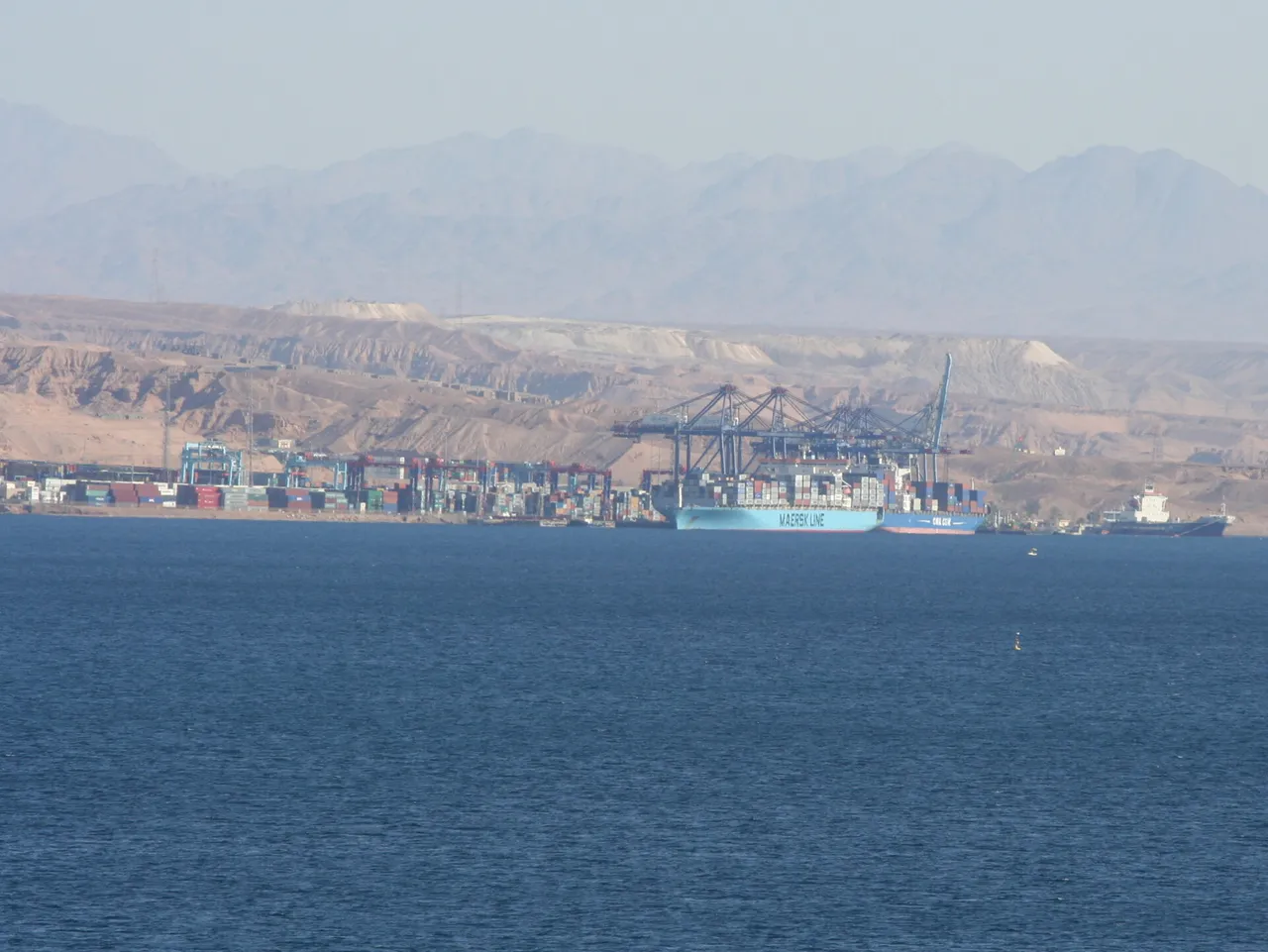
The Zhong Cheng Chang Ling is a 2,200 TEU container ship under the Chinese flag, delivered in January, the sort of feeder that never makes the news. In August her master wrote an email asking the Houthis for permission to cross the Bab el-Mandeb. The reply, reported by the Wall Street Journal on 6 November, granted a transit permit valid for seven days, told the ship to keep her AIS transmitting and to stay on VHF channel 16 for the whole passage, and closed with an invitation to subscribe to the group’s email alerts.
That is the shape of a Red Sea transit in November 2026: no convoy, no naval escort, an inbox and a seven-day window. If you move containers on shipping from China to Saudi Arabia, the emails are less interesting than the line they draw: permission to cross the strait is not permission to work a Saudi berth, and no carrier has said otherwise.
What the Wall Street Journal actually saw
The reporting is based on emails exchanged between shipmasters and the Humanitarian Operations Coordination Centre (HOCC), the body the Houthis set up in early 2024 to tell shipping companies what they are and are not allowed to do. The mechanics are plain, and that is the surprising part.
| Item | What the report describes |
|---|---|
| Channel | Email to the HOCC, usually from the ship or her manager |
| What the operator declares | That owner, manager, charterer and crew have no links to Israel, the United States or the United Kingdom; voyage plan and estimated timings |
| Reply time | Typically within 24 hours, when there is a reply |
| What comes back | A transit authorisation. In the documented case, seven days, covering the Red Sea, Bab el-Mandeb, the Gulf of Aden and the Arabian Sea |
| Conditions | Keep AIS on, monitor VHF channel 16, report anything suspicious |
| Price | None published. The HOCC said in August that passage is a voluntary service and denied reports of a transit fee |
| Official guidance | Maritime authorities advise owners not to engage with or register with the HOCC, and many ships do not, not least because Washington designates the Houthis a terrorist organisation |
The commercial effect is on the schedule. A booking decision that used to depend on a carrier’s proforma sailing now also depends on a reply from Sanaa that may arrive tomorrow or not at all. You cannot reserve a slot in a queue that is administered by email.
Why a Chinese ship bothered asking
Since 20 July the Houthis have banned vessels from loading or discharging at any Saudi port, a message sent to shipowners in writing and enforced, unevenly, ever since. Container lines kept calling Jeddah; the tanker trade mostly stopped. That gap is where the permit system lives.
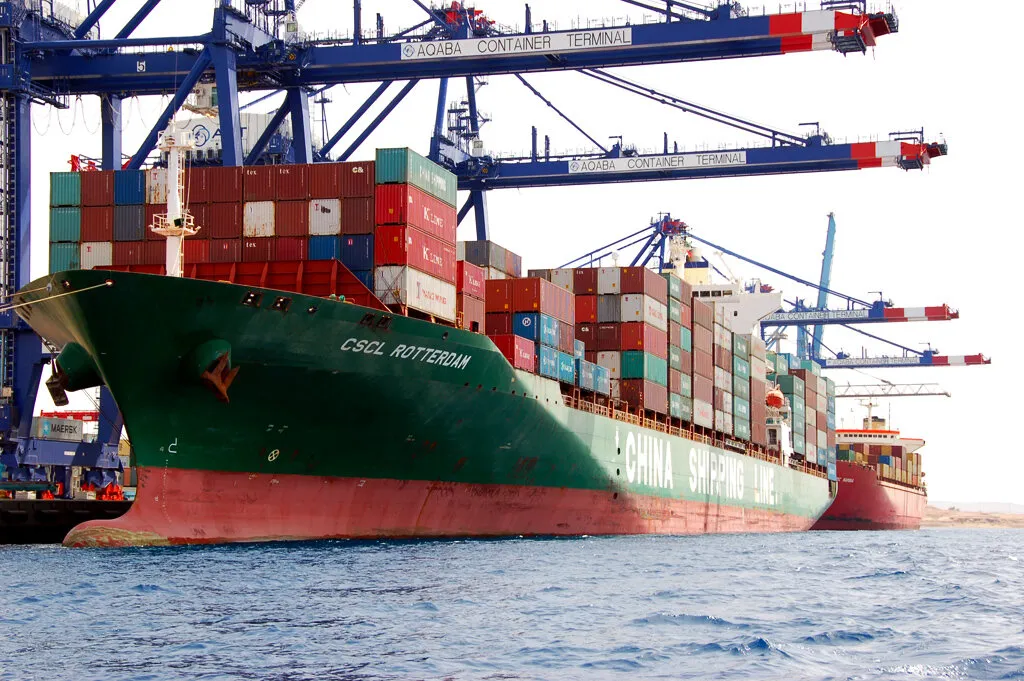
On the face of it, a Chinese-owned, Chinese-crewed ship has nothing to apply for. Ships without Israeli, American or British ties are, by the Houthis’ own criteria, allowed through without asking. The master of the Zhong Cheng Chang Ling told the Journal that his management company wanted the extra precaution. Read the AIS record for the same vessel and the calls in late August are Aqaba on 27 August and Ain Sokhna on 29 August. Jordan and Egypt, not Saudi Arabia. So the ship was not seeking cover for a Saudi call. She was buying reassurance for a route that passes within sight of a coastline the Houthis have held since September, and paying for it with a piece of information that a ship’s security posture usually tries to withhold: exactly where she is.
The permit does not do three things
It does not authorise a Saudi port call. The July notice bans loading or discharging at Saudi ports, full stop, and threatened vessels that ignore it with sanctions and with being targeted “in any location” within reach. A permit for the strait says nothing about your container being discharged in Jeddah. Saudi-bound cargo still moves on whatever the carriers will actually accept, and that means the Gulf gateways and the landbridge for most of it.
It does not bind an insurer. War risk cover for China–GCC shipping is priced on ownership, flag, route and named exclusions, not on an emailed assurance from the party doing the shooting. The closest precedent came at Hormuz, where the Lloyd’s Market Association wrote a clause making payment of a transit fee a matter that could void cover. An operator who treats a Houthi permit as risk mitigation is making an underwriting argument his policy does not contain.
It does not bind the Houthis either. The group has attacked ships with no connection to the named conflict before, and a seven-day window that expires while a vessel is still in the Red Sea does not come with an extension. There is no appeal process and no claims desk.
The AIS condition is the part to think about
AIS on is a reasonable request from the shore side of any strait: it makes traffic visible and collisions rarer. It is also the exact condition a master would rather not accept in a threat area, which is why dark transits rose sharply after the July ban. Lloyd’s List Intelligence counted 38 vessels crossing Bab el-Mandeb in a single week in late July with their transponders off, and treated that figure as an undercount.
The permit trades anonymity for a promise. Keep the transponder on, and the ship is a labelled, trackable target that has publicly declared itself compliant. That is a good trade while the criteria hold and a poor one if the criteria change on the Tuesday of your voyage. It is also why the guidance from maritime authorities has not shifted: do not engage, do not register.
The numbers do not say the strait is closed
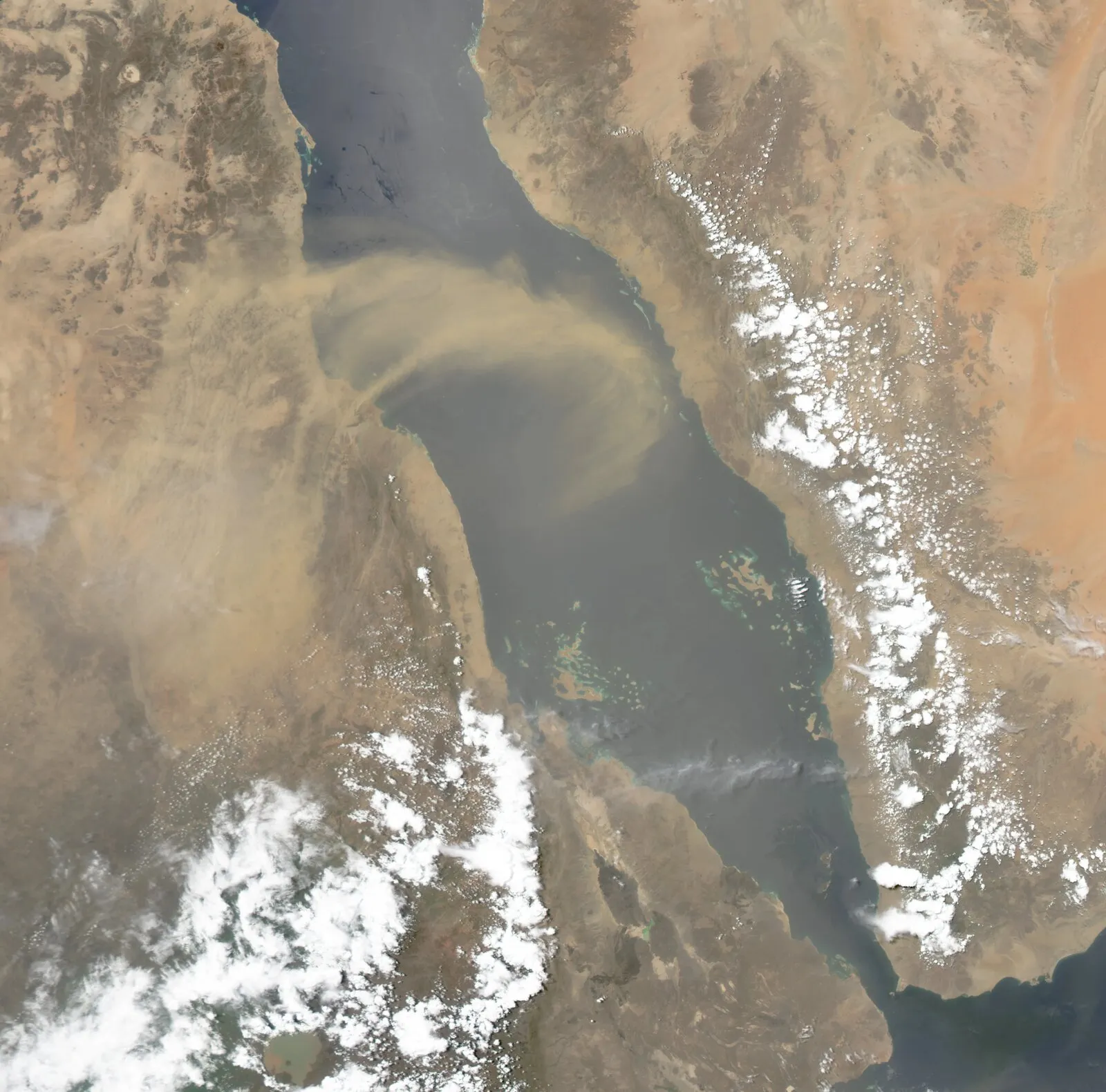
The Houthis said 1,083 vessels crossed Bab el-Mandeb in October, 550 northbound and 533 southbound, and used the figure to argue that the waterway works normally for anyone not connected to Saudi Arabia. Treat that as a claim from an interested party, then set it against the independent counts. Lloyd’s List recorded 263 total transits in the week after the July ban, down from 354 the week before, with 225 of them broadcasting AIS.
On the container side the direction of travel is capacity coming back, not leaving. Xeneta put weekly capacity committed to Red Sea services at 467,297 TEU in October, roughly half the pre-crisis level of August 2023 and about double what was on offer at the end of August this year. The Shanghai Containerised Freight Index fell 1.46% to 3,633.45 on 6 November, its first drop in five weeks.
Cheaper and more frequent are not the same as safer. The same week the permit story broke, a seafarer died on a tanker hit north of Qatar while bound for Bahrain, and the IMO’s incident tracker stood at 129 attacks and 24 seafarer deaths for this conflict. Insurance for a ship with no Saudi link runs at about 0.2–0.3% of hull value; a Saudi-linked ship calling at Yanbu pays near 3%, up to 7% at Jizan, and 6–9% in Hormuz. Those percentages end up in your freight rate whether or not anyone emails Sanaa.
What this means for a box leaving Shenzhen
Very little of the permit story touches your container directly. What touches it is the routing the carrier will accept this month.
| Destination | Practical routing now | Does a transit permit change anything? |
|---|---|---|
| Jeddah, King Abdullah Port | Red Sea service where the carrier still accepts Saudi calls, otherwise a Gulf gateway plus landbridge | No. The Saudi port ban is untouched by a strait permit |
| Riyadh, Dammam, Jubail | Jeddah or King Abdullah plus truck; Gulf coast served overland from the Red Sea | No |
| Aqaba, Jordan | Direct Red Sea calls on the small China–Red Sea strings, then road to Amman and Iraq | For the strait transit only, and it is the carrier’s call, not yours |
| UAE, Qatar, Kuwait, Bahrain, Iraq | Salalah or Khor Fakkan, then feeder or bonded truck. Hormuz remains effectively shut to boxships | Not relevant. These boxes do not pass Bab el-Mandeb |
For shipping from China to Jordan, the strait is unavoidable, and the permit question is live. For Saudi cargo it is mostly a distraction from the two things that actually decide your delivery date: whether the carrier is accepting the Saudi port this week, and how long the box sits after discharge.
Five questions before you confirm a booking
- Which strait does this box actually cross, and which port does the bill of lading name as the place of discharge? If the answer is Khor Fakkan with a truck to Riyadh, Bab el-Mandeb is somebody else’s problem.
- Who files the passage paperwork, and will the carrier put the routing in writing with a date on it? Verbal reassurance about “the Red Sea route” has cost importers two weeks this year.
- Does my cargo war cover respond if the ship transited under a voluntary permit from a designated group? Ask the broker in writing, before the container is loaded.
- What happens if the seven-day window closes mid-voyage? On a small string there is no spare ship and no spare week.
- Who pays the storage if the box is held at an intermediate port because the onward leg was refused? That is usually the cargo owner, and it is rarely quoted.
What to watch next
What deserves watching is whether the arrangement hardens into a requirement. The Institute for the Study of War made the point on 6 November: a voluntary permit system normalises the idea that a non-state group regulates a global chokepoint, which is the foundation for making permits compulsory and priced later. Iran has already run that play at Hormuz through its Persian Gulf Strait Authority.
If that happens, the cost lands in the same place it always does, on the party who cannot pass it on: the importer with a container full of goods and a delivery date. Plan the first quarter of 2027 on the routings that work today, and treat any improvement in the Red Sea as a bonus that arrives with notice, not a baseline you can book against.
If you want a routing check before you commit a booking, our team quotes each gateway separately with the sailing, the surcharge lines and the on-carriage shown as distinct items.
- WhatsApp: Get a quote now