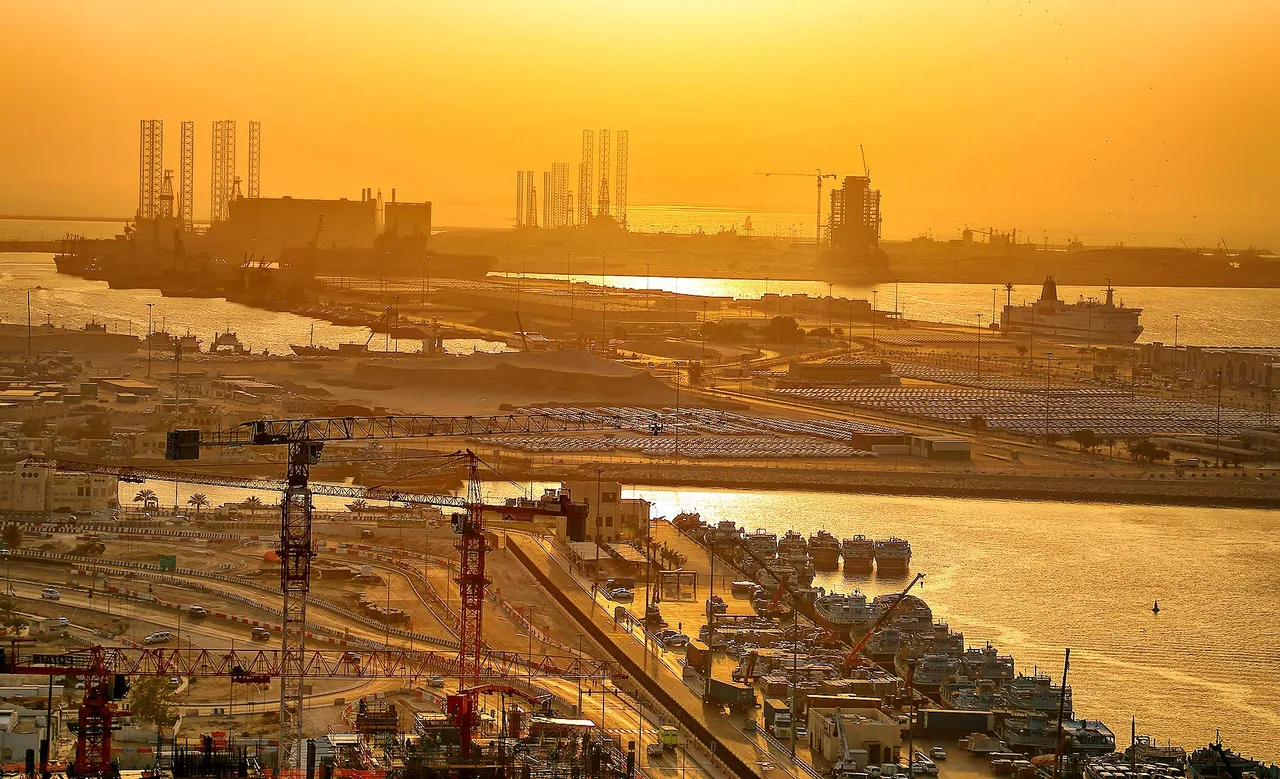
The United Arab Emirates is one of the busiest re-export and consumption markets for Chinese goods in the Middle East. Whether you are delivering to Dubai, Abu Dhabi, Sharjah, or re-exporting to Saudi Arabia, Qatar, Bahrain, or Oman, container shipping from China to UAE is the backbone of most supply chains.
In this guide we explain the ports, container options, 2026 rate levels, transit times, documentation, customs clearance, and the practical choices that decide whether your shipment arrives on time and on budget.
Why the UAE matters for China–GCC trade
The UAE is more than a destination. It is a regional logistics hub.
- Jebel Ali Port in Dubai is the largest container port in the Middle East and one of the most connected transshipment hubs in the world.
- Khalifa Port in Abu Dhabi offers deep-water berths and strong rail and road links to the rest of the Emirates and Saudi Arabia.
- The UAE’s free zones make it attractive for warehousing, re-export, and light assembly before goods move into GCC markets.
- Dubai International Airport and the UAE’s road network allow fast onward movement by air or truck once containers are cleared.
For Chinese exporters, landing cargo in the UAE often means reaching not only the Emirates but the wider Gulf market through efficient land and feeder connections.
Main UAE container ports
Jebel Ali Port (Dubai)
Jebel Ali is the default gateway for most container cargo from China. It handles the largest share of UAE imports and re-exports, offers frequent direct calls from Asia, and is supported by the adjacent Jebel Ali Free Zone (JAFZA).
- Best for: consumer goods, electronics, machinery, automotive parts, e-commerce inventory
- Connectivity: direct services from Shanghai, Ningbo, Shenzhen, Guangzhou, Qingdao
- Onward options: road to all Emirates, Saudi Arabia via Al Batha or Salwa, feeder to Bahrain and Qatar
Khalifa Port (Abu Dhabi)
Khalifa Port is a modern deep-water alternative located between Dubai and the Saudi border. It is especially useful for project cargo, heavy machinery, and shipments destined for Abu Dhabi or the Western Region.
- Best for: industrial equipment, petrochemical-related cargo, oversized shipments
- Connectivity: rail link to the UAE mainland (Etihad Rail), good highway access
- Advantage: less congested than Jebel Ali for certain cargo types
Mina Rashid (Dubai)
Mina Rashid historically handled Dubai’s container traffic. While much of that role has moved to Jebel Ali, Mina Rashid still handles cruise, general cargo, and select logistics activity.
Port of Fujairah
Fujairah sits on the Gulf of Oman, outside the Strait of Hormuz. It is not a major container gateway but plays an important backup role during regional chokepoint tensions. We covered its strategic value in our Fujairah bypass guide.
Sharjah and other ports
- Hamriyah Port: serves Sharjah’s industrial zone
- Khor Fakkan Port: on the east coast, also outside Hormuz, useful for certain re-export arrangements
FCL vs LCL: which fits your shipment?
Full Container Load (FCL)
You rent the entire container. FCL is usually the best value when you have enough cargo to fill most of a 20-foot or 40-foot box.
| Container type | Typical payload | Best for |
|---|---|---|
| 20-foot GP | ~28 CBM, 21–26 tonnes | heavy cargo, dense goods, small machinery |
| 40-foot GP | ~58 CBM, 26–28 tonnes | general cargo, pallets, mixed goods |
| 40-foot HC | ~68 CBM | bulky but light cargo, e-commerce, packaging |
| 40-foot HQ / Reefer | temperature controlled | food, pharmaceuticals, cosmetics |
FCL is faster at origin because the container is loaded once and sealed until destination. It also avoids the extra handling that LCL requires.
Less than Container Load (LCL)
You share container space with other shippers. LCL is ideal when your cargo is too small to justify a full container.
- Minimums can be as low as 1 CBM
- Good for samples, small orders, and trial shipments
- Slightly longer transit because cargo is consolidated at origin and deconsolidated in the UAE
For regular small shipments, LCL helps manage cash flow. For high-volume importers, FCL gives better unit cost and fewer damage risks.
2026 rate guide: what to expect
Container shipping rates from China to the UAE fluctuate weekly with fuel, demand, and regional risk. The numbers below are indicative ranges for planning purposes. Final quotes depend on the exact commodity, weight, dimensions, Incoterms, and sailing date.
FCL rates from China to Jebel Ali (AED per container)
| Route | 20’ GP | 40’ GP/HC |
|---|---|---|
| Shanghai–Jebel Ali | 4,500–6,500 AED | 7,500–10,500 AED |
| Shenzhen–Jebel Ali | 4,000–6,000 AED | 7,000–9,500 AED |
| Ningbo–Jebel Ali | 4,500–6,500 AED | 7,500–10,000 AED |
| Guangzhou–Jebel Ali | 4,500–6,000 AED | 7,500–9,500 AED |
| Qingdao–Jebel Ali | 4,500–6,500 AED | 7,500–10,500 AED |
LCL rates from China to Jebel Ali
- Typical range: 550–900 AED per CBM
- Minimum charge usually 1 CBM
- Heavy cargo may be charged by weight rather than volume if the density exceeds standard limits
Rates can rise during peak seasons (pre-Ramadan, Golden Week, year-end) and when Red Sea or Hormuz disruptions add war-risk surcharges. Always confirm the validity date of any quote.
Transit times from China to UAE
| Origin port | Typical FCL transit | Typical LCL transit |
|---|---|---|
| Shanghai | 18–24 days | 22–28 days |
| Shenzhen | 14–20 days | 18–24 days |
| Ningbo | 18–24 days | 22–28 days |
| Guangzhou | 16–22 days | 20–26 days |
| Qingdao | 22–28 days | 26–32 days |
| Tianjin/Xingang | 24–32 days | 28–35 days |
Transit time is only part of the story. Add customs clearance, deconsolidation (for LCL), inland transport, and any free-zone handling to get the true door-to-door lead time.
Documentation required
Accurate documents keep cargo moving. Missing or incorrect paperwork is one of the most common causes of delays at Jebel Ali or Khalifa Port.
- Commercial invoice: value, description, HS code, currency
- Packing list: weight, dimensions, number of packages per carton
- Bill of lading or sea waybill: proof of contract of carriage
- Certificate of origin: may be required for certain products or preferential treatment
- Import code / trade licence: the UAE consignee must have the correct licence
- Product certificates: ESMA/ECAS/SABER if applicable
- MSDS or technical data: for chemicals, batteries, cosmetics, electronics
If you ship DDP with GCC Freight, we handle much of this documentation on your behalf and coordinate with the UAE clearing agent.
UAE customs clearance and compliance
The UAE is generally business-friendly, but customs clearance is strict on documentation, value declaration, and product conformity.
Customs duty
Most non-GCC-origin goods attract 5% customs duty calculated on the CIF value. Some categories are duty-free, and others (alcohol, tobacco) are higher. Always verify the HS code before shipping.
VAT
The UAE applies 5% VAT on most imports. VAT-registered importers can usually recover this, but the process requires correct documentation.
ESMA and ECAS
The Emirates Authority for Standardization and Metrology (ESMA) runs the Emirates Conformity Assessment Scheme (ECAS). Many consumer products, electronics, and building materials require ECAS certification or a certificate of conformity before customs release.
Common products needing ECAS include:
- Low-voltage electrical equipment
- Electronics and mobile devices
- Toys
- Building materials
- Cosmetics and personal care products
- Food contact materials
If your product is regulated, the certificate should be arranged before shipment. Without it, the cargo can be held, tested, or rejected.
SABER vs ECAS
SABER is the Saudi conformity platform. ECAS is the UAE equivalent. If you are re-exporting from the UAE to Saudi Arabia, you may need both. GCC Freight can advise which certificate applies to your product.
DDP shipping from China to UAE
Delivered Duty Paid (DDP) means the seller or forwarder handles everything from Chinese origin to the UAE destination, including ocean freight, insurance, customs clearance, duties, VAT, and final delivery.
DDP is popular with UAE importers because it removes uncertainty. The buyer knows the total landed cost before the container sails.
A typical DDP process with GCC Freight includes:
- Pickup from supplier factory or consolidation warehouse in China
- Export customs clearance at Chinese port
- Ocean freight to Jebel Ali or Khalifa Port
- UAE import customs clearance and duty/VAT payment
- Local delivery to warehouse, free zone, or customer door
Free zones and warehousing
The UAE has dozens of free zones. The most relevant for Chinese exporters include:
- Jebel Ali Free Zone (JAFZA): largest, connected directly to the port
- Dubai Airport Freezone (DAFZ): air-sea multimodal
- Sharjah Hamriyah Free Zone: cost-effective for light industry
- Khalifa Industrial Zone (KIZAD): near Khalifa Port, good for heavy industry
Free zones allow 100% foreign ownership, duty suspension, and easier re-export procedures. Many importers use them as regional distribution centers.
Red Sea and Hormuz risk considerations
In 2026, route security remains a real factor. Container services from China to Jebel Ali normally pass through the Strait of Malacca and the Strait of Hormuz. The Red Sea route via the Suez Canal and Bab el-Mandeb is an alternative for some carriers, but persistent Houthi activity has made many lines avoid it.
For UAE-bound cargo, the Hormuz route is the standard path. During regional tensions, carriers may add war-risk surcharges, adjust schedules, or shift some cargo to East Coast UAE ports such as Fujairah or Khor Fakkan. If your supply chain is time-sensitive, ask your forwarder for the planned rotation and any contingency options.
How to choose the right shipping option
Use this quick framework:
| Situation | Recommended option |
|---|---|
| Full container every month | FCL to Jebel Ali, DDP or DAP |
| Small trial orders | LCL to Jebel Ali |
| Heavy machinery to Abu Dhabi | FCL to Khalifa Port |
| Re-export focused | Free-zone entry at JAFZA or KIZAD |
| Urgent seasonal stock | Air freight supplement or emergency FCL |
| High-risk period | Gulf routing, confirmed rotation, cargo insurance upgrade |
FAQ
What is the cheapest way to ship a container from China to UAE?
For larger volumes, FCL from Shenzhen or Guangzhou to Jebel Ali is usually the most cost-effective per unit. For small shipments, LCL is cheaper overall.
How long does sea freight take from China to Dubai?
Typical FCL transit from South China is 14–20 days. From East China ports such as Shanghai or Ningbo, 18–24 days. LCL adds 4–7 days for consolidation.
Do I need a UAE company to import?
Yes, an importer needs a valid UAE trade licence or a free-zone company. If you do not have one, your forwarder can clear under a licensed consignee arrangement.
What is the difference between DDP and DAP for UAE imports?
DDP includes duty, VAT, and delivery. DAP means the seller delivers to the destination port or terminal, and the buyer handles import clearance and taxes.
Which products need ECAS certification?
Electronics, toys, low-voltage equipment, cosmetics, building materials, and food-contact items commonly require ECAS. Check the specific HS code and product category.
Is the UAE a good hub for re-export to Saudi Arabia?
Yes, Jebel Ali and JAFZA are widely used for re-export to Saudi Arabia, Bahrain, Qatar, and Oman. You still need to meet the destination country’s requirements, such as SABER for Saudi Arabia.
Conclusion
Container shipping from China to UAE offers flexibility, scale, and access to one of the most dynamic markets in the Middle East. The key to success is matching the right port, container mode, and customs strategy to your product and delivery requirement.
If you are planning your next shipment, contact GCC Freight on WhatsApp for a detailed quote. We can compare FCL and LCL options, confirm the best UAE port, and handle DDP clearance so your cargo moves without surprises.
- WhatsApp: Get a quote now
Hero image: Port Rashid in Dubai, UAE, by Iwona Rege via Wikimedia Commons, licensed under CC BY-SA 4.0.