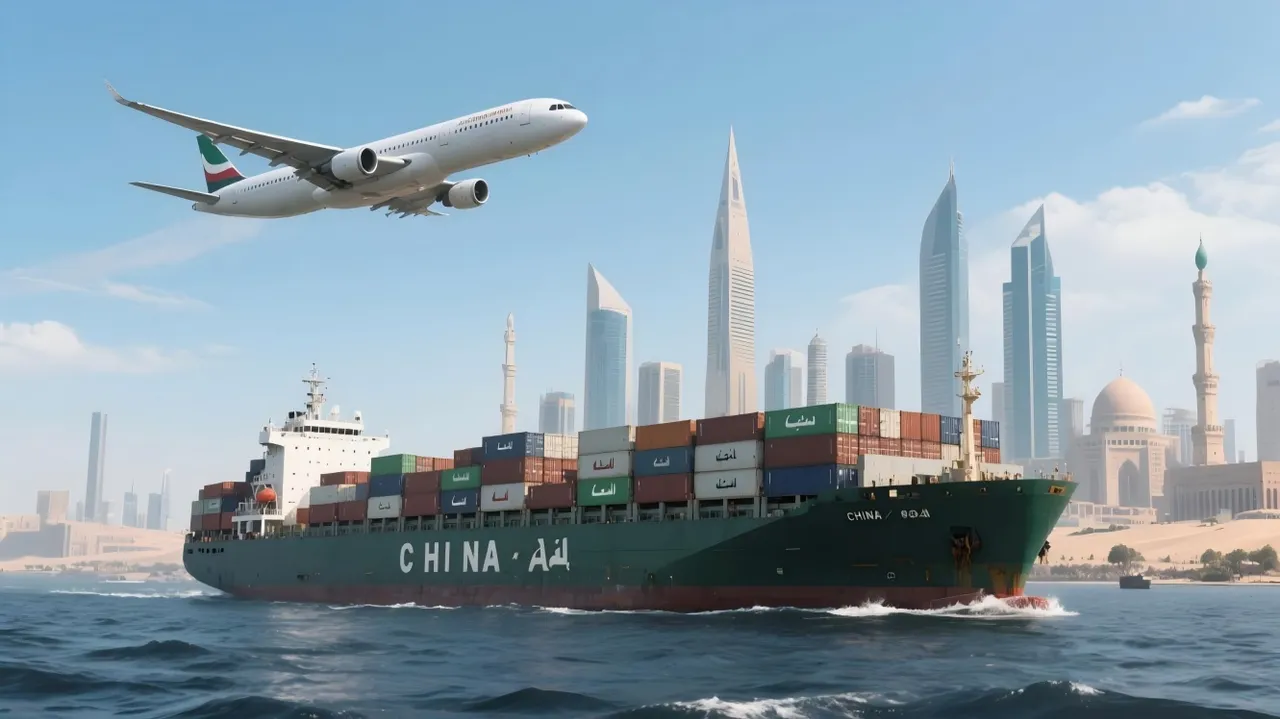
Iraq is China’s largest trading partner in the Arab world. The Chinese ambassador in Baghdad put bilateral trade above USD 51 billion for last year in early October, and even with the war dragging on, Chinese exports to Iraq were still running at about USD 1.16 billion in August alone — down 20.1 per cent year on year, but hardly a collapse. Goods keep coming. What changed is where they enter the country.
Iraq’s only deep-water seaport, Umm Qasr, sits at the head of the Gulf, sixty kilometres south of the Basra oilfields and on the wrong side of the Strait of Hormuz. When the strait effectively closed to commercial traffic at the end of February 2026, Iraq lost its front door. So the cargo went overland instead: unloaded in Jordan, in Syria or in Turkey, and trucked across a border. For an importer arranging shipping from China to Iraq, that shift is now the single biggest variable in the delivery date.
This guide measures the land bridges that exist in November 2026 — what each one costs in time, where the queue actually forms, which customs system your truck will meet, and which of them you should not build a monthly programme on.
What broke: Iraq’s sea gate is behind the strait
Umm Qasr did not slow down in July. It stopped. Reporting from the port on 28 July described berths and container yards that were empty, with no commercial vessels able to reach them through the blockade. Oil revenue is roughly 90 per cent of the Iraqi budget, and grain and sugar move through the same quays, so the standstill hit food supply and state finances at once.
The port was already struggling before the war. In February 2026, more than 50,000 containers were stacked at Umm Qasr North after the rollout of a line-by-line customs tariff and the ASYCUDA clearance system; the authority cut storage fees and lifted throughput back to about 2,500 containers a day. Across the first half of 2026, operators reported vessel waiting times of three to five days and container dwell of seven to ten days, on a port that handled roughly 1.8 million TEU in 2025.
The replacement is not ready, and it is candid about why. Grand Faw, the deep-water port at the southern tip of the country, has completed its five berths, its submerged tunnel is at 98 per cent and its freight and transfer area at 90 per cent; breakwaters finished in October. But the Transport Ministry has said trial operations await “a secure environment” and will begin once the Hormuz crisis is resolved. Do not plan 2027 volume through Faw.
That leaves four overland doors. Only three are open.
The four ways into Iraq, and which are open
| Route | Sea leg | Land leg | Border | Customs at entry | Realistic door to door | Status, November 2026 |
|---|---|---|---|---|---|---|
| Aqaba + Trebil | China → Aqaba, 16–22 days | 1,169 km to Baghdad | Karameh (JO) / Trebil (IQ) | Federal Iraq, ASYCUDA | 35–45 days | Open, congested |
| Latakia or Tartus + Al-Qaim | China → Syria via Suez | 500–700 km | Al-Qaim or Al-Waleed / Rabia | Federal Iraq | 30–40 days, high variance | Open, fragile |
| Mersin or Istanbul + Ibrahim Khalil | China → Turkey via Suez | 1,200–1,500 km | Ibrahim Khalil (Habur) | KRG, or federal if goods go south | 30–38 days | Open, north-focused |
| Bandar Abbas + Sheeb | China → Iran | 400–600 km | Sheeb / Shalamcheh | Federal Iraq | Not bookable | Closed 21 October 2026 |
The last row matters more than its brevity suggests. The Iranian corridor used to be the shortest land path from a Chinese container to Baghdad, and it is the reason some forwarders still quote Iraq as a ten-day destination. Iraq closed Sheeb to passengers, vehicles and commercial trucks on 21 October for security reasons. Any quote built on Bandar Abbas today is built on a closed crossing.
Route 1: Aqaba has become Iraq’s port
Aqaba is Jordan’s only seaport, and most of its boxes are still booked as shipping from China to Jordan. In 2026 the port also became Iraq’s. The clearest number in this market is the one for Iraq-bound containers at Aqaba. In January to July 2025 the Jordanian port handled 3,599 containers destined for Iraq. In the same seven months of 2026 it handled 37,182 — an increase of 933.1 per cent. Total transit containers rose from 30,763 to 80,235 over the same period, up 160.8 per cent.
Read those two figures together and the picture is precise. Aqaba’s overall container throughput barely moved: 472,680 containers in the first half of 2026 against 468,062 in the same period last year. The terminal’s commercial chief told Reuters container trade was up “easily by five per cent”, with growth driven by the wider Levant and Iraq in particular. What exploded was not Jordan’s import demand. It was the transit share, and Iraq is almost all of it.
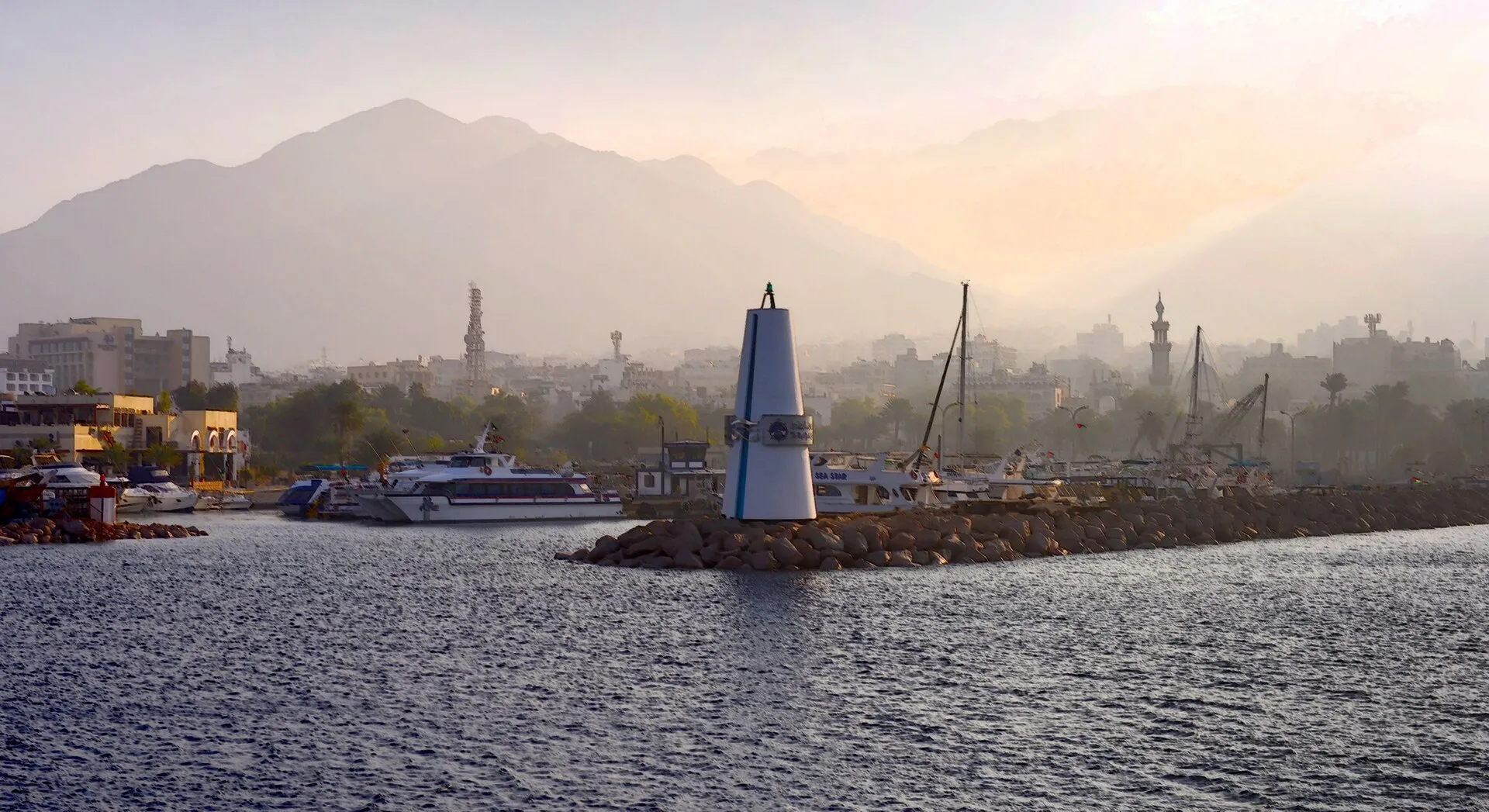
The port has room, in theory. Declared capacity is 1.3 million TEU, and it can be pushed toward two million with extra labour and working hours; the logistics yards behind the quay total about two million square metres. But capacity at the berth is not the constraint, and this is the part importers keep missing. Aqaba’s real problem in 2026 is evacuation — how fast a box can leave the system through gates, customs and trucks. A container that cranes unload in an hour and then sits for two weeks is not throughput; it is a bill.
Jordan’s cabinet has been treating it that way. A September package doubled free time for national exports to 14 days for six months, cut the charge for destroying cargo from JOD 450 to JOD 50 per tonne, moved part of customs clearance to Amman, exempted transit truck movements from trip limits for three months, raised the permitted daily container-truck trips to nine, and allowed trucks to carry two 20-foot containers at once. Transit container dwell has come down from about 15 days to 12, local inbound containers sit at about eight, and daily gate-out capacity has risen from roughly 900 to 1,200 containers. The Jordan Maritime Commission met on 5 October specifically to attack vessel waiting times.
Twelve days of dwell is still twelve days. Add the ocean leg, add the border, and the arithmetic stops resembling a brochure. Sea freight to Aqaba runs 16–22 days from South China; a container that then waits twelve days for a gate slot is already at day 30 before it has moved a kilometre toward Baghdad.
Trebil: one gate, a thousand trucks a day
The Jordan–Iraq border has a single commercial crossing, and it has two names. Jordan calls its side Karameh (Al-Karamah); Iraqi paperwork says Trebil, in Anbar. Seeing one name on the transit document and the other on the import declaration is normal, not an error — use Karameh for exit formalities, Trebil for the Iraqi entry.
Trebil clears under Iraq’s federal customs authority and files through ASYCUDA, with the federal tariff applied at the border itself. It handles about 1,000 trucks a day, and expansion work on yards and inspection capacity has been under way since at least May. That sounds like a lot of capacity until you set it against 37,182 containers arriving from Aqaba in seven months, all routed at one yard.
Here is where the calendar quietly loses a week. The road itself is not the problem: Aqaba to Baghdad is 1,169 km of surveyed truck route, about 15 hours of driving. Measured lanes in 2026 run 10–12 days port to door, because a truck spends its time queueing at the yard, waiting for a declaration to clear, and waiting for a return load. Older guides — including ours — quote three to four days for the same leg. That figure describes driving plus a clean clearance in calm conditions. It is not a planning number in the current market.
The single most expensive document in the file is the HS code. Iraq’s tariff is now calculated line by line, and a code that does not match the invoice description will park a truck in the Trebil yard for days while storage and detention accrue at both ends of the journey. Shipping cost from China to Jordan covers the rates; the compliance file is what decides whether you pay those rates once or three times.
Two operational habits pay for themselves. First, price the land leg per truck and separately from the ocean freight, so a border delay shows up as a line item instead of a surprise. Second, have a second crossing prepared in the same file before the truck leaves Aqaba — Arar (Saudi Arabia), Al-Qaim or Al-Waleed (Syria), Safwan (Kuwait), Ibrahim Khalil (Turkey). Redirection costs a day. Redocumenting from scratch costs a week.
Route 2: the Syria leg is real, but it is not a volume route
The route the trade papers are excited about runs China → Latakia or Tartus on the Mediterranean via Suez, then by road through Syria to Al-Qaim or Al-Waleed and into Iraq’s western governorates. It is shorter on paper and it has genuinely improved: on 27 September, Iraq and Syria agreed eight measures to streamline cross-border trade, including electronic customs data exchange, dedicated commercial lanes, priority routes for fuel tankers and perishables, and simplified transit. Iraq has rolled out ASYCUDAWorld across its customs network, and the ECOR electronic certificate-of-origin platform became mandatory on 7 October. Syrian officials estimate truck waiting times could fall from two to four days to about six hours, cutting road costs by 15–25 per cent.
Now the part the same officials will tell you privately. On 27 October, Syria closed Nassib — the only crossing between the two countries — in both directions, after Jordanian air strikes on southern Syria. Trucks backed up three kilometres from the Jaber gate, refrigerated cargo sat for hours, and Syrian authorities withdrew customs clearance agents from the centre, leaving the crossing on a slower back-to-back transfer regime. It reopened the next day, 28 October, with a joint investigation announced. Around 1,500 shipments a day normally pass through that customs centre.
A crossing that closes for a day on a security incident is not a corridor you schedule a monthly programme on. Use the Syria leg for western Iraq, for Anbar, for cargo that cannot wait for Trebil — and price it with a buffer measured in days, not hours. The longer-term signals are good: the Al-Tanf road is being rehabilitated, Rabia is being expanded, and a first transit convoy from Turkey has already crossed into Iraq via Syria. None of that is a November planning assumption.
Route 3: Turkey for the north
The third door is the northern one. Cargo moves China → Mersin or Istanbul via Suez, then road through Turkey to the Ibrahim Khalil (Habur) crossing and on to Mosul, Erbil and Duhok. Transit is longer — 1,200 to 1,500 km of road depending on the Turkish port — but the corridor is mature and the sailing options are deeper than the Red Sea alternatives.
Two things decide whether it suits you. The first is destination: for Erbil and Duhok it is usually the shortest door-to-door option, while for Baghdad you are adding a long domestic haul. The second is which customs system you land in. Ibrahim Khalil clears under the Kurdistan Regional Government, and goods that then travel south into federal Iraq face a further federal tariff settlement. Importers who quote a KRG-cleared cost and deliver to Karbala discover the gap at the second border.
The long-term answer to all of this is the Development Road, the corridor that will run from Grand Faw through Basra to Turkey, with an initial phase targeted for 2028 and a cost estimate above USD 24 billion. It is a serious project and it is not a solution to a booking you are making this month.
The customs file decides more than the route does
You can choose the perfect crossing and still lose two weeks at the gate. Four documents and one number control that outcome.
| Requirement | What it is | Why it stops cargo |
|---|---|---|
| Certificate of Conformity (CoC) | Pre-shipment inspection and certification of regulated goods under the COSQC programme, run by appointed bodies, mandatory since October 2020 | Cannot be obtained after the goods arrive; a missing CoC means the consignment is held or rejected at entry |
| ECOR certificate of origin | Electronic platform for verifying certificates of origin and invoices, mandatory since 7 October 2026 | Paper certificates are no longer the working document; verification failures show up as clearance refusals |
| HS classification | Tariff line under Cabinet Decision 957, applied ad valorem since early 2026 | The tariff is line by line now, and a mismatch between invoice and declaration description is the most common reason a truck waits days |
| Reconstruction levy and duty | Customs duty of 0–30 per cent by HS line, plus a 5 per cent reconstruction levy | Iraq has no free trade agreement with China and remains a WTO observer, so no preferential rate applies |
Two further details change the maths. In February 2026 the tariff increases sparked merchant protests and port-level disruption, and the cabinet responded with a temporary 25 per cent reduction applied to the assessed customs value — the rates did not fall, the base did. And the KRG regime is generally regarded as lighter than the federal one, which is why so much northern cargo enters through Ibrahim Khalil.
When air beats the land bridge
Air freight from China to Iraq runs three to seven days to Baghdad (BGW) or Erbil (EBL) at roughly USD 4.80 to 8.00 per kilo, with door-to-door DDP services typically landing at five to ten days. Against a 35–45 day Aqaba land bridge, that is a month of inventory financing recovered.
The break-even is not subtle. Air earns its premium on cargo where the value density is high enough that a month of tied-up capital, plus a month of demand risk, outweighs the rate difference — electronics, fashion, spare parts that stop a production line, samples that decide a contract. It does not work for cement, steel, tiles, furniture or anything sold by the tonne. For a mixed container, split it: air the urgent twenty per cent, sea-and-road the rest.
What to check before you book
- Name the crossing in the quote. “To Iraq” is not a routing. Ask for the port, the border and the customs system on both sides, in writing.
- Separate the truck leg from the ocean freight. One number for the sea, one per truck for the road, one line for border waiting. When Trebil holds trucks for three days, you want to see it, not absorb it.
- Confirm the CoC and ECOR before the container sails. Both are origin-side controls; neither can be fixed in Anbar.
- Insure the desert leg, not just the sea leg. The Aqaba–Baghdad run crosses a long, empty stretch of the western highway, and standard marine cover usually ends at the port of discharge.
- Have a backup crossing documented. Al-Qaim, Al-Waleed, Arar, Safwan or Ibrahim Khalil — decided in advance, with the paperwork drafted.
- Do not book Aqaba on a three-day land assumption. Twelve days of transit dwell plus a border queue is the current baseline, and it moves with volume, not with the sailing schedule.
Iraq’s gate will move again. Umm Qasr is empty because of a strait, not because of demand; Faw is finished at the berths and waiting for calm; the Development Road is a decade-long bet. Until one of those changes, the land bridge is the route, and the operator who manages the border file — not the one who finds the cheapest sailing — is the one whose cargo arrives on the date promised. The three open crossings, their planning times and the customs file are set out on our China to Iraq route page.
- WhatsApp: Get a quote now
Frequently asked questions
How long does shipping from China to Iraq take right now?
Door to door via Aqaba and Trebil, plan 35–45 days: 16–22 days of ocean to Aqaba, around 12 days of container dwell and gate-out, and 10–12 days of road and border to Baghdad. Air freight runs three to seven days to Baghdad or Erbil.
Is Umm Qasr port open?
Commercial operations at Iraq’s only deep-water port came to a standstill in July 2026 because vessels could not transit the Strait of Hormuz. There have been partial recoveries since, but no importer should plan a November shipment on a direct Umm Qasr call.
Which border crossing is used for Iraq cargo from Aqaba?
Trebil, known as Karameh on the Jordanian side. It is the only commercial road crossing between Jordan and Iraq, it clears under federal Iraqi customs through ASYCUDA, and it handles about 1,000 trucks a day.
Can I ship to Iraq through Syria?
Yes, via Latakia or Tartus and then Al-Qaim or Al-Waleed. The corridor has improved — electronic customs data exchange agreed in September 2026, ECOR mandatory since 7 October — but the Nassib crossing closed for a day in late October after air strikes, so treat it as a flexible option rather than a fixed schedule.
Do I need a certificate of conformity for Iraq?
For regulated products, yes. The COSQC pre-shipment inspection programme has been mandatory since October 2020, and the certificate must be issued in the country of origin before shipment. It cannot be obtained on arrival.
What duty will I pay on Chinese goods entering Iraq?
Customs duty runs from 0 to 30 per cent depending on the HS line, plus a 5 per cent reconstruction levy. The line-by-line tariff under Cabinet Decision 957 has applied since early 2026, with a temporary 25 per cent reduction applied to the assessed value rather than to the rates. Iraq has no free trade agreement with China.