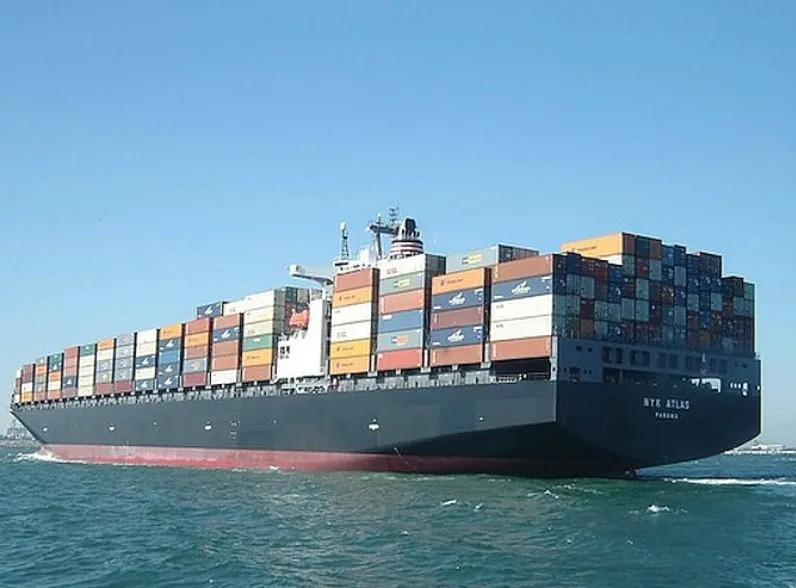
If you are importing goods from China to the UAE, Sea Freight Shipping from China to UAE remains the most cost-effective and reliable option in 2026. Whether you are importing a full container from a factory in Shenzhen or a small shipment from the wholesale market in Yiwu, understanding the difference between FCL and LCL and knowing the real market rates will save you thousands of dirhams and prevent costly surprises when your cargo arrives at Jebel Ali Port.
In this practical guide, we explain everything an importer needs to know: how to choose between FCL and LCL, what container shipping rates look like in 2026, how long shipping takes from each Chinese port, and how to avoid the hidden fees that catch many new importers off guard.
What is Sea Freight Shipping from China to UAE?
Sea freight shipping from China to the UAE is the transportation of goods across the Indian Ocean using massive container vessels. This route is one of the most important international trade lanes, with thousands of containers moving weekly from Chinese ports to Jebel Ali Port in Dubai.
Why is sea freight the first choice?
- 80-90% lower cost compared to air freight for large cargo.
- Massive capacity: A 40ft container can hold up to 67 CBM of goods.
- Safe for heavy cargo: Machinery and equipment cannot be shipped by air at a reasonable cost.
- Direct and safe route: Unlike shipments heading to Europe, your vessels do not need to pass through the troubled Red Sea region.
Important note: Vessels sailing from China to the UAE follow a completely different route than those heading to Europe. They pass directly through the Strait of Hormuz, far from the Red Sea crisis. This means your shipments are much less affected by the current situation.
FCL vs LCL: How to Choose?
When planning Sea Freight Shipping from China to UAE, every importer faces a critical question: Should I book a full container (FCL) or share a container with others (LCL)?
FCL (Full Container Load)
You rent the entire container exclusively for your goods. The container is sealed at the supplier’s factory in China and is not opened until it reaches your warehouse in the UAE.
| Container Type | Internal Dimensions | Capacity | Best Used For |
|---|---|---|---|
| 20GP | 5.9 × 2.35 × 2.39 m | 33 CBM | Heavy, dense cargo |
| 40GP | 12.03 × 2.35 × 2.39 m | 67 CBM | General cargo, large volume |
| 40HQ | 12.03 × 2.35 × 2.69 m | 76 CBM | Light, bulky cargo, furniture |
FCL Advantages:
- ✅ Faster: No consolidation or deconsolidation time
- ✅ More secure: Container is sealed with a factory seal
- ✅ Lower cost per CBM for large shipments
- ✅ Less risk of damage: No contact with other people’s cargo
LCL (Less than Container Load)
You only pay for the space your cargo occupies inside a shared container. Space is measured in CBM (cubic meters).
LCL Advantages:
- ✅ Economical for small shipments (less than 15 CBM)
- ✅ Flexible: You can ship frequently in small quantities
- ✅ No need to wait to accumulate a large order
LCL Disadvantages:
- ❌ Slower: Requires consolidation in China and deconsolidation in Jebel Ali
- ❌ Higher risk: Your cargo touches other people’s goods
- ❌ Higher cost per CBM
The Golden Decision Rule
| Shipment Volume | Best Option | Reason |
|---|---|---|
| 1-10 CBM | LCL | Much cheaper than FCL |
| 10-15 CBM | LCL or FCL 20GP | Compare both prices |
| 15-25 CBM | FCL 20GP | Usually cheaper than LCL |
| 25-55 CBM | FCL 40GP | Best value |
| 55+ CBM | FCL 40HQ | Maximum capacity at best price |
Practical rule: If your cargo volume exceeds 13-15 CBM, FCL 20GP is usually more economical than LCL. If it exceeds 25 CBM, FCL 40GP is the clear choice.
Practical Example: When to Switch from LCL to FCL?
Let’s assume you are importing goods from Shenzhen to Jebel Ali:
| Scenario | LCL (10 CBM) | FCL 20GP | Winner |
|---|---|---|---|
| Ocean freight | $80 × 10 = $800 | $2,200 | - |
| Consolidation/deconsolidation | $150 | $0 | - |
| Port charges | $120 | $200 | - |
| Total | $1,070 | $2,400 | LCL |
| Scenario | LCL (18 CBM) | FCL 20GP | Winner |
|---|---|---|---|
| Ocean freight | $80 × 18 = $1,440 | $2,200 | - |
| Consolidation/deconsolidation | $200 | $0 | - |
| Port charges | $150 | $200 | - |
| Total | $1,790 | $2,400 | LCL (but margin is slim) |
| Scenario | LCL (22 CBM) | FCL 20GP | Winner |
|---|---|---|---|
| Ocean freight | $80 × 22 = $1,760 | $2,200 | - |
| Consolidation/deconsolidation | $250 | $0 | - |
| Port charges | $180 | $200 | - |
| Total | $2,190 | $2,400 | FCL (better value + faster + safer) |
Conclusion: At 22 CBM, FCL costs only $210 more but saves 3-5 days and reduces damage risk.
Sea Freight Shipping Rates from China to UAE in 2026
Ocean freight rates are influenced by multiple factors: season, container availability, fuel prices, and geopolitical situations. Below are estimated rates for mid-2026:
FCL Rates (Port-to-Port)
| Route | 20GP | 40GP | 40HQ | Notes |
|---|---|---|---|---|
| Shenzhen → Jebel Ali | $1,800 - $2,500 | $2,800 - $3,500 | $2,900 - $3,600 | Direct line, frequent |
| Shanghai → Jebel Ali | $2,000 - $2,800 | $3,000 - $3,800 | $3,100 - $3,900 | Largest volume, competitive |
| Ningbo → Jebel Ali | $1,900 - $2,600 | $2,900 - $3,600 | $3,000 - $3,700 | Cost advantage |
| Qingdao → Jebel Ali | $2,100 - $2,900 | $3,200 - $4,000 | $3,300 - $4,100 | Northern China |
| Xiamen → Jebel Ali | $1,900 - $2,700 | $2,950 - $3,700 | $3,050 - $3,800 | Light industrial goods |
| Guangzhou → Jebel Ali | $1,850 - $2,550 | $2,850 - $3,550 | $2,950 - $3,650 | Close to Shenzhen |
LCL Rates (Port-to-Port)
| Route | Price per CBM | Minimum | Notes |
|---|---|---|---|
| Shenzhen → Jebel Ali | $60 - $120 | 1 CBM | High volume, competitive rates |
| Shanghai → Jebel Ali | $65 - $130 | 1 CBM | Multiple lines available |
| Ningbo → Jebel Ali | $62 - $125 | 1 CBM | Good alternative |
| Yiwu (truck to Ningbo) → Jebel Ali | $70 - $140 | 1 CBM | + inland transport cost |
Warning: The rates above are Port-to-Port only. They do NOT include:
- Transport from factory to port in China
- Chinese export customs clearance
- Insurance
- UAE customs clearance
- Transport from Jebel Ali to your warehouse
- Customs duty (5%) and VAT (5%)
Factors Affecting the Price
- Season: Rates increase 20-40% before Ramadan (March-April) and before back-to-school (August).
- Container availability: Container shortages raise prices (common after Chinese New Year).
- Bunker Adjustment Factor (BAF): Fuel price fluctuations add or subtract 5-15%.
- Currency Adjustment Factor (CAF): Exchange rate fluctuations between USD and CNY.
- Peak Season Surcharge: Applied during peak season (usually August-October).
Transit Times for Sea Freight from China to UAE
| Port of Origin (China) | Port of Arrival (UAE) | Ocean Transit | Total Time (with clearance) |
|---|---|---|---|
| Shenzhen (Yantian/Shekou) | Jebel Ali | 14-18 days | 18-25 days |
| Shanghai (Yangshan) | Jebel Ali | 16-20 days | 20-28 days |
| Ningbo | Jebel Ali | 15-19 days | 19-26 days |
| Qingdao | Jebel Ali | 18-22 days | 22-30 days |
| Xiamen | Jebel Ali | 16-20 days | 20-27 days |
| Tianjin | Jebel Ali | 20-25 days | 24-32 days |
| Shenzhen | Jeddah (Saudi Arabia) | 18-22 days | 22-30 days |
| Shanghai | Jeddah | 20-24 days | 24-32 days |
Note: LCL adds 3-5 extra days for consolidation in China and deconsolidation in Jebel Ali.
How to Speed Up Your Shipment?
- Choose direct lines: Some routes stop at transshipment ports (Singapore, Colombo) adding 2-4 days.
- Avoid peak season: Shipping in January-February or June-July is usually faster.
- Prepare documents in advance: Any document delay will hold your cargo at the port.
- Use a reliable local agent: An agent who knows Jebel Ali procedures can speed up clearance by 2-3 days.
Jebel Ali Port: Your Gateway to the Gulf
Why Jebel Ali is the Center?
- Largest port in the Middle East: Handles over 19.4 million containers annually.
- 150+ shipping lines: Connects you to 150+ ports worldwide.
- 80+ weekly services: High frequency ensures multiple options.
- JAFZA: The world’s largest free zone adjacent to the port.
- Sea-air corridor: Transfer from ship to plane in just 45 minutes.
Customs Clearance Process at Jebel Ali
When a container arrives at Jebel Ali, it goes through three channels:
| Channel | Description | Duration | Shipment Percentage |
|---|---|---|---|
| 🟢 Green | Automatic approval, no inspection | 1-3 hours | 70-80% |
| 🟡 Yellow | Document review + partial inspection | 1-2 days | 15-20% |
| 🔴 Red | Full physical cargo examination | 2-5 days | 5-10% |
Factors that trigger Red Channel:
- Suspicious or incorrect HS codes
- Discrepancies in declared value
- Restricted or sensitive goods
- Random selection (5% of shipments)
How to Ensure Green Channel?
- ✅ Accurate HS codes: Any error will automatically trigger inspection.
- ✅ Clear commercial invoice: Accurate description, realistic value, clear currency.
- ✅ Matching packing list: Weights, dimensions, HS codes must match the invoice.
- ✅ Trusted importer: A good customs record increases Green Channel chances.
- ✅ Avoid suspicious goods: Electronics, food, cosmetics are inspected more frequently.
Hidden Fees: What Your Agent Doesn’t Tell You
Many importers are surprised by additional fees that exceed their calculated cost. Here is a list of fees you should request details for in your quote:
1. Demurrage (Port Delay Fees)
- What: Fees for keeping the container at the port after the free period.
- Free period: Usually 7-10 days for imports.
- Cost: $50 - $100 per day per container.
- How to avoid: Book clearance and transport before the vessel arrives.
2. Detention (Container Return Delay Fees)
- What: Fees for keeping the container with you after the free period.
- Free period: Usually 7-14 days.
- Cost: $30 - $80 per day.
- How to avoid: Unload the container and return it quickly.
3. Terminal Handling Charges (THC)
- What: Container handling fees at the port.
- Cost: $200 - $400 per container.
- Note: Some agents don’t include this in the initial quote.
4. Documentation Fees
- What: Document preparation fees (B/L, Certificate of Origin, etc.).
- Cost: $50 - $150.
5. Bunker Adjustment Factor (BAF)
- What: Fuel price adjustment.
- Cost: 5-15% of the shipping price.
- Note: Changes monthly.
6. Currency Adjustment Factor (CAF)
- What: Currency fluctuation adjustment.
- Cost: 2-8%.
7. Peak Season Surcharge (PSS)
- What: Peak season surcharge.
- When: August-October, before Ramadan.
- Cost: $200 - $500 per container.
8. War Risk Surcharge (WRS)
- What: War risk surcharge (due to Red Sea crisis).
- Cost: $50 - $150 per container.
- Note: Applied even to shipments that don’t pass through the Red Sea.
Checklist for a Comprehensive Quote
When requesting a quote for Sea Freight Shipping from China to UAE, make sure it includes:
- Ocean freight rate
- Port handling charges (THC)
- Documentation fees
- BAF and CAF (or confirm they are included)
- Chinese export charges
- UAE import charges
- Customs clearance at Jebel Ali
- Customs duty (5%)
- VAT (5%)
- Transport from port to your warehouse
- Insurance (if applicable)
- Demurrage and Detention free period
Golden tip: If a quote is significantly lower than the market average, there are hidden fees waiting for you. “If it sounds too good to be true, it probably is.”
Step-by-Step Sea Freight Shipping from China to UAE
Phase 1: Before Shipping (China)
| Step | Duration | Details |
|---|---|---|
| 1. Request quote | 1-2 days | Provide: cargo type, weight, volume, departure port, delivery terms |
| 2. Compare quotes | 1 day | Compare 2-3 agents: price, service, reviews |
| 3. Book space | Immediate | Confirm booking with the shipping line |
| 4. Cargo preparation | Depends on supplier | Supplier prepares and packs goods |
| 5. Transport to port | 1-3 days | Truck from factory to port |
| 6. Chinese export customs | 1-2 days | Document preparation, customs inspection |
| 7. Loading on vessel | 1 day | Loading and departure |
Phase 2: During Transit (Ocean)
| Step | Duration | Details |
|---|---|---|
| 8. Ocean transit | 14-22 days | Depending on port and shipping line |
| 9. Tracking | Continuous | Monitor vessel location via AIS |
Phase 3: After Arrival (UAE)
| Step | Duration | Details |
|---|---|---|
| 10. Arrival at Jebel Ali | - | Arrival notice received |
| 11. Document submission | 1 day | Original B/L, invoice, packing list, certificate of origin |
| 12. Customs clearance | 1-5 days | Depending on channel (Green/Yellow/Red) |
| 13. Pay fees | Immediate | Duty 5% + VAT 5% + port charges |
| 14. Container pickup | 1-2 days | Unload at warehouse or direct to truck |
| 15. Return empty container | 1 day | Avoid Detention fees |
Expected total time: 18-32 days from order to delivery.
Required Documents for Sea Freight Shipping from China to UAE
Essential Documents (Mandatory)
-
Commercial Invoice
- Seller and buyer details
- Accurate cargo description
- Value (CIF)
- Signature and stamp
-
Packing List
- Number of packages
- Weights and dimensions
- HS codes for each item
-
Bill of Lading (B/L)
- Contract of carriage between shipper and carrier
- Used to claim cargo
- Can be Original or Telex Release
-
Certificate of Origin
- Proves goods are from China
- Required for customs duty calculation
Additional Documents (Depending on Cargo Type)
| Cargo Type | Additional Document |
|---|---|
| Electrical appliances | ECAS certificate (ESMA) |
| Food products | Ministry of Health approval |
| Chemicals | MSDS + customs approval |
| Textiles | Certified certificate of origin |
| Branded goods | Trademark import license |
Frequently Asked Questions about Sea Freight Shipping from China to UAE
What is the difference between Telex Release and Original B/L?
- Original B/L: A paper document that must be sent by courier from China to the UAE. Additional cost ($50-100) and 3-5 days delay.
- Telex Release: Immediate electronic release. Faster and cheaper, but some importers prefer Original B/L for additional legal protection.
Tip: Use Telex Release for regular shipments with trusted agents. Keep Original B/L for high-value or new shipments.
How much does cargo insurance cost for sea freight?
- All Risks: 0.3% - 0.5% of CIF value.
- WPA + All Risks: 0.15% - 0.3%.
- Example: Goods worth $50,000 → insurance $150 - $250.
Is insurance mandatory? No, but it is highly recommended. Vessels are safe but accidents happen.
Can I import goods without a company in the UAE?
No. You must have:
- A valid UAE trade license (mainland or free zone)
- A registered Importer/Exporter Code in Dubai Trade Portal
- TRN number (if VAT registered)
Solution: Work with a freight forwarder offering IOR (Importer of Record) service where they import under their name and then deliver to you.
What goods are prohibited or restricted?
| Prohibited | Restricted (Requires Approval) |
|---|---|
| Drugs | Electrical appliances (ECAS) |
| Weapons (without license) | Food products (Ministry of Health) |
| Pornographic materials | Chemicals |
| Israeli products | Pharmaceuticals |
| Counterfeit goods |
How do I avoid fraud in Sea Freight Shipping from China to UAE?
- Verify the agent’s license: Must be licensed in the UAE.
- Request detailed breakdown: Every item must be clear.
- Avoid full upfront payment: Usually 30% upfront and 70% upon arrival.
- Check reviews: Look for customer testimonials.
- Use a written contract: Clear and detailed.
- Confirm local office presence: An agent with offices in Dubai or Shenzhen is better.
Can I ship to JAFZA (Free Zone)?
Yes, and this is an excellent option if you:
- Import for re-export to other Gulf countries
- Want to defer customs duty and VAT payment
- Need long-term storage
JAFZA Benefits:
- ✅ Exempt from customs duty (5%) and VAT (5%) while goods remain in the free zone
- ✅ Unlimited storage duration
- ✅ Re-export without additional fees
- ✅ 100% foreign ownership allowed
JAFZA Drawbacks:
- ❌ When moving goods to mainland UAE, duty and VAT become payable
- ❌ Cannot sell directly to end consumers from JAFZA
How GCC Freight Simplifies Sea Freight Shipping from China to UAE
At GCC Freight, we specialize in Sea Freight Shipping from China to UAE since 2015. We offer:
1. Transparent and Comprehensive Quotes
No hidden fees. Every item is clearly listed in the quote. We explain every charge before shipping.
2. Fast Customs Clearance at Jebel Ali
Our Dubai team deals with customs daily. We know the channels and speed up procedures. Our goal: Green Channel for every shipment.
3. Warehouse in Dubai (Jebel Ali)
We provide storage and distribution services from our Dubai warehouse. Short and long-term storage, order fulfillment, and re-shipping.
4. Support in Arabic, English, and Chinese
Our team speaks Arabic, English, and Chinese, ensuring smooth communication with suppliers in China and importers in the UAE.
5. Real-Time Shipment Tracking
Track your shipment from the supplier’s warehouse in China to your door in the UAE. Automatic updates via WhatsApp or email.
6. Door-to-Door Service
From picking up cargo at the factory in China to delivering it to your warehouse in the UAE. We handle everything: transport, export, shipping, clearance, and delivery.
7. Free FCL vs LCL Consultation
Not sure between FCL and LCL? We analyze your cargo and advise you on the most economical option.
Planning to import goods from China to the UAE by sea?
Let GCC Freight handle your Sea Freight Shipping from China to UAE. From pickup in China to delivery in Dubai, we ensure a smooth and hassle-free shipping experience.
Get a free sea freight quote now
Published: June 25, 2026 Sources: DP World Jebel Ali, UAE Federal Customs Authority, Incoterms 2020 (ICC), International Shipping Market Data 2026, GCC Freight Shipping Expertise