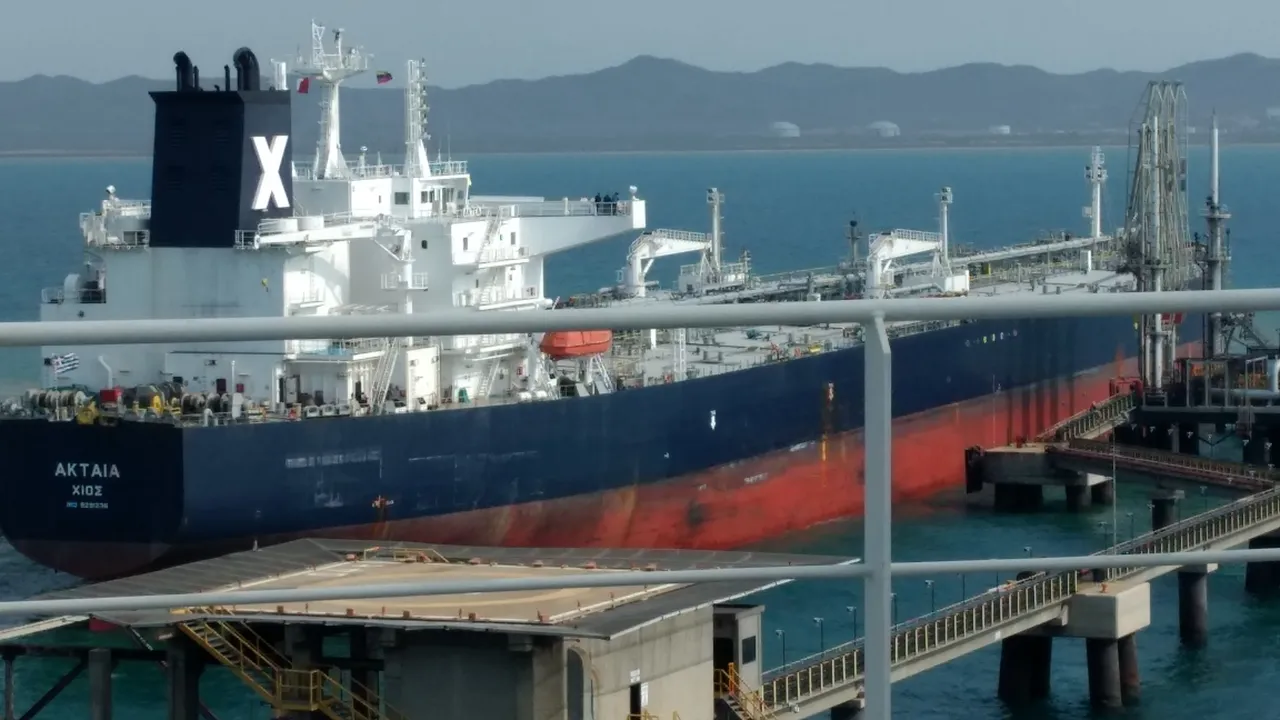
On 1 August 2026, the Houthi-run Humanitarian Operations Coordination Centre (HOCC) issued a statement that appeared designed to calm the shipping world: passage through the Bab el-Mandeb strait, it said, would remain a “voluntary and free safety service.” No official transit fee would be charged. For anyone watching the Red Sea corridor, the wording was careful, almost reassuring.
Yet on the same day, vessel-tracking data told a different story. Six Very Large Crude Carriers (VLCCs) operated by Saudi Arabia’s state-owned shipping company Bahri were steering clear of Bab el-Mandeb and taking the long route around Africa. Kpler data showed only about twenty-six commercial vessels crossing the strait on 1 August, while just two were visible transiting the Strait of Hormuz. When the owners of the cargo, the insurers, and the ship operators vote with their hulls, press releases matter less than route maps.
If you are shipping from China to Saudi Arabia, this contradiction is not an abstract diplomatic issue. It is a live signal about risk, cost, and timing. Below we explain why the Houthi denial has not ended the Red Sea premium, what Saudi oil-tanker routing tells us about the broader market, and what importers and exporters should do now.
What the Houthi denial actually said
The 1 August statement denied reports, including a Reuters story, that the Houthis were planning to impose fees on vessels using the Red Sea corridor. According to the HOCC, the “safety of navigation” was a voluntary service and would not be monetised. The wording suggested that no invoice would be issued at Bab el-Mandeb.
The denial did not, however, say that attacks on shipping would stop. It did not withdraw earlier threats against Saudi-linked or Israeli-linked vessels. It did not provide a mechanism for neutral verification, and it did not address the question of what happens to a ship that refuses to identify itself to a Houthi checkpoint. In maritime risk management, “no fee” is not the same as “no threat.”
For container lines, the statement therefore changed little. Most major carriers have kept their vessels away from the southern Red Sea for months, routing Asia–Europe and Asia–Mediterranean cargo around the Cape of Good Hope. The few container services that still use the Red Sea do so under heavy war-risk premiums and often with military escort arrangements.
Why Saudi oil tankers are still sailing around Africa
Crude oil tankers are not container ships, but they face the same chokepoint. Bab el-Mandeb is the only practical southern entrance to the Red Sea. A VLCC carrying two million barrels of crude has limited options: it can enter the Red Sea and head for the Suez Canal or the Mediterranean, or it can turn south around Africa.
Six Bahri VLCCs chose the African route. That decision is expensive. Rerouting a VLCC around the Cape of Good Hope can add two to three weeks to the voyage and thousands of dollars per day in fuel and charter costs. Ship owners do not take that decision because of a rumour; they take it because the expected cost of an attack, a detention, a mine strike, or a sudden change in Houthi rules exceeds the cost of the diversion.
The Saudi choice also reflects a political reality. The Houthis have repeatedly named Saudi Arabia as a party to the Yemen conflict and have targeted Saudi energy infrastructure in the past. Even if a generic cargo ship is told it may pass freely, a Saudi-flagged or Saudi-chartered tanker has every reason to assume it could be treated differently. Self-insurance, charter-party clauses, and buyer requirements can all make the African route the only commercially viable option.
What this means for container shipping from China to Saudi Arabia
Most finished-goods cargo from China to Saudi Arabia moves in containers, not crude tankers. So why should a Saudi importer care about VLCC routing?
The answer is that oil tankers and container ships share the same risk geography. If crude carriers are avoiding Bab el-Mandeb, it is a strong market signal that the strait is still considered unsafe for deep-sea commercial traffic. That signal affects insurance markets, carrier scheduling, and port congestion in three ways.
1. War-risk premiums remain high
The London insurance market and the Joint War Committee have already widened the Red Sea high-risk zone. When tanker owners reroute, underwriters take note. Container vessels that still transit the area pay sharply higher premiums, and those premiums are passed on to shippers as Red Sea surcharges or general-rate increases.
2. Schedule reliability is still weak
A container service that avoids Bab el-Mandeb and sails around Africa adds roughly ten to fourteen days to the China–Europe leg. For cargo bound to Jeddah on the Red Sea coast, the disruption is more complicated: vessels may drop Saudi cargo at Jebel Ali or another Gulf hub and complete the journey by feeder or land bridge. That creates extra handling, extra paperwork, and extra time.
3. Port-level impacts inside Saudi Arabia
Jeddah Islamic Port and King Abdullah Port on the Red Sea are natural gateways for western Saudi Arabia. If mainline carriers stay away, those ports see fewer direct calls and more feeder traffic from the Gulf. Dammam King Abdulaziz Port on the Gulf side becomes a more attractive alternative for many importers, especially for cargo headed to Riyadh or the Eastern Province. The right port choice is no longer automatic; it now depends on the live route map.
Should Saudi importers expect Red Sea fees for containers?
The Houthi statement denied fees. Whether that holds depends on politics, not shipping contracts. For now, the practical “fee” that importers pay is the surcharge baked into freight rates and insurance, not a separate invoice at Bab el-Mandeb.
What could change the picture quickly?
- A new Houthi announcement that reintroduces a “registration” or “coordination” charge under a different name.
- A major attack on a container vessel, even if politically unrelated, that causes carriers to suspend Red Sea calls again.
- Escalation involving Iran and the Strait of Hormuz, which would turn the risk from “Red Sea only” into a two-chokepoint problem.
Any of these events would send rates up and capacity down. If your supply chain relies on regular China–Saudi sailings, the time to build alternatives is before the next headline, not after it.
What Chinese exporters should watch
For Chinese manufacturers and traders selling into Saudi Arabia, the most important number is not the daily oil-tanker count. It is the reliability of the ocean freight booking you confirmed last week.
If your freight forwarder is quoting a transit time that assumes a Red Sea passage, ask explicitly whether the service is routed via Bab el-Mandeb or around Africa. The difference can be two weeks. If your customer in Riyadh or Jeddah has a fixed delivery date, an Africa-routing container may miss the window unless it was planned for.
You should also check whether your Incoterms leave you exposed to war-risk surcharges. On some routes, carriers are adding separate bunker and war-risk clauses that can change between booking and sailing. A DDP quote from a forwarder who monitors these surcharges daily is usually safer than a bare FCL rate that can be re-invoiced later.
Practical response plan for China–Saudi Arabia shipments
Based on the current 1–3 August picture, we recommend the following steps for anyone moving cargo between China and Saudi Arabia.
Confirm the actual route before booking
Do not assume the route on the carrier’s advertised map is the route your vessel will take. Ask your forwarder for the planned rotation and whether it currently includes Bab el-Mandeb. If the answer is “it depends,” get a written confirmation of the routing that applies to your sailing.
Build a Gulf-first option
For shipments to Riyadh, the Eastern Province, or central Saudi Arabia, consider landing at Dammam or Jebel Ali and completing delivery by road or rail. We covered the broader logic in our Houthi maritime embargo guide. The same principle applies here: reducing dependence on Bab el-Mandeb removes one major variable from your schedule.
Keep air freight as a safety valve
If a shipment is urgent, seasonal, or high-value, air freight from China to Saudi Arabia can bypass the Red Sea entirely. It is more expensive per kilogram, but it protects against the cascading delays that follow a sudden Red Sea closure or surcharge spike.
Review your cargo insurance
Standard marine cargo insurance may not fully cover war-risk events in the Red Sea or Bab el-Mandeb area. Ask your insurer or forwarder whether your policy includes the expanded high-risk zones defined by London underwriters in recent weeks. If it does not, the additional premium is usually far cheaper than absorbing a total loss or a month-long delay.
Update your customer communication
Saudi buyers often plan around expected delivery dates. If your forwarder confirms an Africa routing or a feeder transfer, tell your customer immediately. Transparency about an extra ten days is better than silence followed by a missed deadline.
How GCC Freight is adjusting for Red Sea uncertainty
At GCC Freight, we do not rely on a single corridor for China–Saudi Arabia cargo. Our operations team tracks daily carrier updates, war-risk zone changes, and port congestion in Jeddah, Dammam, Jebel Ali, and the alternative hubs.
When Red Sea risk rises, we can:
- Rebook FCL and LCL cargo to Gulf-first routings with final-mile delivery into Saudi Arabia.
- Switch urgent shipments to air freight with direct or one-stop service to Riyadh, Jeddah, or Dammam.
- Provide customs clearance and DDP pricing that includes duty, VAT, and any applicable war-risk surcharge, so the final cost is known upfront.
- Advise on cargo insurance and documentation for shipments passing through or near declared high-risk areas.
The goal is to give importers a workable plan before the next headline, not a panic response after it.
FAQ
Did the Houthis really cancel Red Sea fees?
They denied that any fee would be charged on 1 August 2026. That is different from a permanent policy, and it does not remove the underlying military risk in Bab el-Mandeb.
Are Saudi oil tankers the only ships avoiding Bab el-Mandeb?
No. Many container lines and other deep-sea operators have also rerouted around Africa. The Saudi VLCCs are simply the most visible signal because of their size and ownership.
Will my China–Saudi container face extra charges because of this?
You may see Red Sea surcharges, war-risk premiums, or longer transit times if your service uses the Red Sea. The exact cost depends on the carrier, the routing, and your Incoterms.
Is the Red Sea safer now than in July?
The Houthi denial is a diplomatic signal, but vessel-tracking and insurance-market behaviour show that commercial operators are not treating the strait as safe yet.
What is the safest way to ship from China to Saudi Arabia right now?
There is no single safest route, but a Gulf-first strategy that enters through the Strait of Hormuz and avoids Bab el-Mandeb is currently the most stable option for most container cargo.
Conclusion
The Houthi denial of Red Sea fees and the simultaneous rerouting of Saudi oil tankers around Africa are two sides of the same market reality: words can change in hours, but ship routing reflects the risk that operators actually believe. For anyone shipping from China to Saudi Arabia, the lesson is to plan for uncertainty rather than assume a return to normal.
If you want a current routing assessment for your next shipment, contact GCC Freight on WhatsApp. We can check the latest carrier rotations, compare Gulf-first and Red Sea options, and quote DDP prices that include the real risk cost on the date of sailing.
- WhatsApp: Get a quote now