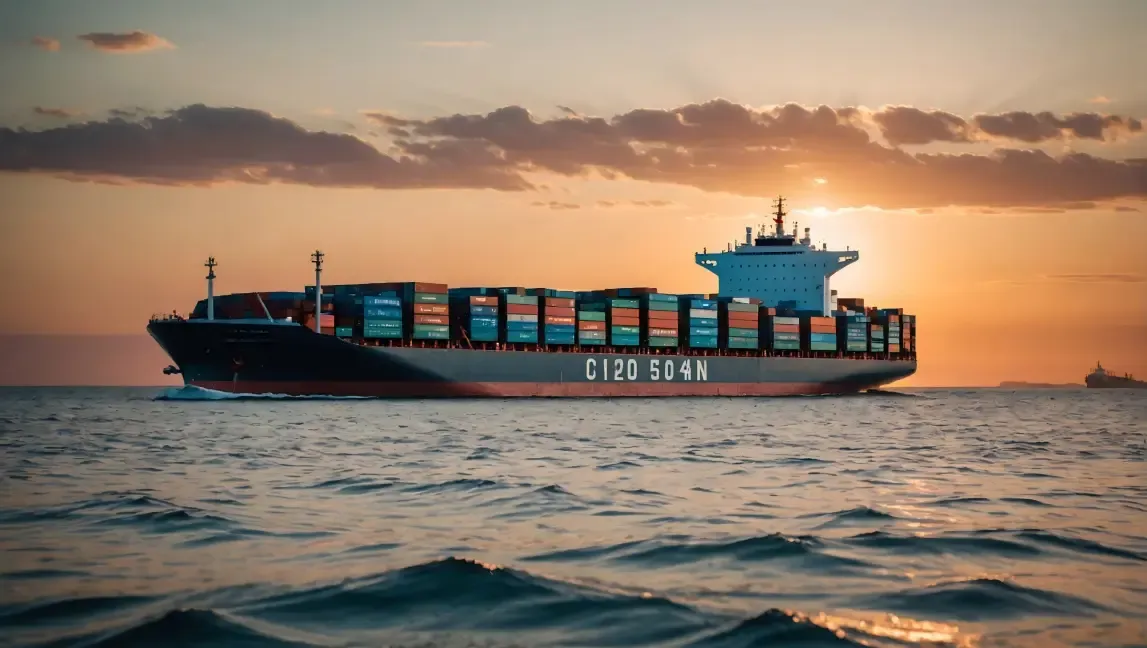
Qatar has emerged as one of the most dynamic import markets in the Gulf region. With its modern Hamad Port — one of the largest and most technologically advanced container terminals in the Middle East — and continued post-World Cup development across infrastructure, real estate, and industrial sectors, demand for reliable shipping from China to Qatar has never been stronger.
This comprehensive guide covers everything you need to know about container shipping between China and Qatar in 2026 — from FCL and LCL pricing and transit times to customs clearance procedures, documentation requirements, and project cargo solutions.
Why Qatar Matters for Chinese Imports
Qatar’s import market is driven by several structural factors that make it a consistently strong destination for Chinese goods:
Post-2022 World Cup legacy projects — Stadium retrofitting, the Lusail City development, and the Doha Metro expansion continue to generate new construction phases requiring steel, glass, prefabricated structures, and heavy machinery.
Qatar National Vision 2030 — The country’s long-term development plan is investing heavily in healthcare, education, transportation, and industrial diversification, all of which require imported equipment and materials from China.
High per capita consumption — Qatar has one of the highest GDP per capita rates globally, driving demand for consumer goods including furniture, electronics, home appliances, textiles, and automotive parts — most of which are sourced from Chinese manufacturers.
According to Qatar’s Planning and Statistics Authority, China remains the top source of Qatar’s non-oil imports, with containerised cargo accounting for the majority of seaborne trade volume.
Qatar’s Two Main Container Ports
Understanding Qatar’s port infrastructure is the first step in planning your container shipment. The country has two commercial ports that handle containerised cargo:
Hamad Port (Main Gateway)
Opened in 2017 and located south of Doha, Hamad Port is the principal maritime gateway to Qatar. With an annual handling capacity of 7.5 million TEUs, it ranks among the most modern container ports in the Middle East.
| Feature | Details |
|---|---|
| Location | 40 km south of Doha |
| Annual capacity | 7.5 million TEUs |
| Container terminals | 2 (operated by Mwani Qatar & QTerminals) |
| Depth | 18 metres — accommodates ultra-large container vessels |
| Reefer plugs | Over 1,200 for refrigerated cargo |
| Connectivity | Direct services from all major Chinese ports |
Hamad Port’s state-of-the-art infrastructure includes automated stacking cranes, a dedicated container terminal with a 900-metre quay, and a 1.2 km² container yard. The port uses an electronic data interchange (EDI) system that significantly speeds up customs clearance.
Al Ruwais Port (Northern Gateway)
Located in northern Qatar, Al Ruwais Port serves industrial zones and gas projects in the northern part of the country. It is smaller than Hamad Port but strategically important for project cargo destined for the Ras Laffan Industrial City and the broader northern region.
| Feature | Details |
|---|---|
| Location | 120 km north of Doha |
| Primary cargo | Project cargo, construction materials, industrial equipment |
| Services | FCL and breakbulk, limited LCL |
| Best suited for | Northern Qatar deliveries, LNG project supplies |
FCL Shipping from China to Qatar
Full Container Load (FCL) is the preferred option when you have enough cargo to fill an entire container (typically 15–20 cubic metres or more). FCL offers faster transit times, lower per-unit costs for large shipments, and full control over container sealing and security.
Standard Container Types and Sizes
| Container Type | Internal Volume | Max Payload | Best For |
|---|---|---|---|
| 20 ft Standard (20GP) | ~28 m³ | ~28 tons | Heavy, dense cargo (machinery, steel, tiles) |
| 40 ft Standard (40GP) | ~58 m³ | ~26 tons | General cargo, furniture, consumer goods |
| 40 ft High Cube (40HQ) | ~68 m³ | ~26 tons | Bulky, lightweight cargo (household goods, large equipment) |
| 20 ft Open Top (20OT) | ~25 m³ | ~26 tons | Over-height cargo (machinery, pipes) |
| 40 ft Flat Rack (40FR) | — | ~40 tons | Oversized cargo, construction equipment |
Indicative FCL Rates from China to Qatar (2026)
Note: Freight rates fluctuate based on market conditions, fuel surcharges, and seasonal demand. Contact our team for real-time pricing. All rates exclude local charges at origin (THC, documentation) and destination (delivery order, terminal handling).
| Route | 20GP (USD) | 40GP (USD) | 40HQ (USD) |
|---|---|---|---|
| Shenzhen → Hamad Port | $1,400 – $1,900 | $2,100 – $2,800 | $2,300 – $3,100 |
| Guangzhou → Hamad Port | $1,500 – $2,000 | $2,200 – $2,900 | $2,400 – $3,200 |
| Ningbo → Hamad Port | $1,400 – $1,900 | $2,100 – $2,800 | $2,300 – $3,100 |
| Shanghai → Hamad Port | $1,400 – $1,900 | $2,100 – $2,800 | $2,300 – $3,100 |
| Shenzhen → Al Ruwais Port | $1,700 – $2,300 | $2,500 – $3,400 | $2,700 – $3,600 |
Price drivers: The main factors influencing FCL rates are season (peak season June–October commands a premium), cargo type (heavy or project cargo may attract surcharges), and service level (direct vs. transshipment via Jebel Ali).
FCL Transit Times from China to Qatar
| Departure Port | Hamad Port | Al Ruwais Port |
|---|---|---|
| Shenzhen | 17–19 days | 19–21 days |
| Guangzhou | 17–20 days | 19–22 days |
| Ningbo | 17–19 days | 19–21 days |
| Shanghai | 18–20 days | 20–23 days |
Sailings to Hamad Port depart every 10 days from major Chinese ports, with more frequent options during peak season. Direct services are available from Shenzhen and Ningbo, while some departures run via Jebel Ali as a transshipment hub.
LCL Shipping from China to Qatar
Less than Container Load (LCL) is the smart choice for smaller shipments — typically between 1 and 15 cubic metres. You share container space with other cargo and pay only for the space your goods occupy.
When to Choose LCL
- Cargo volume is 1–15 m³ — You don’t have enough goods for a full container
- You want to test the Qatar market — Lower commitment and minimum risk
- Consolidation from multiple suppliers — We can collect goods from different factories in China and consolidate them into one shipment
- Budget-conscious imports — LCL can be significantly cheaper than FCL when your volume is under 10 m³
Indicative LCL Rates from China to Hamad Port
| Volume (CBM) | Estimated Rate (USD/m³) |
|---|---|
| 1–3 m³ | $100 – $140 |
| 3–6 m³ | $80 – $120 |
| 6–10 m³ | $70 – $110 |
| 10–15 m³ | $60 – $90 |
Note: LCL rates include the ocean freight plus consolidation fees. Handover from origin warehouse to destination customs clearance is included in our DDP service. Minimum charge typically applies for shipments under 1 m³.
LCL Transit Times
LCL shipments take slightly longer than FCL due to consolidation and deconsolidation time at origin and destination ports.
| Route | Transit Time |
|---|---|
| Shenzhen → Hamad Port (LCL) | 19–23 days |
| Guangzhou → Hamad Port (LCL) | 19–24 days |
| Ningbo → Hamad Port (LCL) | 20–23 days |
| Shanghai → Hamad Port (LCL) | 20–25 days |
Major Chinese Departure Ports for Qatar
We ship containerised cargo from all major Chinese industrial and port hubs:
Shenzhen (Yantian / Shekou)
Our headquarters city and the fastest consolidation and loading hub in southern China. Shenzhen is the ideal departure point for electronics, machinery parts, and general consumer goods. It offers the most frequent sailings to Hamad Port — every 7–10 days.
Guangzhou (Nansha / Huangpu)
A major manufacturing centre for furniture, textiles, ceramics, and home décor items. Nansha Port has direct LCL consolidation services to Qatar with competitive rates.
Ningbo
Port of choice for cargo originating from the Zhejiang industrial belt — auto parts, electrical equipment, hardware, and plastic products. Direct FCL services to Hamad Port with excellent transit time.
Shanghai
China’s largest port, offering the widest range of carriers and sailing frequencies. Best for shipments originating from the Yangtze River Delta region, including machinery, chemicals, and automotive parts.
Qatar Customs Clearance — What You Need to Know
Import Duties and Taxes
Qatar applies a 5% customs duty on the CIF (Cost, Insurance, Freight) value of most imported goods. Some categories enjoy exemptions:
| Cargo Type | Duty Rate | Notes |
|---|---|---|
| General commercial goods | 5% | CIF value basis |
| Basic foodstuffs | 0% | Staple foods, essential cooking ingredients |
| Medical supplies & pharmaceuticals | 0% | Must be registered with MoPH |
| Construction materials (basic) | 0–5% | Varies by product category |
| Alcohol & tobacco | 100%+ | Highly restricted and taxed |
| Personal effects | 0% | For personal use, subject to inspection |
Required Documentation
Every container shipment to Qatar requires the following documents:
- Commercial Invoice — Must be certified by the Chamber of Commerce in China and legalised by the Qatari Embassy in Beijing
- Packing List — Detailed description of contents per package
- Bill of Lading — Original or telex release (MBL + HBL for LCL)
- Certificate of Origin — Also requires Chamber of Commerce certification
- Certificate of Conformity — Required for certain product categories (electrical appliances, toys, automotive parts, building materials). Qatar’s Ministry of Commerce and Industry specifies which products need this
- Halal Certificate — Required for food products and cosmetics containing animal derivatives
- Import Declaration — Submitted through Qatar’s Al Nadeeb electronic customs system
Common Customs Challenges in Qatar
- Document verification delays — Uncertified or incorrectly witnessed commercial invoices and certificates of origin are the most common cause of clearance delays
- Product conformity issues — Certain goods require a Qatar Conformity Assessment Scheme (QCAS) certificate or an equivalent IECEE certification
- Arabic labelling requirements — Product labels must include Arabic text with product description, origin, and importer details. This is frequently overlooked by first-time shippers
- Value discrepancies — The Qatari customs authority may challenge the declared CIF value if it appears unusually low for the product category
Our DDP service handles all of this for you — from document preparation and certification to duty payment and last-mile delivery. We maintain an experienced customs clearance team in Doha who understand Qatari customs procedures intimately.
Why Choose DDP for Qatar Shipments
Delivered Duty Paid (DDP) is the most popular shipping service for Qatar-bound cargo from China. Under DDP terms, we take full responsibility — from the factory in China to your doorstep in Doha, Al Wakrah, Al Khor, or anywhere in Qatar.
What DDP includes:
- Factory-to-port transport in China
- Export customs clearance in China
- Ocean freight (FCL or LCL)
- Import customs clearance in Hamad Port
- Payment of 5% customs duty and all import fees
- Last-mile delivery within Qatar
DDP is especially valuable for Qatar because the country requires Chamber of Commerce certification and Embassy legalisation for commercial documents — processes that can be complex and time-consuming for new importers. Our experience in handling these procedures ensures your cargo clears customs on the first attempt, without costly delays.
Compare this with DDU (Delivered Duty Unpaid), where you would need a Qatari customs broker, must handle duty payment yourself, and bear the risk of clearance delays.
Types of Cargo Commonly Shipped from China to Qatar
Qatar’s import profile from China is diverse. Here are the most commonly shipped commodity categories:
| Cargo Category | Common Items | Preferred Shipping Method |
|---|---|---|
| Construction materials | Rebar, steel structures, cement, pipes, prefabricated buildings | FCL 20GP / Project cargo |
| Industrial machinery | Generators, pumps, compressors, production lines | FCL 20GP / Open Top / Flat Rack |
| Furniture & home décor | Home furniture, office furniture, carpets, curtains | FCL 40HQ / LCL |
| Electronics & appliances | Air conditioners, televisions, smartphones, household appliances | FCL 40GP / LCL |
| Textiles & apparel | Ready-made garments, fabrics, bedding | LCL / FCL 40GP |
| Auto parts | Tires, spare parts, accessories | LCL / FCL 20GP |
| Food products | Packaged foods, beverages (Halal certified) | FCL 20GP / Reefer container |
| Medical equipment | Hospital furniture, diagnostic equipment, PPE | Air freight / FCL |
| FMCG & retail goods | Toys, cosmetics, household items, stationery | LCL |
Project Cargo & Heavy Lift Shipping to Qatar
Qatar’s ongoing infrastructure and industrial expansion creates regular demand for project cargo — oversized, heavy, or complex shipments that require specialised logistics.
We handle:
- Machinery up to 100 tons per piece
- Dimensions up to 30 metres in length
- Open Top and Flat Rack containers for over-height and over-width cargo
- Breakbulk shipping for the largest items
- Full route planning, permits, and delivery coordination in Qatar
Project cargo to Qatar typically requires 4-week pre-shipment planning. Our team coordinates with the factory, arranges specialised containers or vessel space, handles documentation (including any special permits), and manages the entire chain from China to the project site in Qatar.
Container Shipping Process: Step by Step
Here’s how a typical container shipment from China to Qatar works with GCC Freight:
Step 1: Inquiry — Send us your cargo details (type, volume, weight, destination in Qatar). We respond with a competitive quote within 24 hours.
Step 2: Booking & Documentation — Confirm the booking. We prepare the commercial invoice, packing list, and coordinate certificate of origin and chamber certification.
Step 3: Cargo Collection — We collect your goods from the supplier’s factory (or you deliver to our warehouse in Shenzhen or Guangzhou). We inspect, repack if needed, and consolidate LCL cargo.
Step 4: Container Loading & Customs in China — Your cargo is loaded into a container (FCL) or consolidated with other LCL shipments. We handle export customs clearance.
Step 5: Ocean Freight — The vessel departs for Qatar. Transit time: 17–21 days for FCL to Hamad Port. We monitor the vessel and provide tracking.
Step 6: Qatar Customs Clearance — Upon arrival at Hamad Port, our customs team processes the clearance, submits documents through Al Nadeeb, pays duties, and obtains cargo release.
Step 7: Last-Mile Delivery — We arrange transport from the port to your specified address anywhere in Qatar — Doha, Al Wakrah, Al Khor, Al Rayyan, Mesaieed, or the industrial areas.
Frequently Asked Questions
How do I choose between FCL and LCL for Qatar shipping?
Choose FCL if your cargo exceeds 15 cubic metres, if you need faster transit, or if your goods are valuable and require dedicated container security. Choose LCL for smaller volumes (1–15 m³), sample shipments, or when you want to minimise shipping costs.
What are the major ports in Qatar for container shipping?
Hamad Port is the primary gateway — handling over 95% of Qatar’s containerised trade. Al Ruwais Port in northern Qatar is used for project cargo destined for the northern industrial zones. Both ports are serviced from all major Chinese departure ports.
Does Qatar require SABER-like certification for imports?
Qatar does not use Saudi Arabia’s SABER system. Instead, it operates the Qatar Conformity Assessment Scheme (QCAS) for regulated products. Electrical appliances, automotive parts, building materials, and toys may require this certification. Our team checks product requirements before shipping and can assist with the certification process if needed.
What documents do I need to ship from China to Qatar?
You need a commercial invoice (Chamber-certified and embassy-legalised), packing list, bill of lading, and certificate of origin (also certified). Certain products require a Certificate of Conformity. All original documents must be submitted to the Qatari customs authority through the Al Nadeeb electronic system.
What is the customs duty rate in Qatar?
Qatar imposes a standard 5% customs duty on the CIF value of most commercial goods. Basic foodstuffs and medical supplies are exempt. The DDP shipping option covers all duties and clearance costs in one all-inclusive price.
How long does container shipping take from China to Qatar?
FCL shipments arrive at Hamad Port in 17–21 days from Shenzhen or Ningbo. LCL takes 19–24 days. Al Ruwais Port takes slightly longer at 19–23 days (FCL). Air freight is available in 4–7 days via Doha’s Hamad International Airport (DOH).
Can you ship construction materials and heavy machinery to Qatar?
Yes — project cargo and heavy equipment are our specialties. We handle construction materials (steel, cement, prefabricated structures), industrial machinery up to 100 tons per piece, and oversized items. We offer Open Top, Flat Rack, and breakbulk options with full delivery to project sites across Qatar.
Do you offer DDP shipping to Qatar?
Absolutely. Our DDP service handles everything from factory collection in China to doorstep delivery anywhere in Qatar — including all customs clearance, duty payment (5%), and inland transport. This is our most popular option for Qatar-bound shipments.
What items are restricted or prohibited in Qatar imports?
Restricted items include alcohol (requires special import permit), pork products, weapons, used batteries, and certain chemicals. All food products must be Halal certified. Our team can advise on your specific product category before shipping.
Ready to Ship Containers from China to Qatar?
Whether you’re importing construction materials for a new project in Lusail, household goods for the Doha market, or industrial equipment for the energy sector, GCC Freight has the experience and infrastructure to handle your container shipping needs.
Get a free quote within 24 hours, or reach our team directly on WhatsApp for immediate assistance. We speak Arabic, English, and Chinese — and we understand the Qatar market.